
Arts &Culture
The true story of the Saharawis lives in their rich oral traditions, where knowledge, wisdom, and memory are carried through their music, poetry, and proverbs.
Saharawi culture belongs to a wider cultural region known as Trab el Beidan, which includes Mauritania and the peripheral areas of surrounding countries.
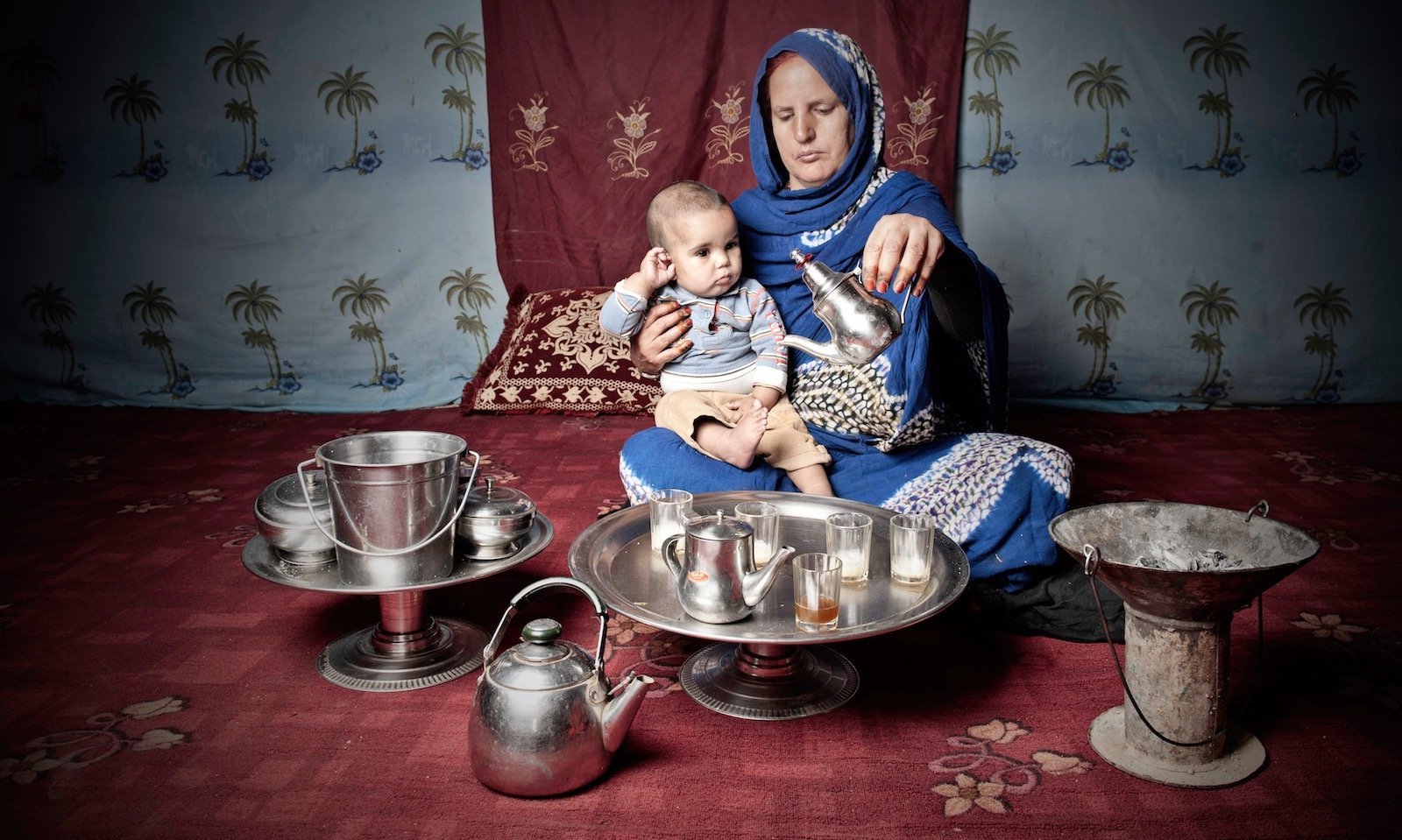
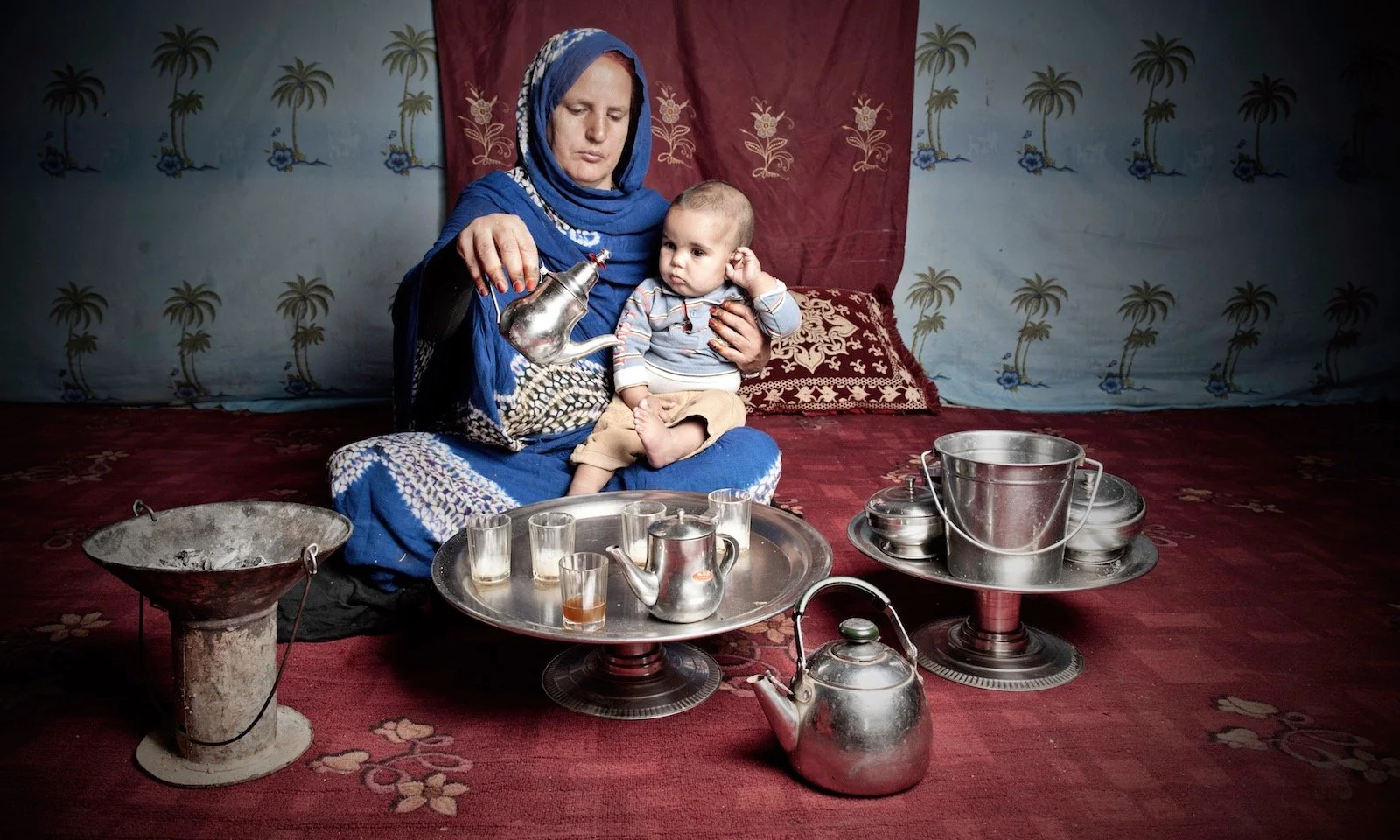
In their former pastoral nomadic lives, Saharawi culture was passed on from generation to generation through their oral traditions - often during long hours spent making and drinking tea.
However, decades of exile have led to an alarming erosion of these oral traditions. Today, a third generation of Saharawi children is growing up knowing more about Sleeping Beauty or Superman than their own ancestral desert stories. As elders with memories of life in Western Sahara age and pass away, they take with them irreplaceable oral “libraries” of the past. A mix of challenges—years of education outside the camps, economic pressures, mass media, the rise of technology and social media—have disrupted this ancestral chain of cultural transmission. It is estimated that around 70% of Saharawi oral cultural heritage has been lost since they became displaced in the Hamada in 1975.
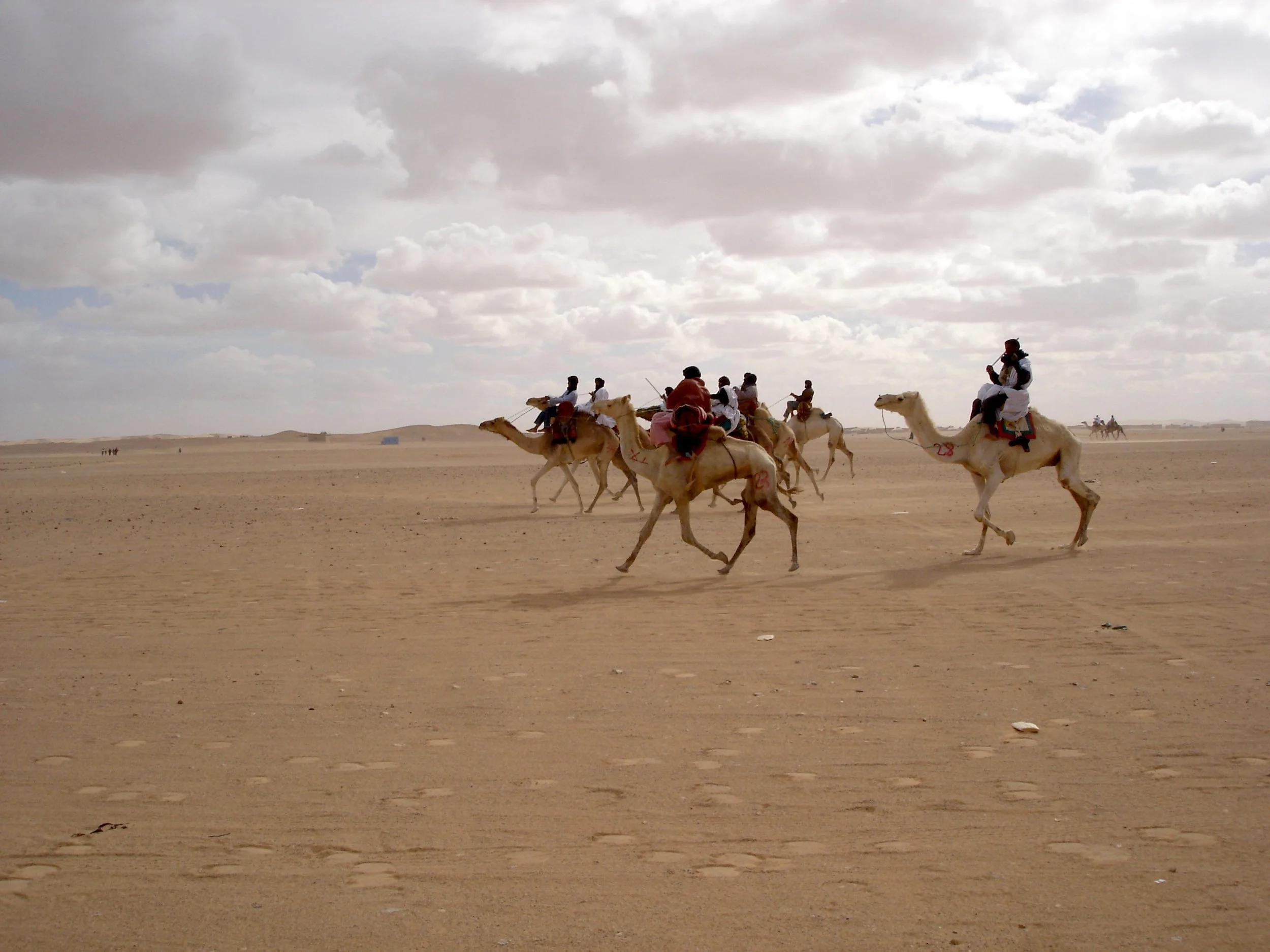
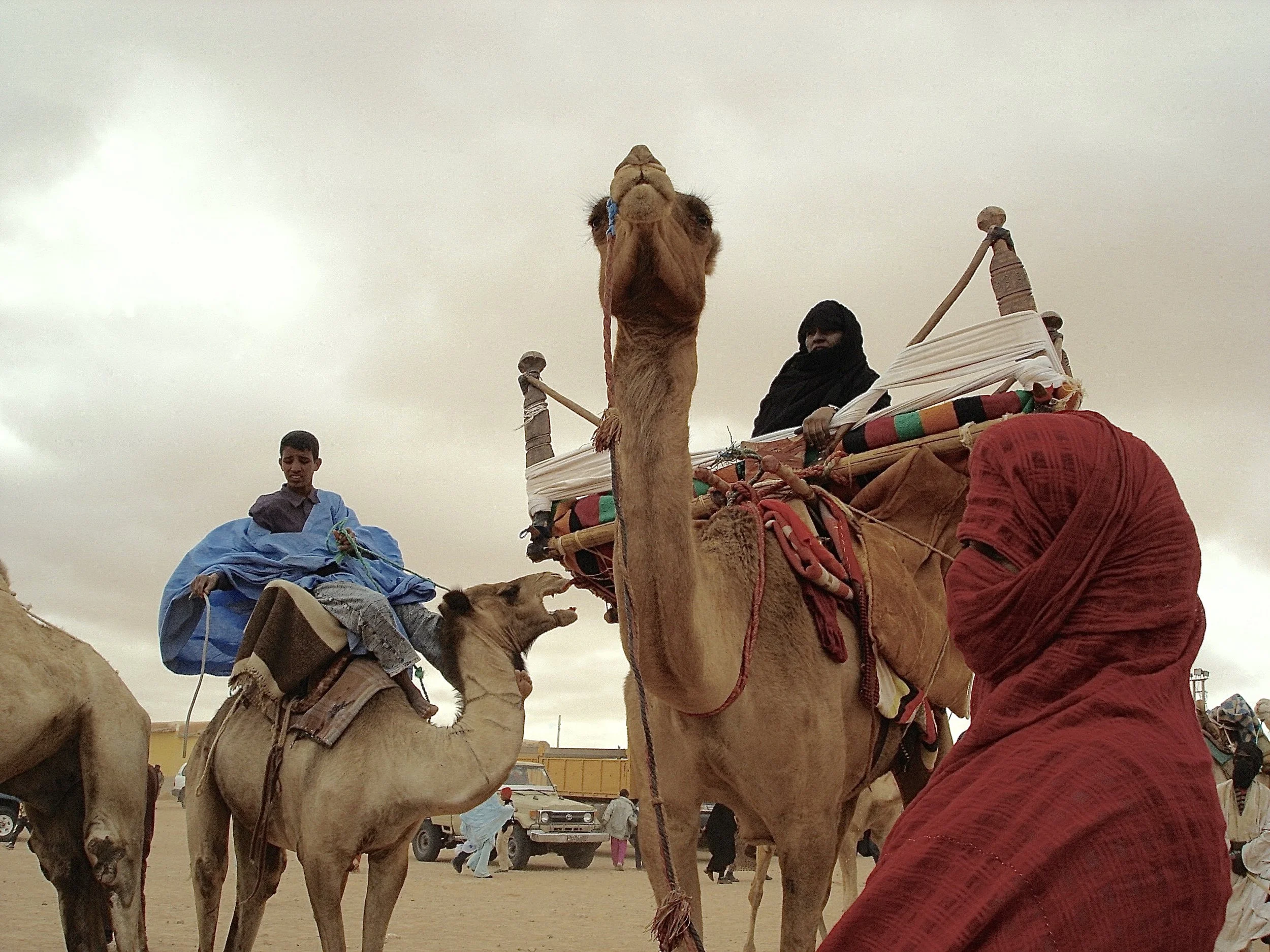
Saharawi men racing eachother on camels in the desert
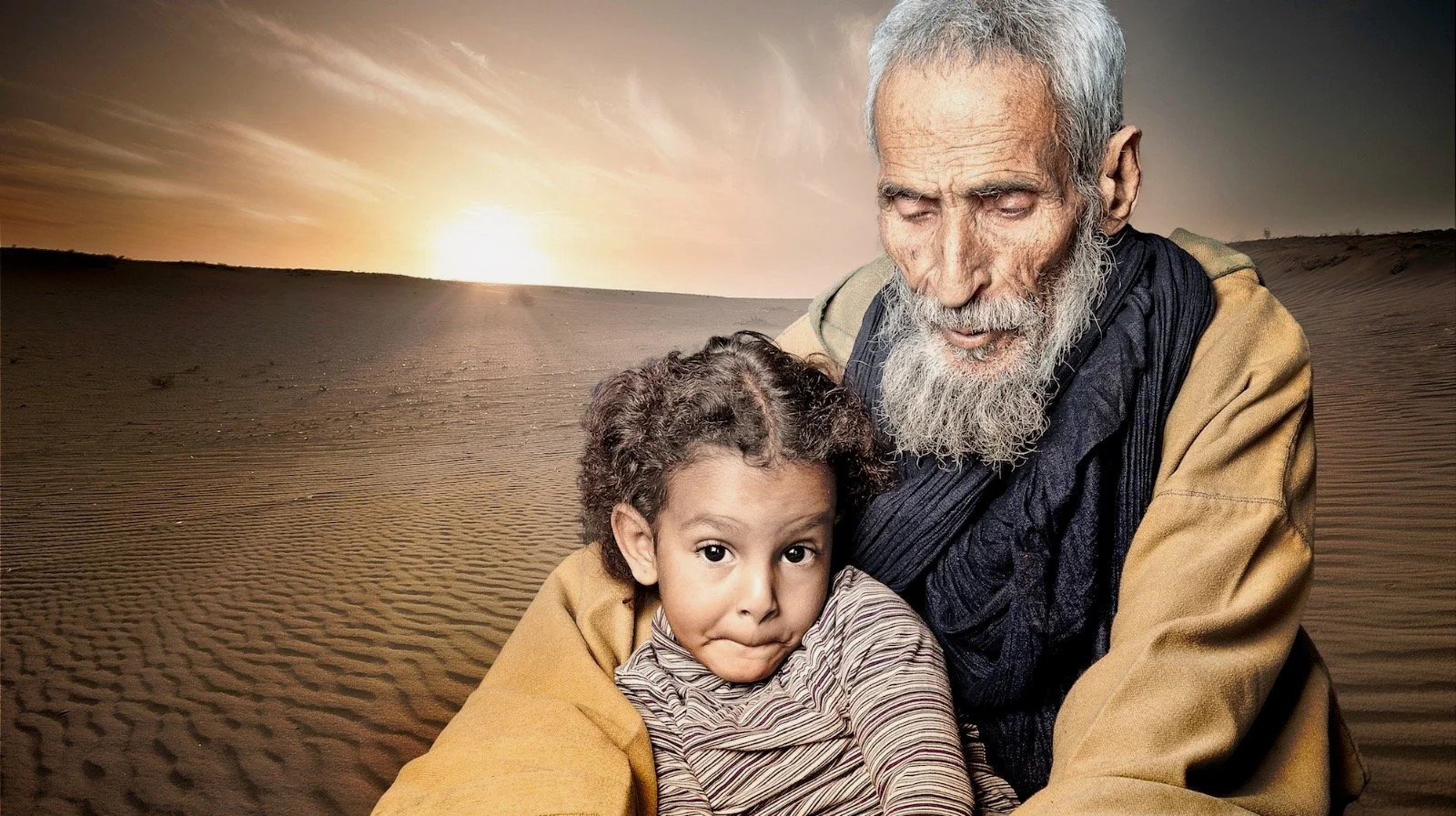
"In the land of the Saharawi, where culture is faithfully preserved in the memory of the people, where the libraries are human, when an old person dies, a library dies with him."
– Bahia Mahmud Awah, Saharawi writer and poet
The Making & Evolution of Saharawi Culture
Learn more about Generacion de Amistad Saharaui, and our relationship to their work on our blog.
Over centuries, a fusion of influences stemming from the autochthonous Sanhaja berber tribes, West African slavery and the Beni Hassan Yemenite Arab tribes, have shaped Saharawi culture. The Beni Hassan, who conquered the Western Sahara region between the 11th and 13th centuries gave the name to the dialect spoken by the Saharawis, Hassaniya, which is around 70% Arabic.
Inevitably, nearly a century of Spanish colonialism also left its mark on Saharawi culture. Many words from Spanish were adopted into their lexicon and in the refugee camps, Arabic and Spanish are both taught in the schools.
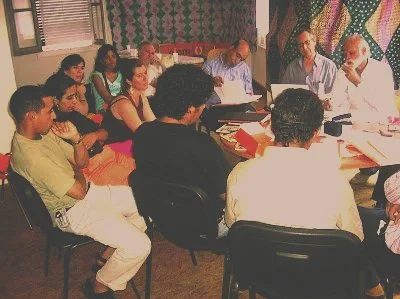
Spanish has become a main medium of creative expression for some like the group of Saharawi poets known as the Generacion de Amistad Saharaui.. Their first bilingual English/Spanish anthology -31- was published by Sandblast in collaboration with Leeds University in 2006.
Click on the sections below to find out more about Saharawi arts and traditions
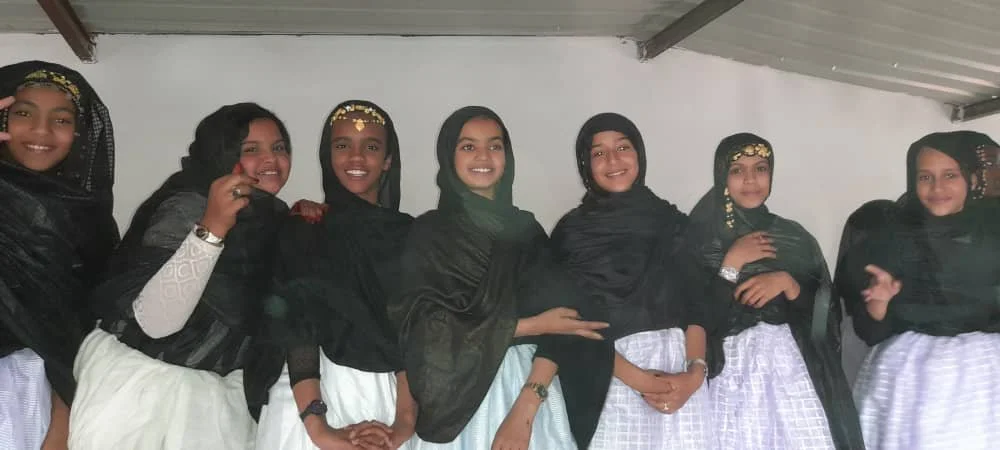
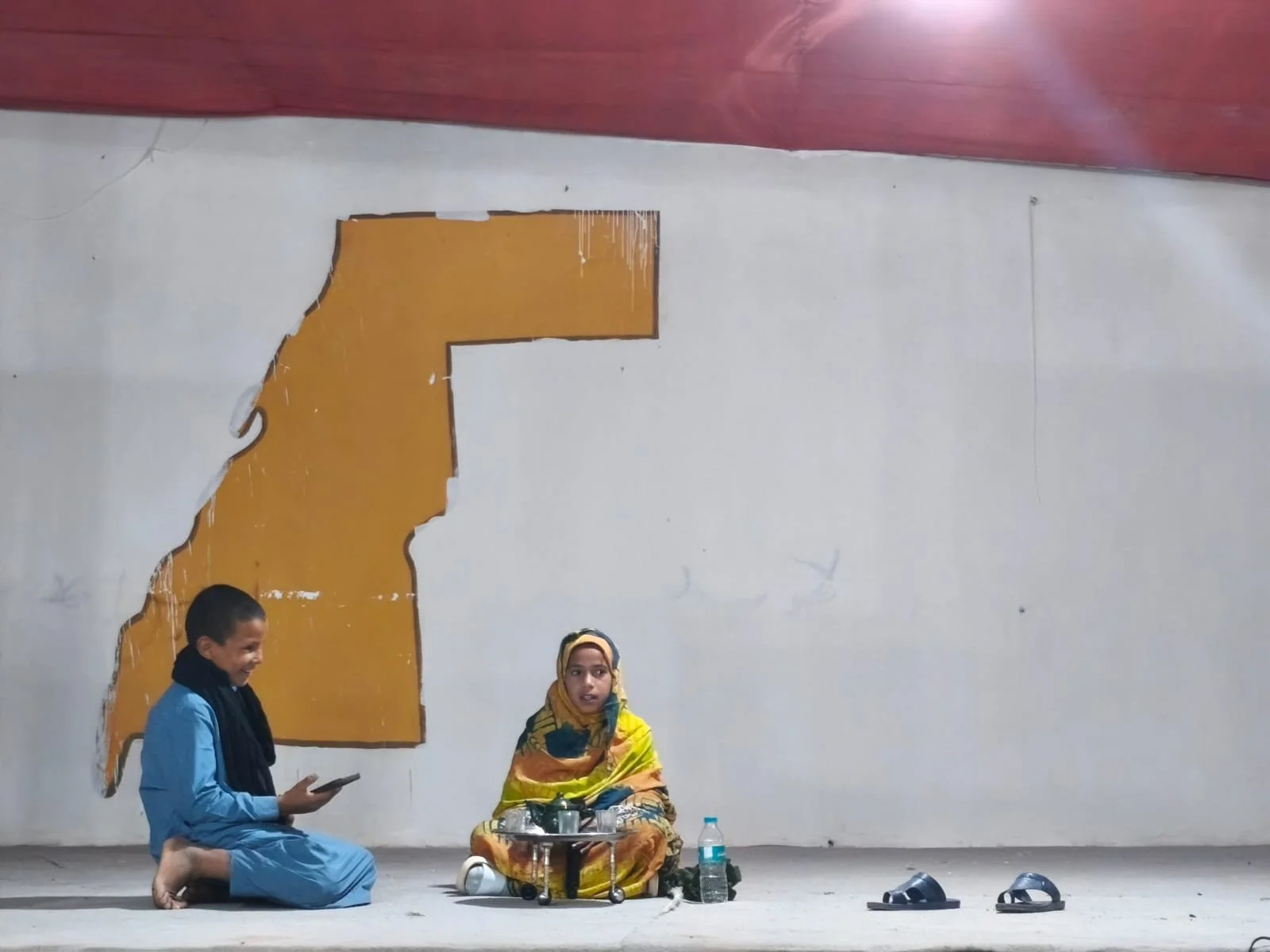
Students performing a scene they wrote with a tea ceremony
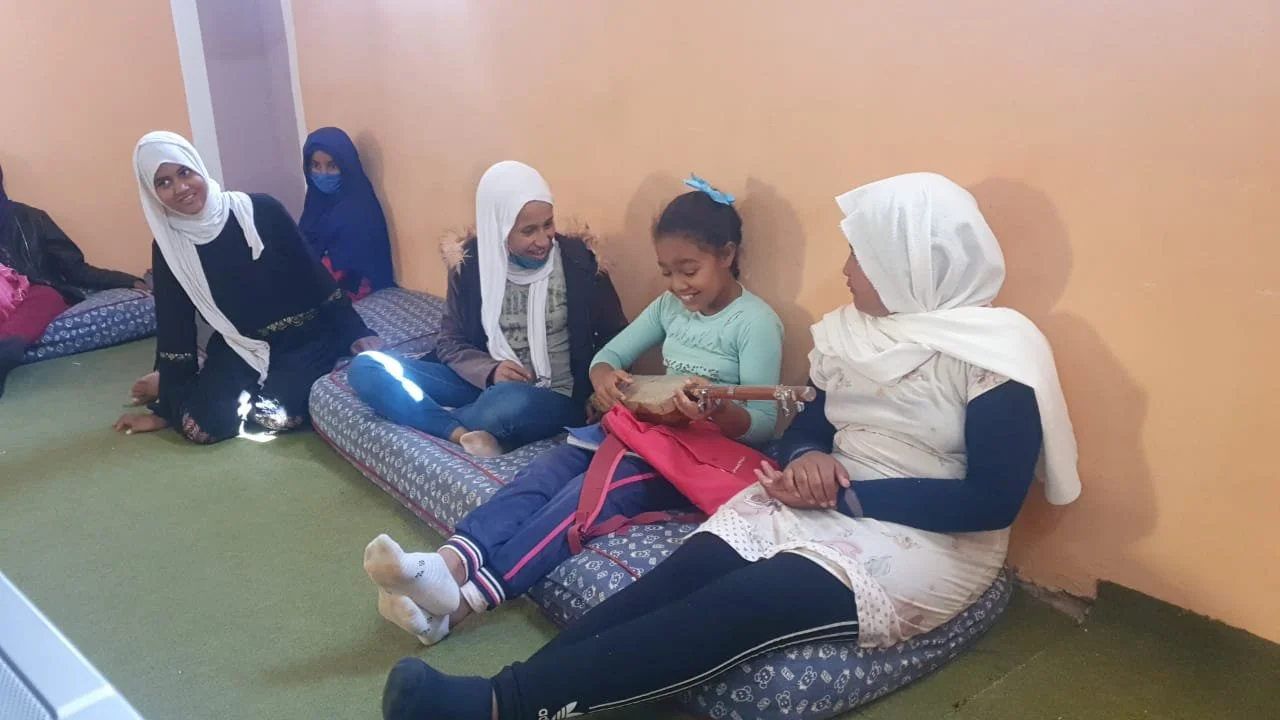
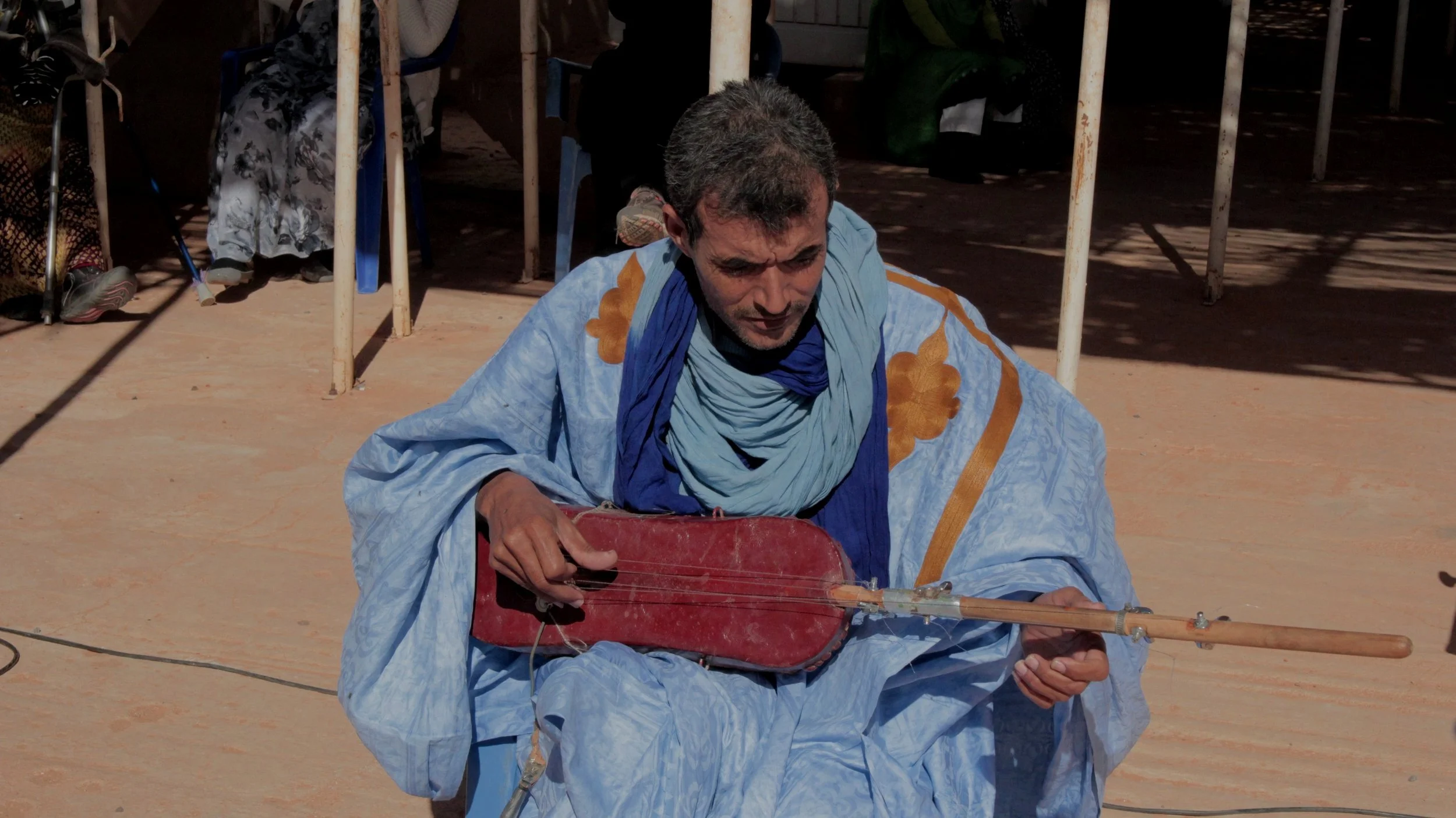
Girls learning to play Tidinit, an instrument traditionally for men
Reviving Saharawi Culture through Desert Voicebox
Another value close at the heart of our mission is promoting cultural preservation. As the Saharawis continue to fight for justice and sovereignty, we at Sandblast use our resources to aid in the cultural education of Saharawi youth in the refugee camps.
Isolation, digital media, globalization and the influences of external education are all factors that hinder the youngest generation from growing a connection to their roots. The loss of Saharawi cultural heritage, due to the ravages of prolonged displacement in the remote Hamada desert, harms Saharawi youth most of all.
Sandblast seeks to combat this cultural decline through our partnership with the Saharawi Ministry of Culture and the support of Saharawi elders to teach a new generation the beauty of being Saharawi.
In particular, our flagship after school programme, Desert Voicebox., is working to reconnect young Saharawis to their heritage by:
Bringing local artists to teach traditional music
Host lessons for traditional styles of dance
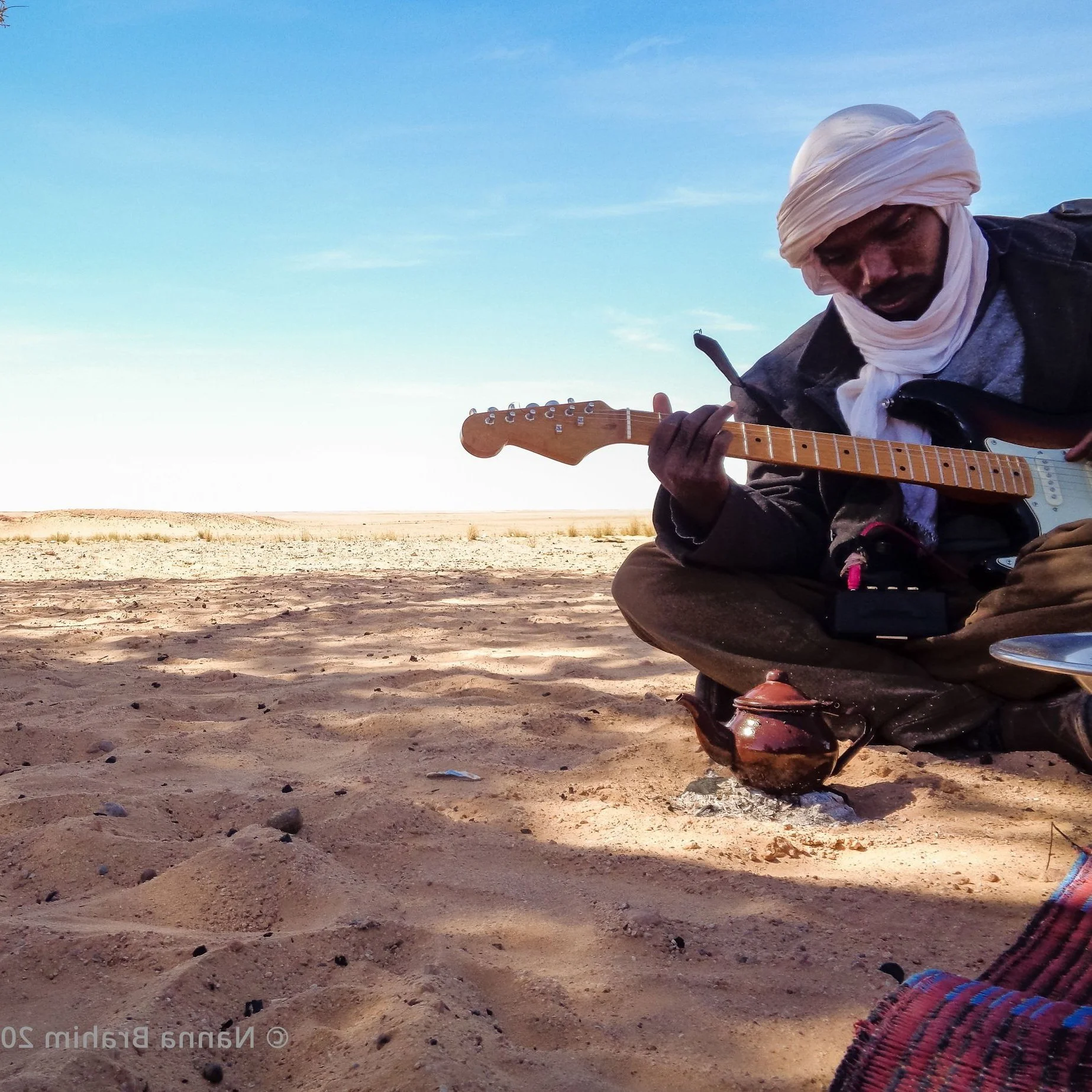
Provide access to instruction on the Tidinit, a Saharawi instrument
Organizing activities that foster inter-generational relationships with elders
This is not just cultural preservation—it’s an act of resilience and resistance.
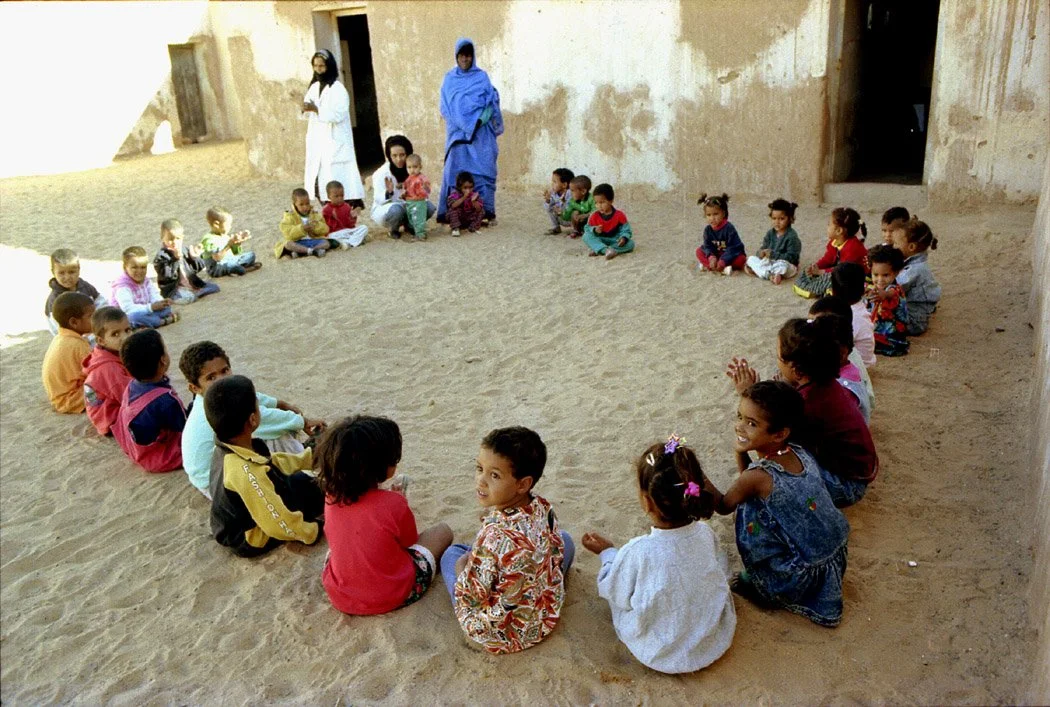
“Saharawi child take hold of a paper and pencil and learn literature, math and science. Sahrawi child, sit closely by your elders and listen carefully to the wisdom; this is the way which in the future will come to your rescue."
- Agaila Abba Hemedia, Sahrawi Writer and Poet
Ancestral Roots
Some of the earliest known inhabitants of Western Sahara were the Sanhaja Berbers, whose presence dates back as far as the Neolithic era. Central to the trans-Saharan trade, the Sanhaja helped connect West Africa with the Muslim cultures of North Africa.
Between the 11th and 13th centuries, waves of Beni Hassan Arab tribes from the Yemenite Peninsula arrived, bringing Islam and giving rise to a unique cultural fusion. This blend created Hassaniya Arabic, the dialect that remains central to Saharawi identity today, enriched over centuries with West African influences.
Saharawi tribes developed a deep sense of belonging to the desert landscape. This connection is beautifully reflected in Adtlal poetry, a genre dedicated solely to the land and its meaning in Saharawi life.
Culture Across Dividing Lines
Today, Saharawi culture exists across three main settings:
Occupied Western Sahara, where Moroccan policies suppress cultural expression and impose the Moroccan dialect and educational system
Refugee camps in southwest Algeria, where cultural identity is actively preserved despite limited resources
The global diaspora, especially in Spain, shaped by diverse influences from Spanish, Cuban, and Algerian cultures.
In all these settings, Saharawis work to keep their unique identity alive in the face of displacement, repression, and change.
Language & Oral Traditions
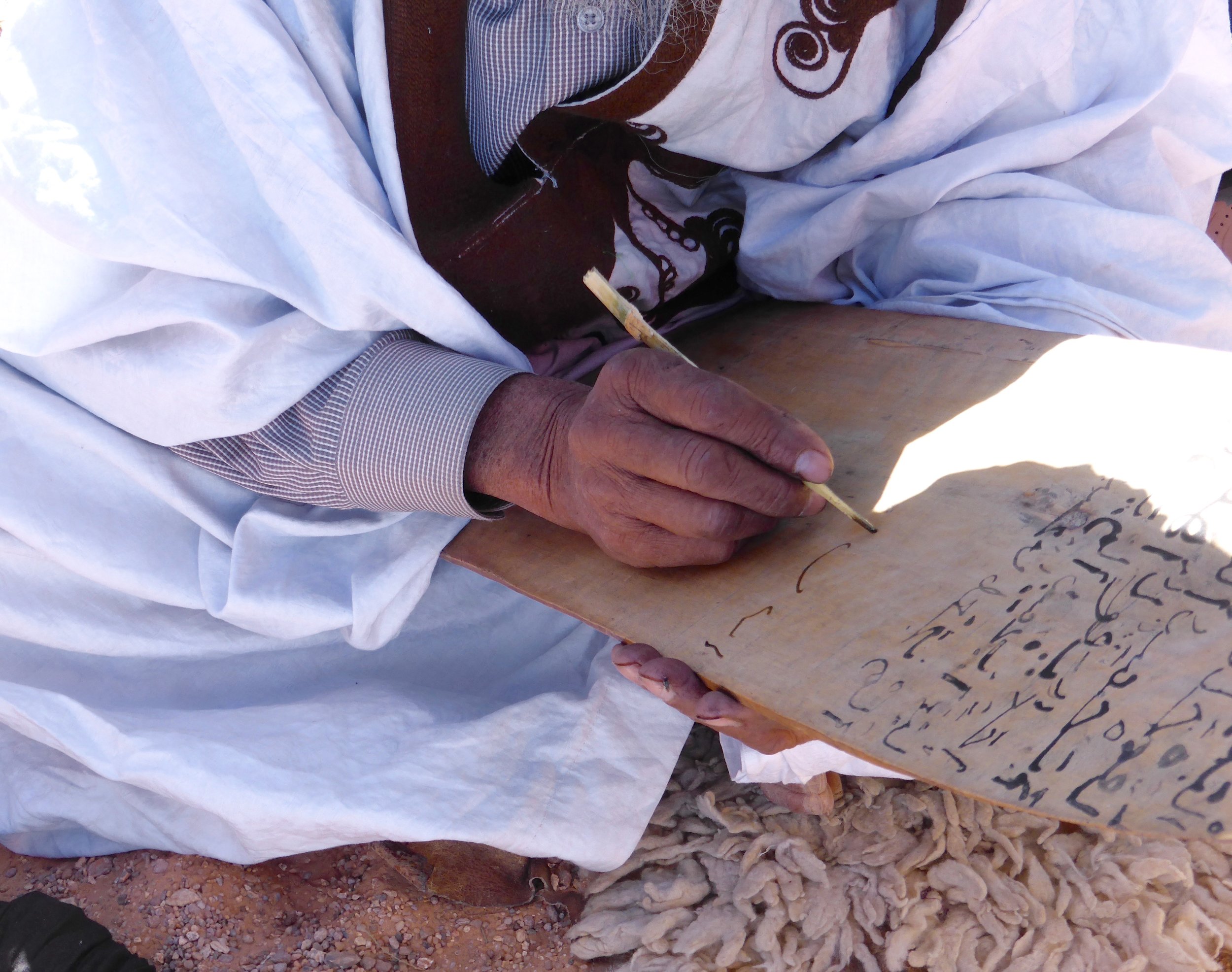
Hassaniya Arabic, derived from the Beni Hassan conquest, is the heart of Saharawi cultural expression and resistance. As a traditionally oral society, the Saharawis preserve history, values, and wisdom through storytelling, poetry, and proverbs.
In the refugee camps, Arabic and Spanish are official languages, reflecting the Saharawis’ historical ties to Spain and Cuba. Increasingly, English is also being learned. In occupied Western Sahara, however, Moroccan Arabic (Darija) and French dominate, threatening the survival of Hassaniya among younger generations.
As Saharawi poet Bahia Mahmud Awah famously said:
“In the land of the Saharawi, where culture is faithfully preserved in the memory of the people, where the libraries are human, when an old person dies, a library dies with him.”
The true story of the Saharawis lives in their rich oral traditions, where knowledge, wisdom, and memory are carried through music, poetry, and proverbs.
But decades of exile have deeply threatened these traditions. A mix of challenges—years of education outside the camps, economic pressures, mass media, and the rise of technology and social media—have disrupted the chain of cultural transmission.
Today, a third generation of Saharawi children is growing up knowing more about Sleeping Beauty or Superman than their own ancestral desert stories. As elders with memories of life in Western Sahara age and pass away, they take with them irreplaceable oral “libraries” of the past.