
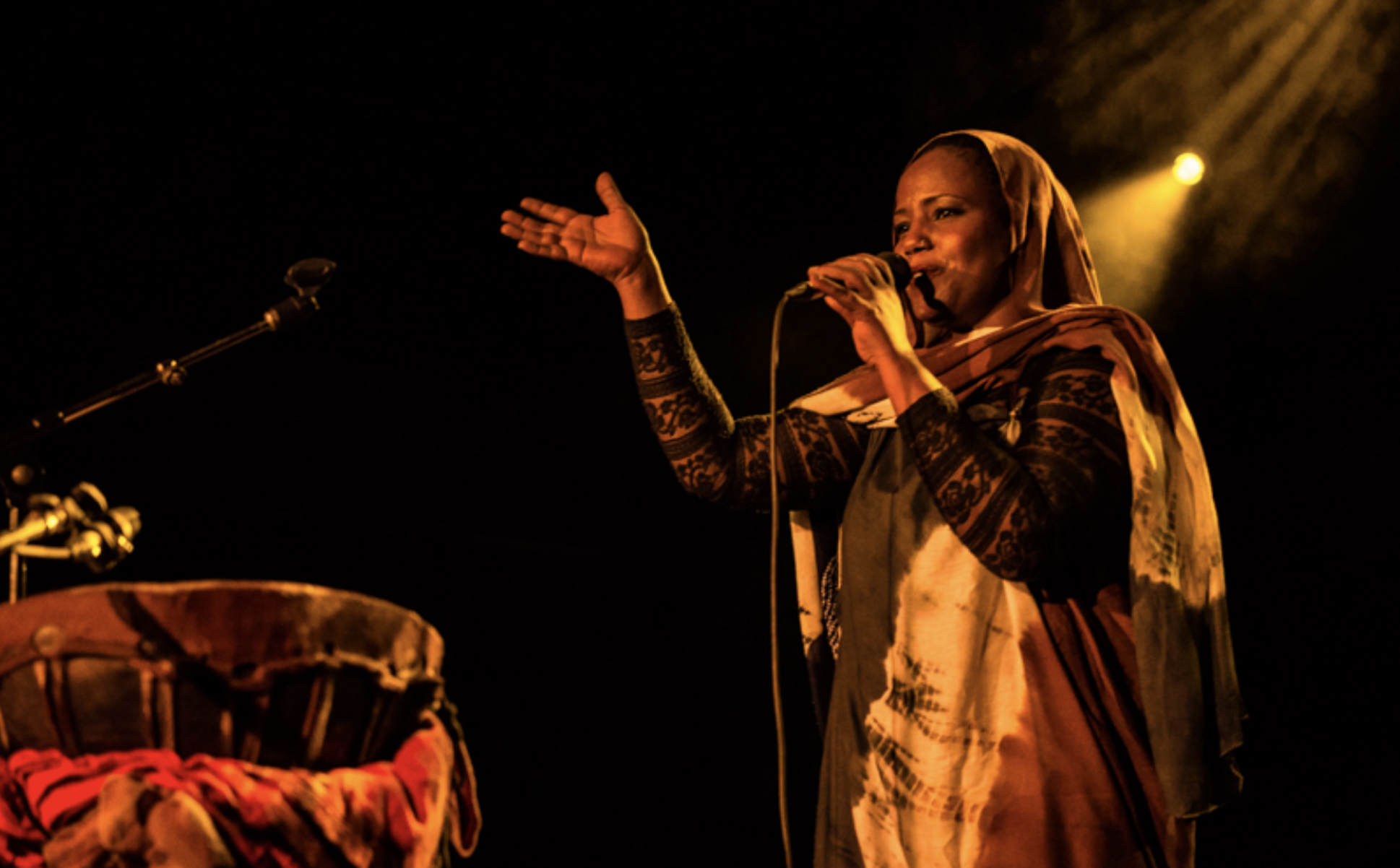
Saharawi Music
Music is a shared practice in Saharawi culture, and is deeply connected to Hassaniya poetry and to social and spiritual traditions. In the context of the ongoing struggle, music has become an important means of expressing political and cultural resistance. As the Saharawi way of life is increasingly threatened, music also serves to connect to tradition and reaffirm the unique Saharawi culture.
The Roots of Saharawi Music
Saharawi music is rooted in the traditions of Trab El-Bidhân and is closely related to the music played in Mauritania, known as El-hawl. This musical style is made up by a complex system of modes known as bhor (seas) that sing of different themes such as love, religious praise, battle, homage to landscapes, and nostalgia. These modes are traditionally played in a strict and specific order.
In Mauritania and in many other regions, el-hawl is usually played by the iggâwen (griots), the hereditary praisers and story-tellers, who have been regarded as socially inferior.
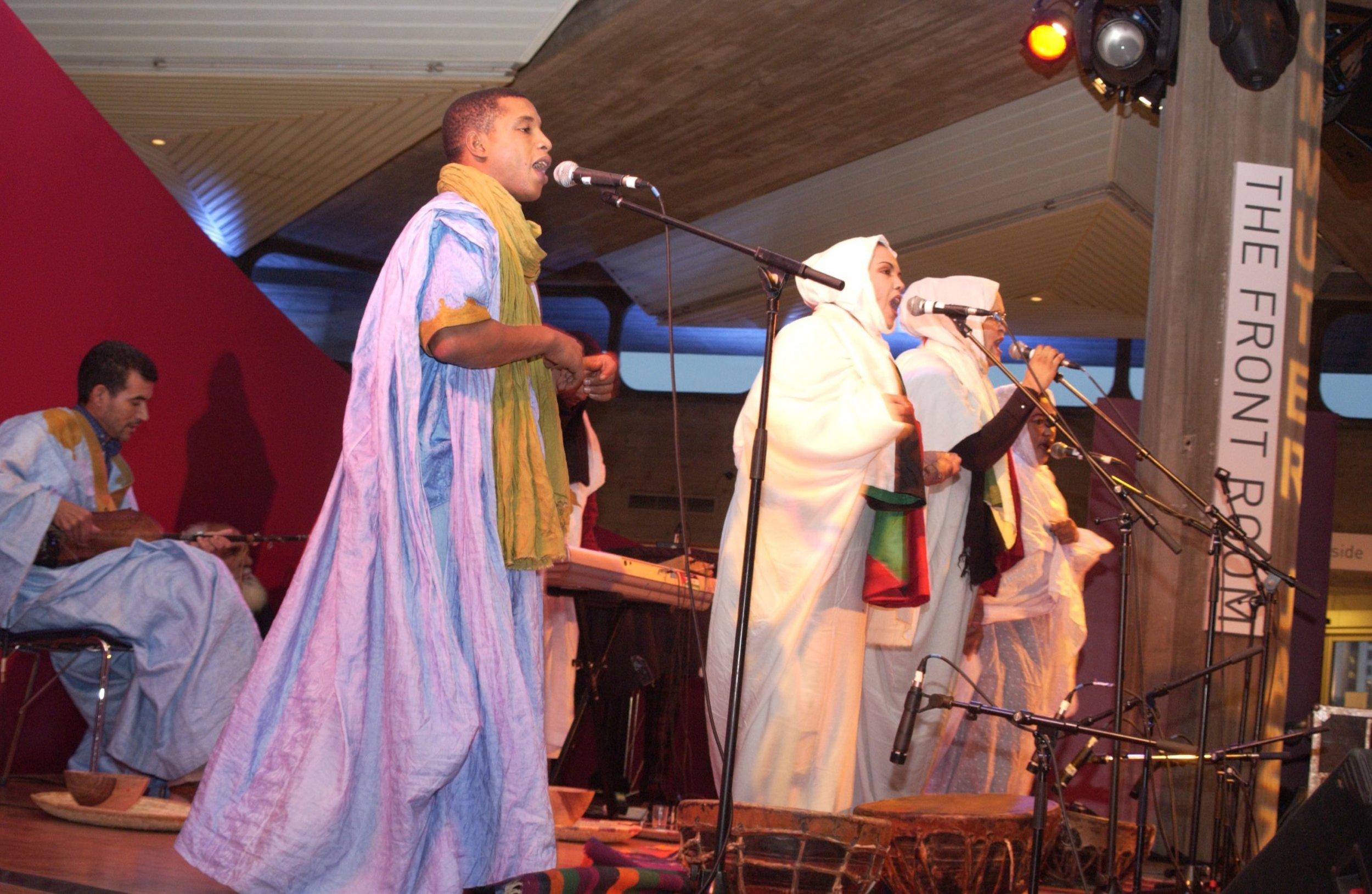
Although admired for their talents, they were looked upon for earning their living from music and praising. Traditionally, the iggâwen (iggiw in singular) played at the service of eminent social personalities and political leaders often developing entire repertoires in their praise. They also played at key social events related to the celebration of birth, marriage and even divorce. The central social pastime of drinking tea in Bidhân society equally provided an inspiring and informal setting for el-hawl to be played.
Music Emerging as Resistance
Saharawi music bands and professional musicians only began to appear in the early 70s at the end of the Spanish colonialism. With the rise of the Polisario front, songs played an important role in mobilizing Saharawis to join the Polisario movement and were often sung at large gatherings like weddings and other social occasions to avoid Spanish reprisals.
But it really was once large numbers of Saharawis were forced into exile into the harsh Algerian desert and the refugee camps became the main space where political resistance and aspirations could be freely expressed that that music became harnessed to express the struggle and Saharawi aspirations for nationhood.
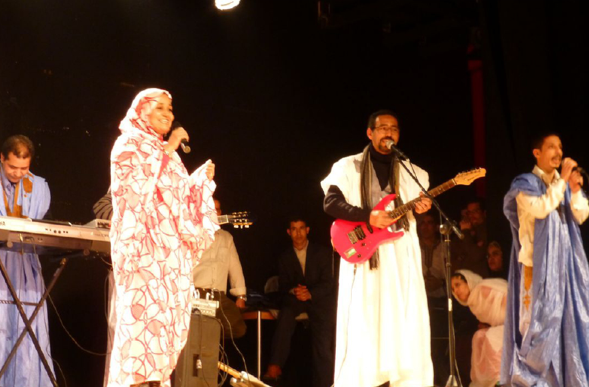
Over the past four decades, particularly in the diaspora and especially in the refugee camps, Saharawi music has evolved to reflect the centrality of their cause and the influences of modern instruments. The most famous Saharawi modern revolutionary band of all time has been Shaheed El Uali, named after Polisario founder El Uali Mustapha Sayed.
The electric guitar, bass and keyboard synthesizer, in particular, have tended to be preferred over the traditional tidinit and the t’bal drum. Musical modes relating to battle and landscape have developed at the expense of other modes.
Due to multiple influences, the younger generation of Saharawis are increasingly experimenting with and incorporating other music traditions into theirs, especially from the Latin American and hip-hop worlds. Most significantly, the Saharawis have largely succeeded in overcoming the social stigma associated with being a musician. This has been possible because those Saharawis with talent applied it to sing for their cause and not for money, in the early days, thereby making it an acceptable and even noble pursuit.
Today, Saharawi artists are increasingly looking to earn a livelihood through their music. Playing at weddings in the refugee camps is currently one of the most lucrative activities.
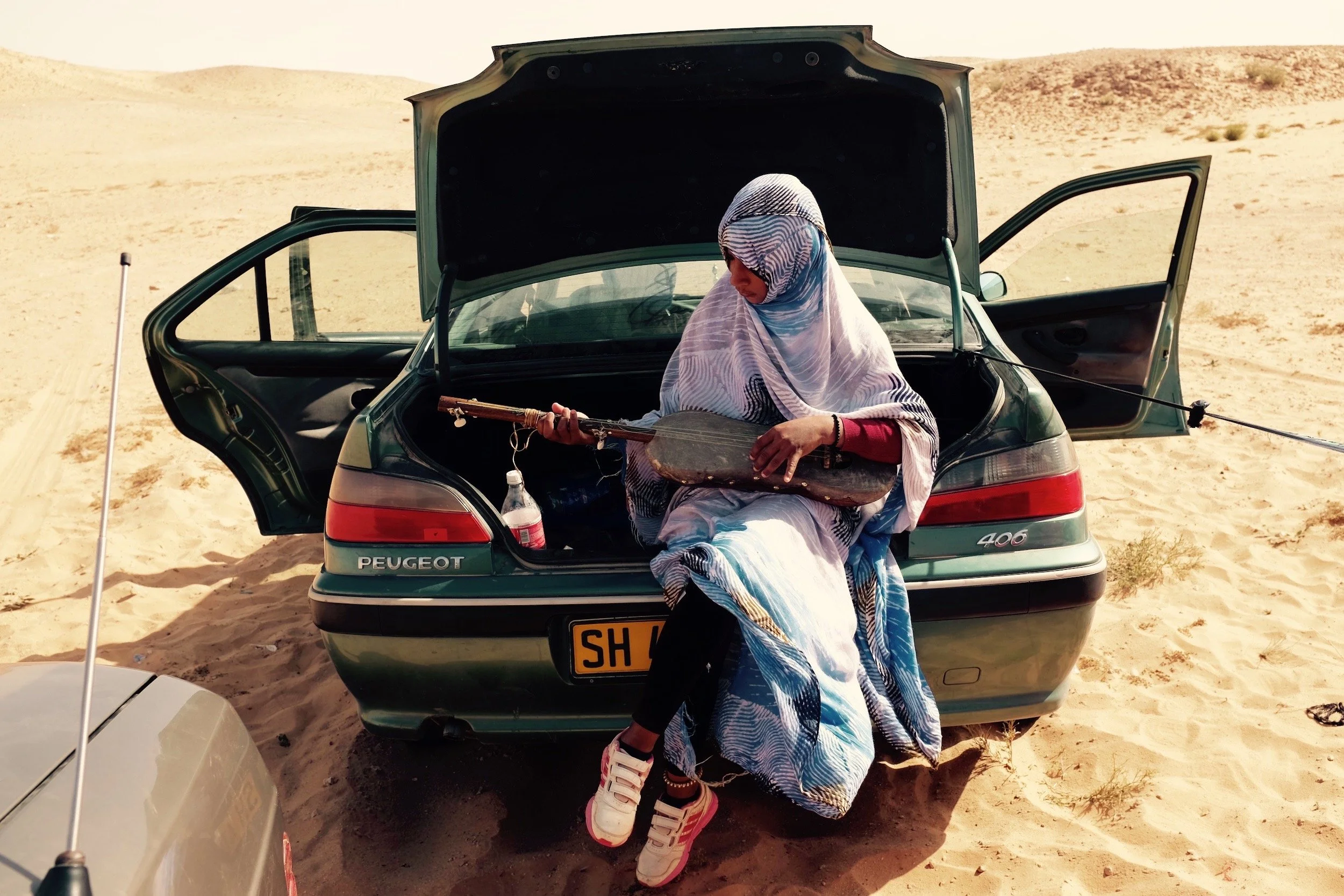
What’s a Tidinit?
The tidinit is a traditional stringed instrument that accompanies Saharawi poetry, singing, and storytelling.
A type of lute typically crafted from wood and animal skin, the tidinit looks similar to a ukelele or a small guitar. It has four strings, usually made of gut, and is played with a pick.
Other traditional instruments include the Tbal drum! See how one is made here.
-
![]()
2007 Sandblast Festival & Tiris UK Tour
-
![]()
Portraits of Saharawi Music
-
![]()
-
![]()
Badawi Saharawi Music Archive
Music at Desert Voicebox
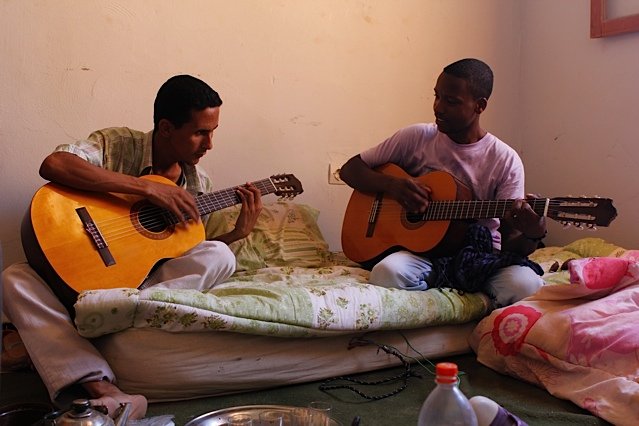
Through collaboration with local musicians in the camps we offer weekly sessions in traditional music and dance. Additionally with the of support music educators from abroad and our local Saharawi teachers we run regular music lessons to our Desert Voicebox Students.
All our students are able to study their traditional music and dance, and have opportunities to experiment with new styles through creative workshops run by special guest artists.- like our Zombies in the Air music project!
Music practice is a wonderful creative outlet that builds confidence for our Saharawi students, while also giving them the tools to become cultural ambassador and promote Saharawi cultural in the face of ongoing Moroccanization and cultural erasure in occupied Western Sahara.