
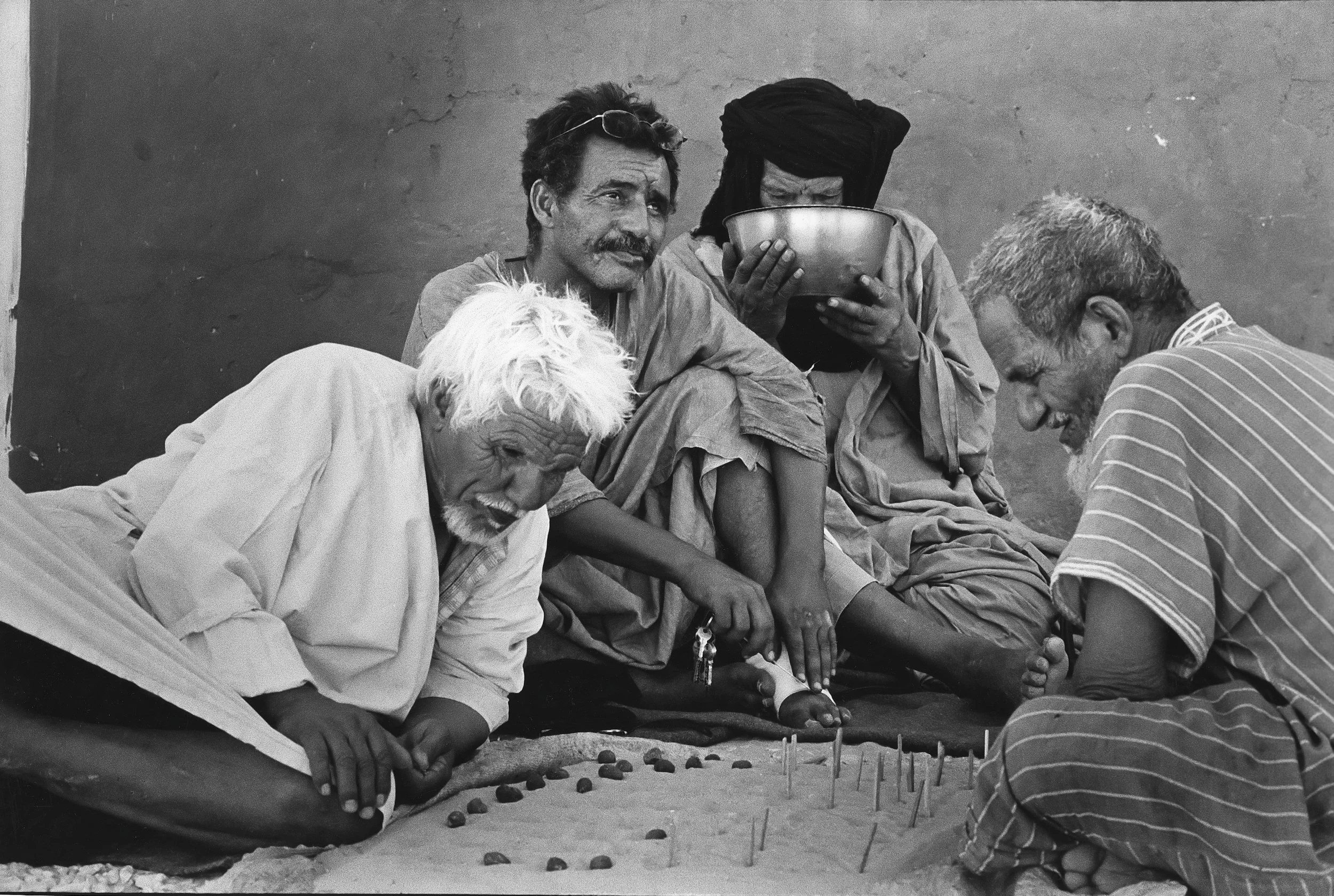
Traditions
Despite decades of exile, cultural oppression and erosion under the Moroccan occupation, the Saharawis still strive to maintain many of their traditions and ancestral practices.
Their fight to promote their distinct cultural identity while living in refugee camps is hampered by the lack of many resources and means for protecting their unique heritage. Meanwhile, the influence of diverse cultures, especially Spanish, Cuban, and Algerian, due to the education of many Saharawi children outside the camps and the migration of youth to earn livelihoods, has also significantly impacted Saharawi culture and identity.
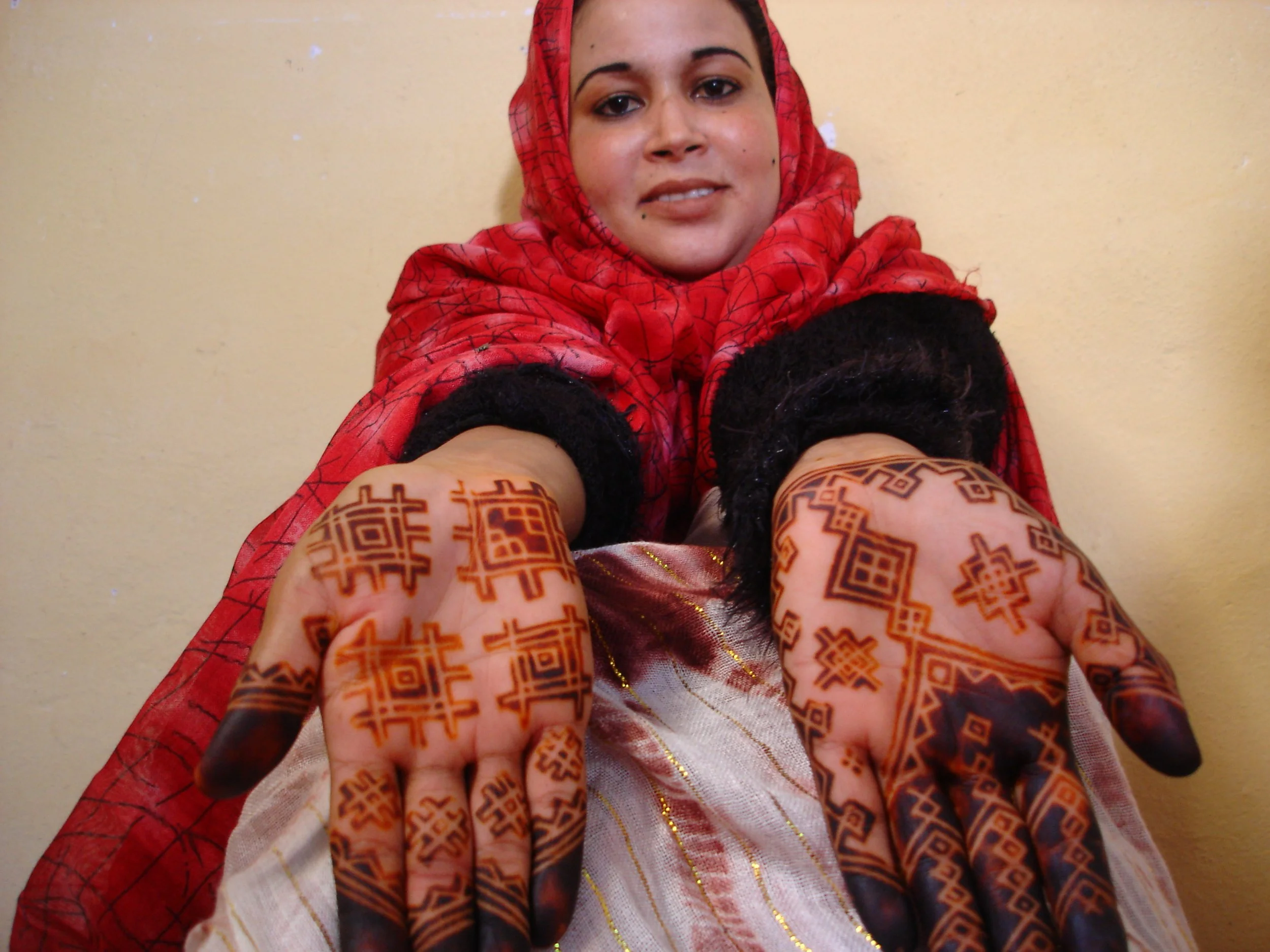
Saharawi henna is a unique, living expression of identity, resilience, and intergenerational heritage.
Practiced by Saharawi women across the occupied territory of Western Sahara, in refugee camps in Algeria, and amidst the global diaspora, this ancestral tradition serves as a powerful symbol of cultural continuity in the face of displacement.
The Tea Ceremony
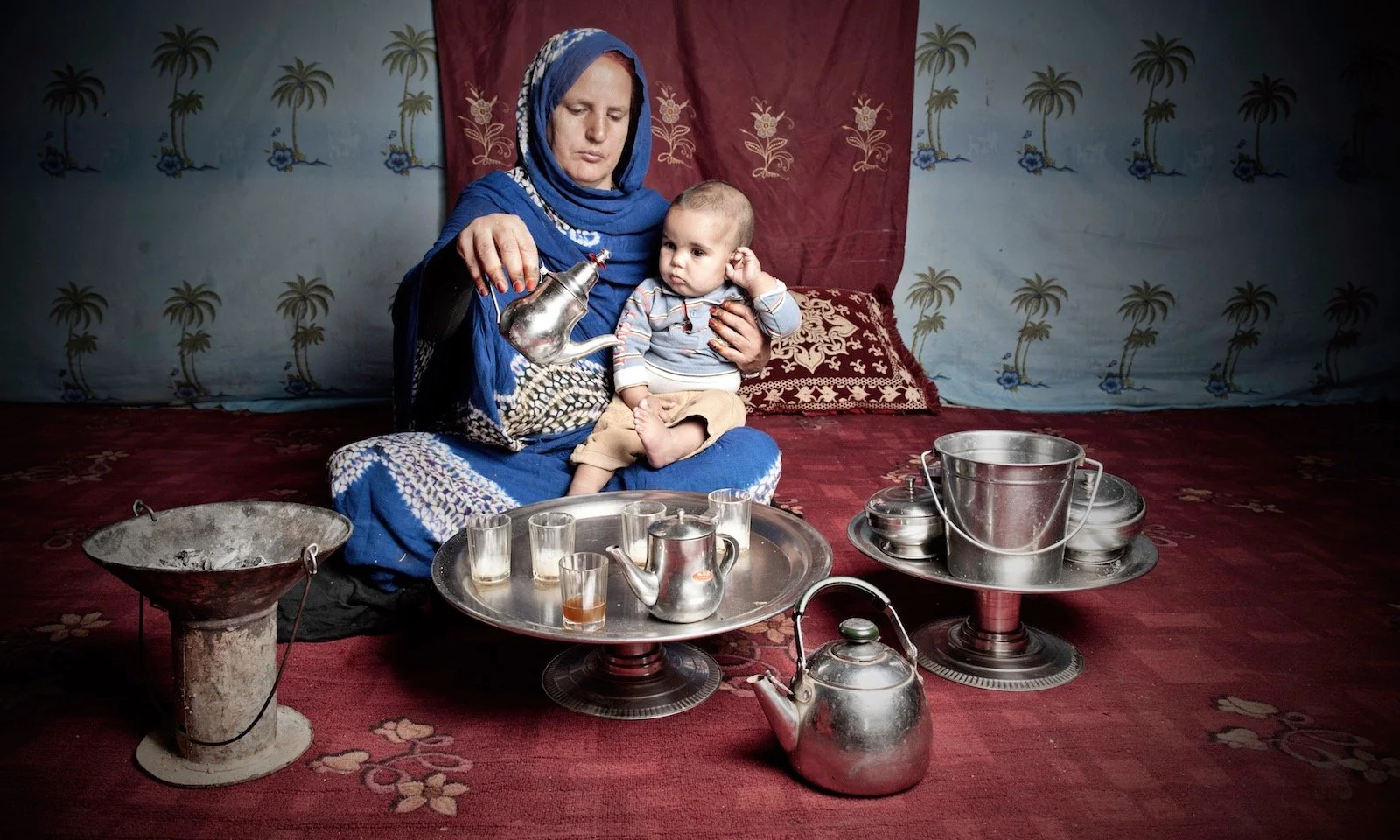
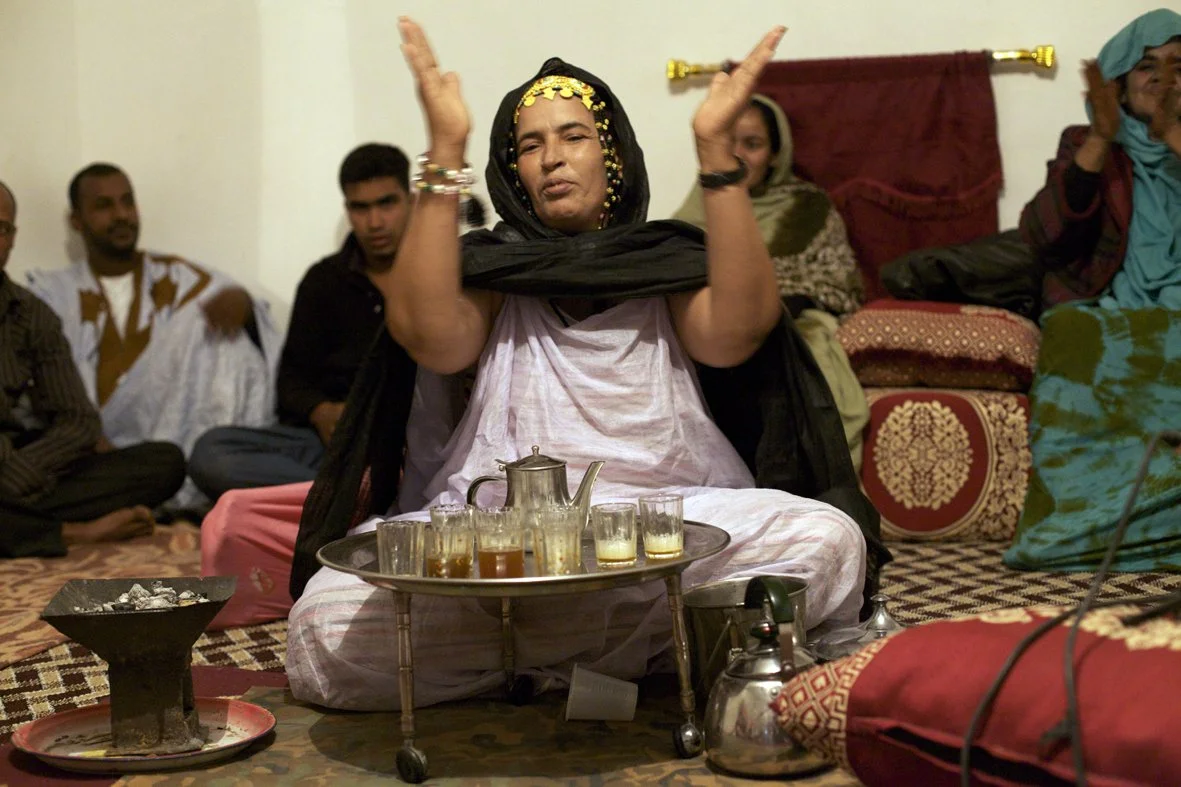
The Saharawi tea ceremony is one of the most important rituals of Saharawi culture, and is central to their understanding of hospitality. The tea brewing is a central activity in gatherings. Saharawis usually drink three small cups of strong green Chinese gunpowder tea during the tea ceremony, often adding mint to the second and third cups. A Saharawi saying describes each cup the tea like a different aspect of life: "the first cup tastes as bitter as life, the second as sweet as love, and the third as mild as death. “
History of Saharawi Tea Drinking
In the 18th century, Western Sahara was understood to be a haven for trade, as a gateway to the Great Sahara and North Africa. It is through trade with the British that the potent Chinese gunpowder green tea was introduced to the Saharawis. The beverage soon became popular among the indigenous people of Western Sahara and the original ceremony was adapted to the long journeys through the desert on camel back. As tea and sugar cannot grow in the region and the Saharawis needed to trade for these luxuries, they were considered precious items, only offered initially to honour very special guests. But over time the generous spirit of the Sahrawi prevailed and the tea ceremony became obligatory and a central aspect of hospitality offered to all their guests.
A tea ceremony requires a teapot called "abarad" or abrig made of tanmint (a type of metal); a tray, "tabla", made of red or yellow bronze; bowls for sugar and tea, named "kuntiya" and "a’msar;" an air pump, "rabuz", to keep the fire alive; charcoal, "jmaar", for the fire; and, of course, a great gathering of people called a "jmaa". The perfect tea experience has 3 J's: Jmaar (the charcoal), Jma3 (the gathering) and Jaaf (lasts long).
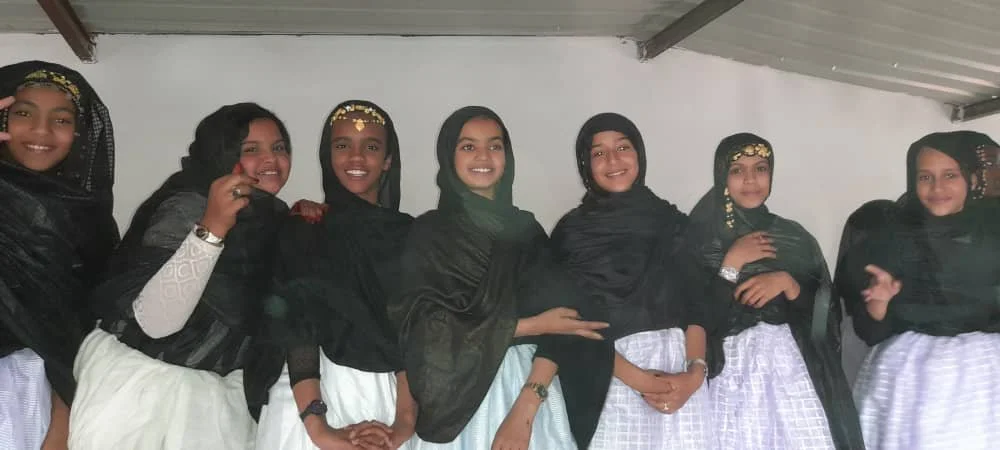
The Next Generation of Cultural Ambassadors
Today, Saharawi culture and society must be considered from at least three different contexts that define their reality and the way they express their culture: those living under the Moroccan occupation in Western Sahara, those living in harsh refugee camps in SW Algeria and those elsewhere in the diaspora, especially in Spain where the largest number live outside the region. Under Moroccan occupation, Saharawi culture has been deeply affected by the imposition of the Moroccan language and educational system and policies that systematically seek to deny their cultural identity and history.
This contemporary context is what shapes our cultural promotion initiatives through our pioneering after school programme, Desert Voicebox, in the refugee camps.
The Arts hold extraordinary power to cross boundaries, awaken emotions, and remind us of our shared humanity.
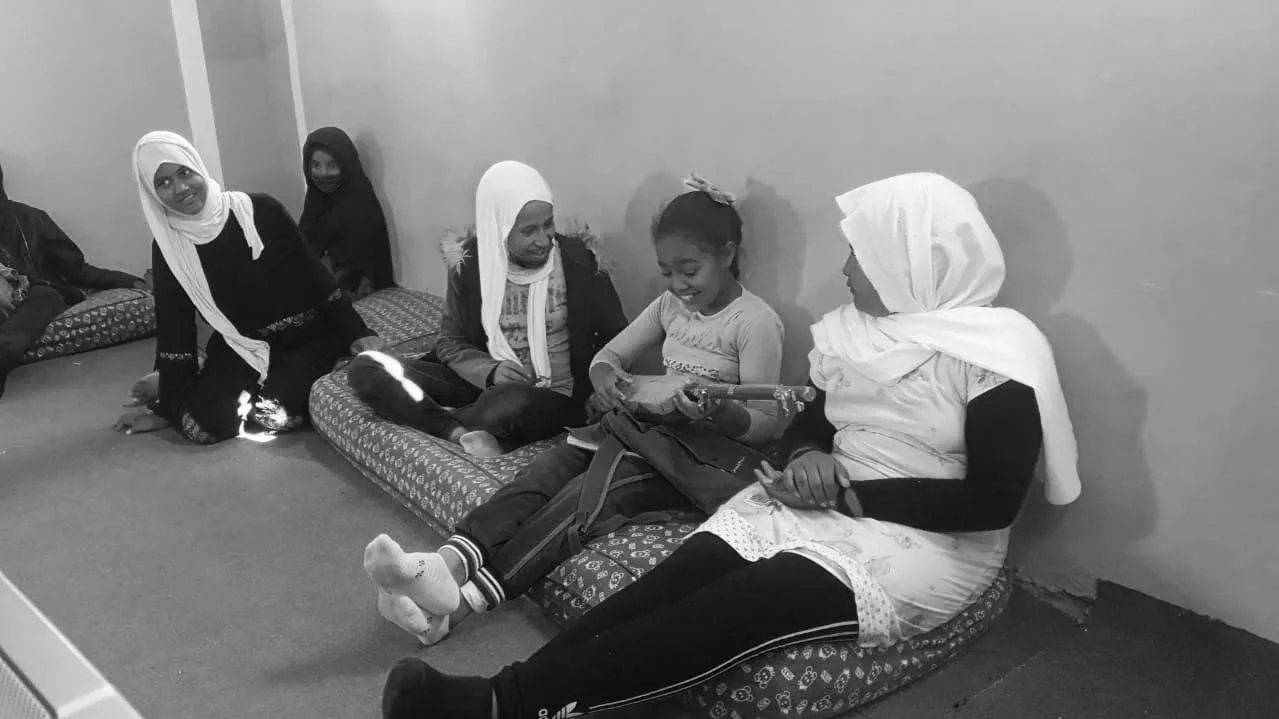
Lessons in traditional instruments and dance
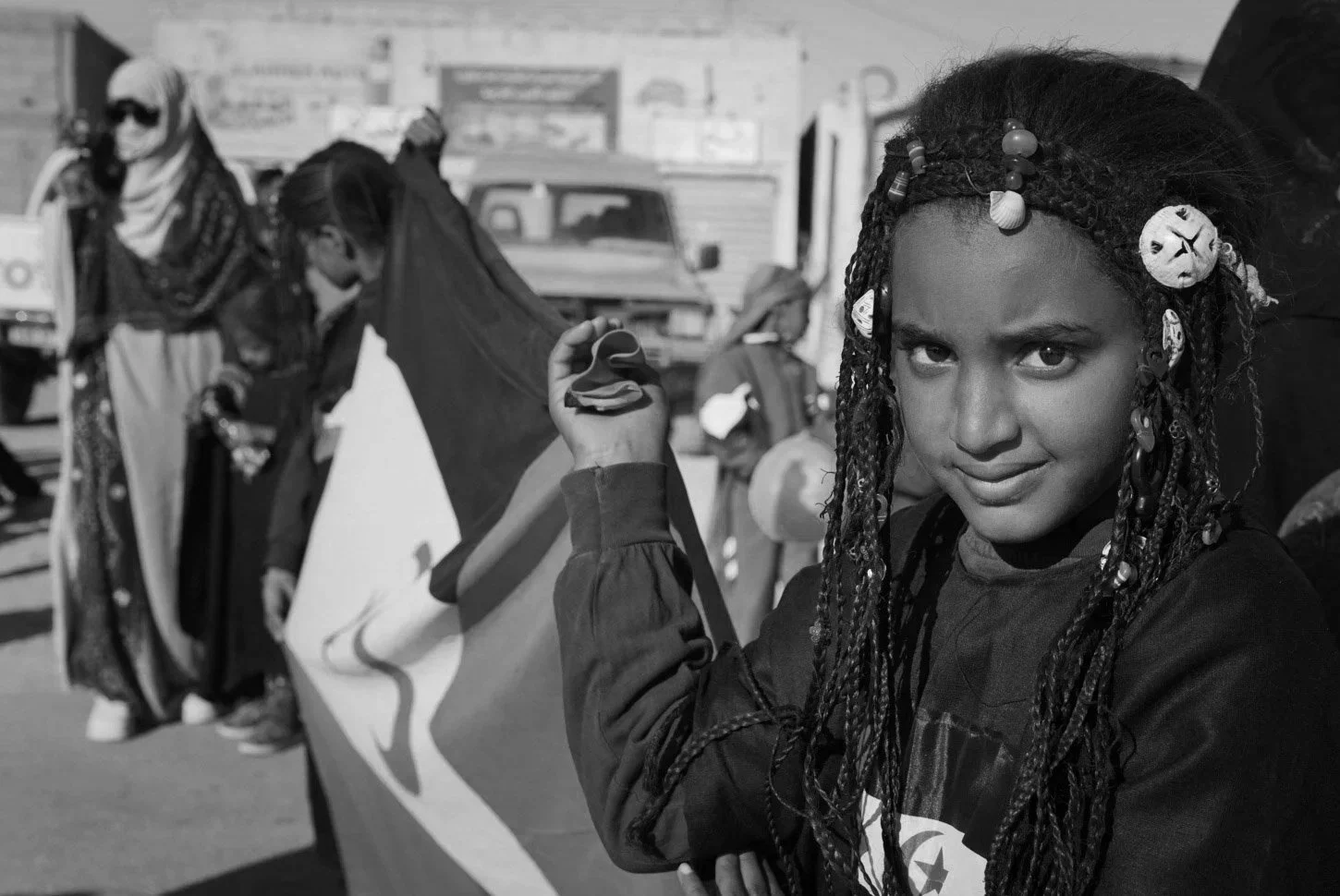
Learning Advocacy and Cultural Pride
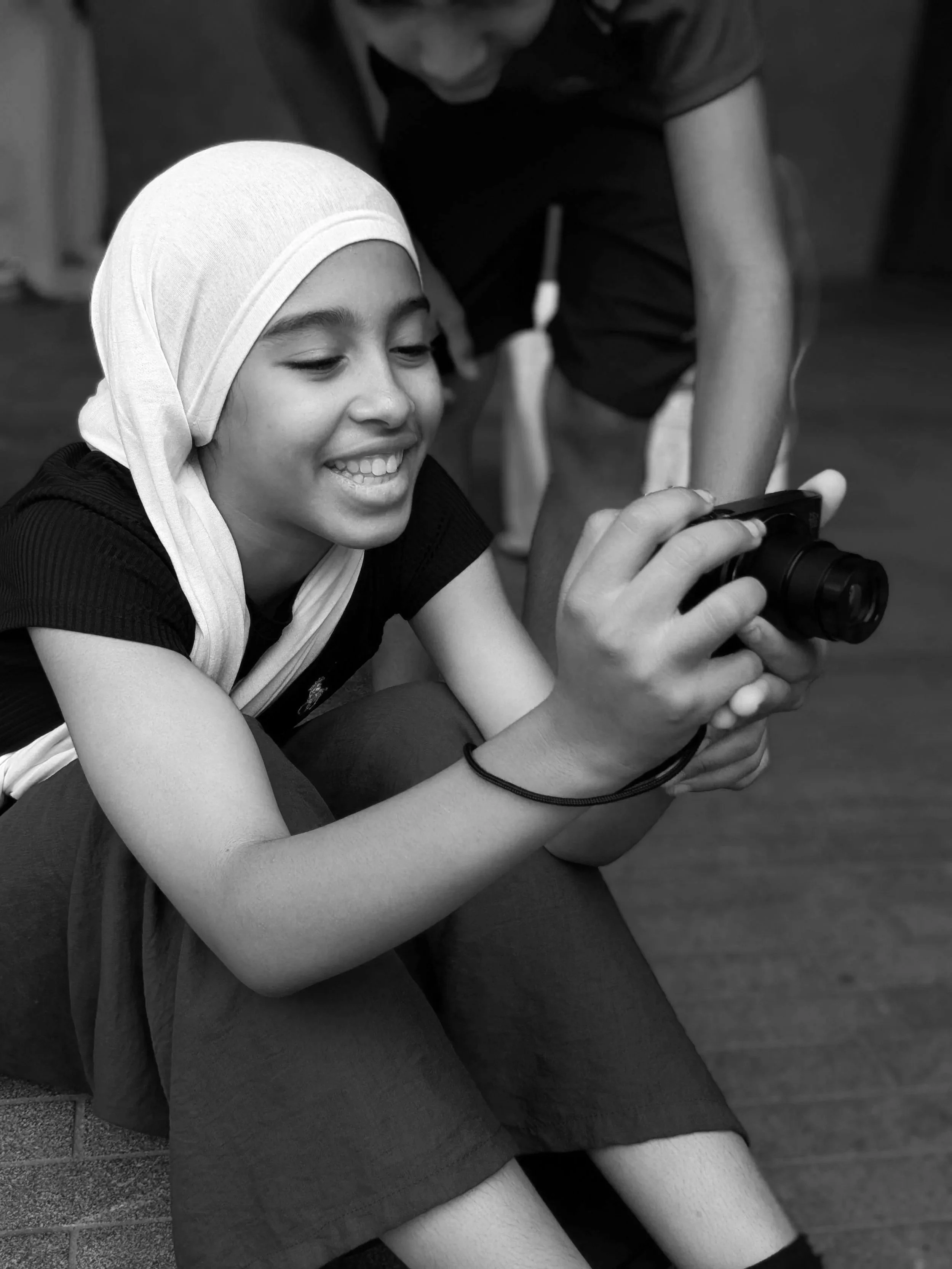
Expressing their unique voices and perspective