
One of the greatest rewards of volunteering with Sandblast is the opportunity to join the Saharawi community on the ground in Boujdour camp.
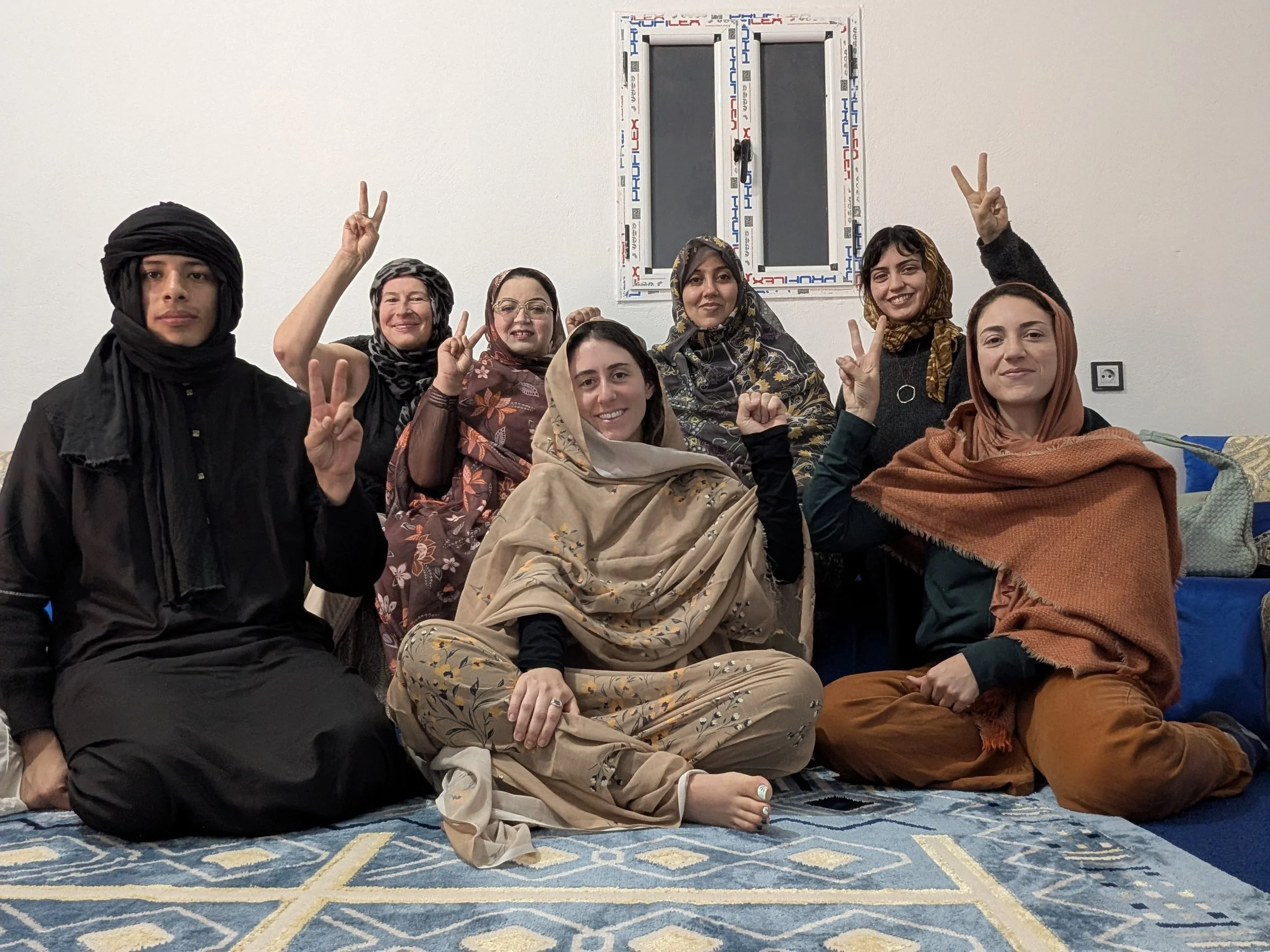
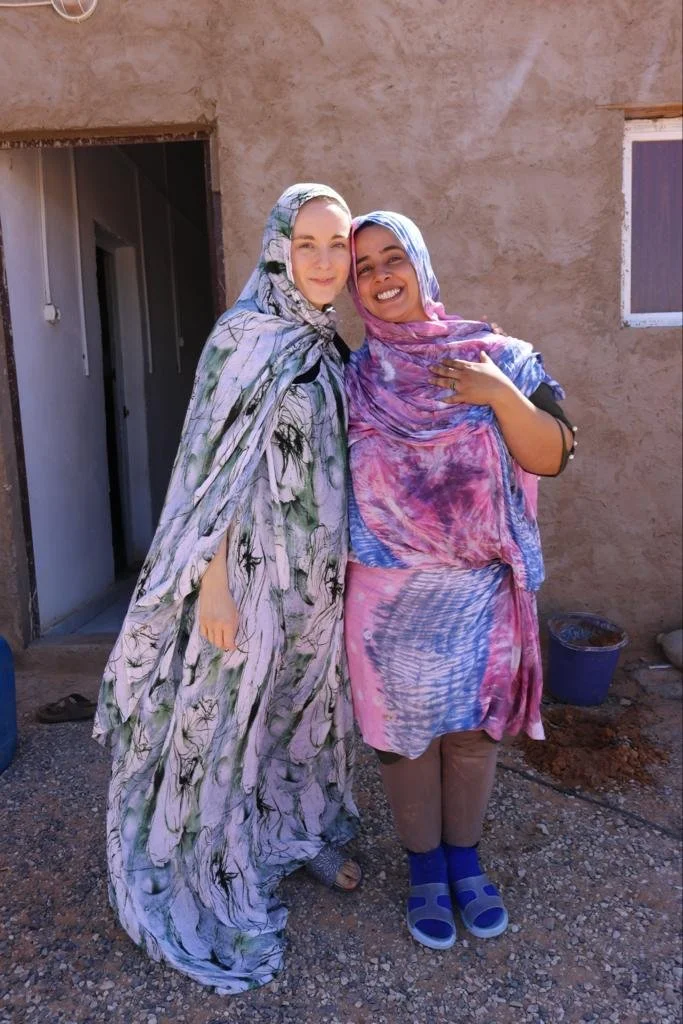
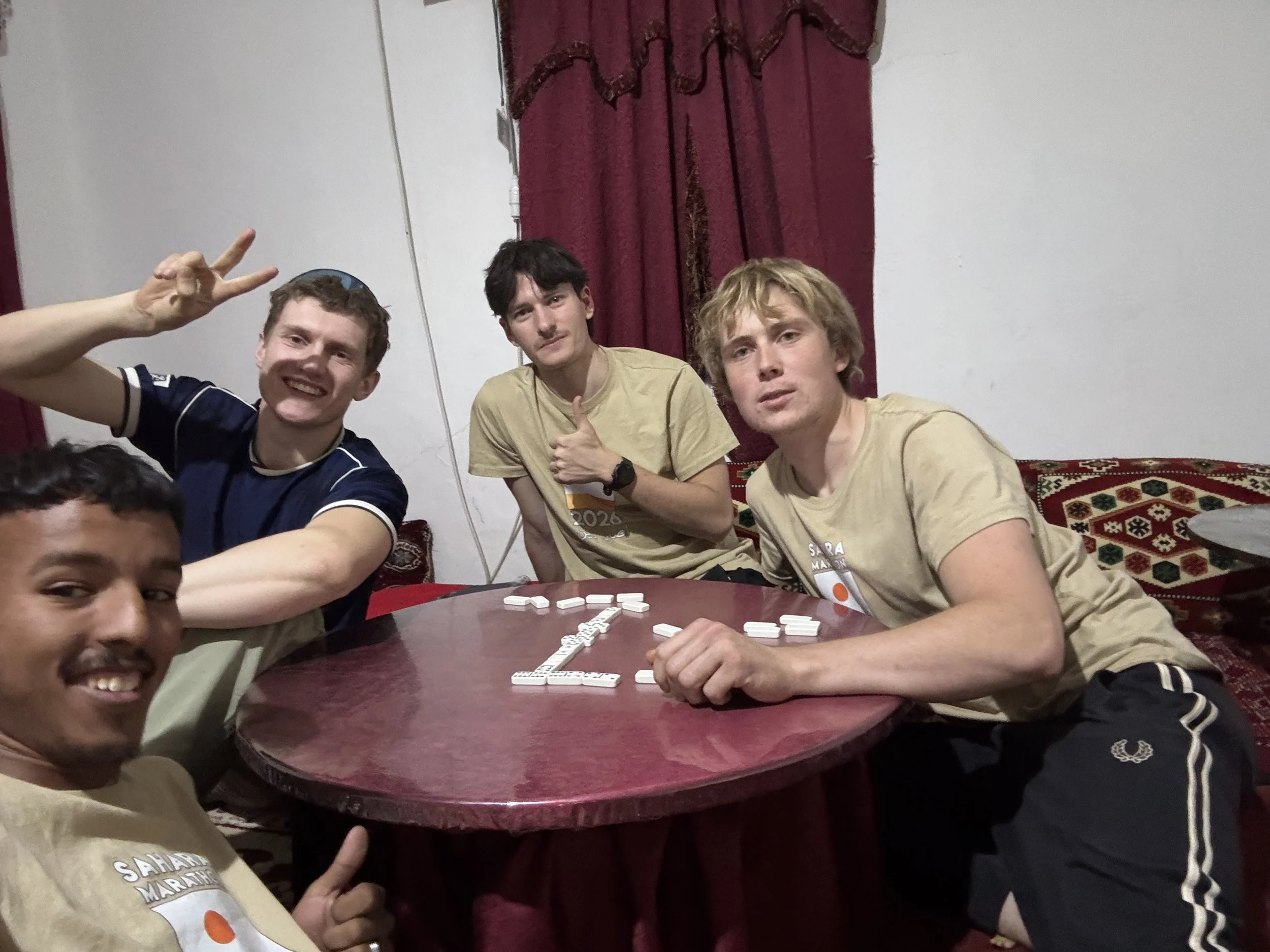
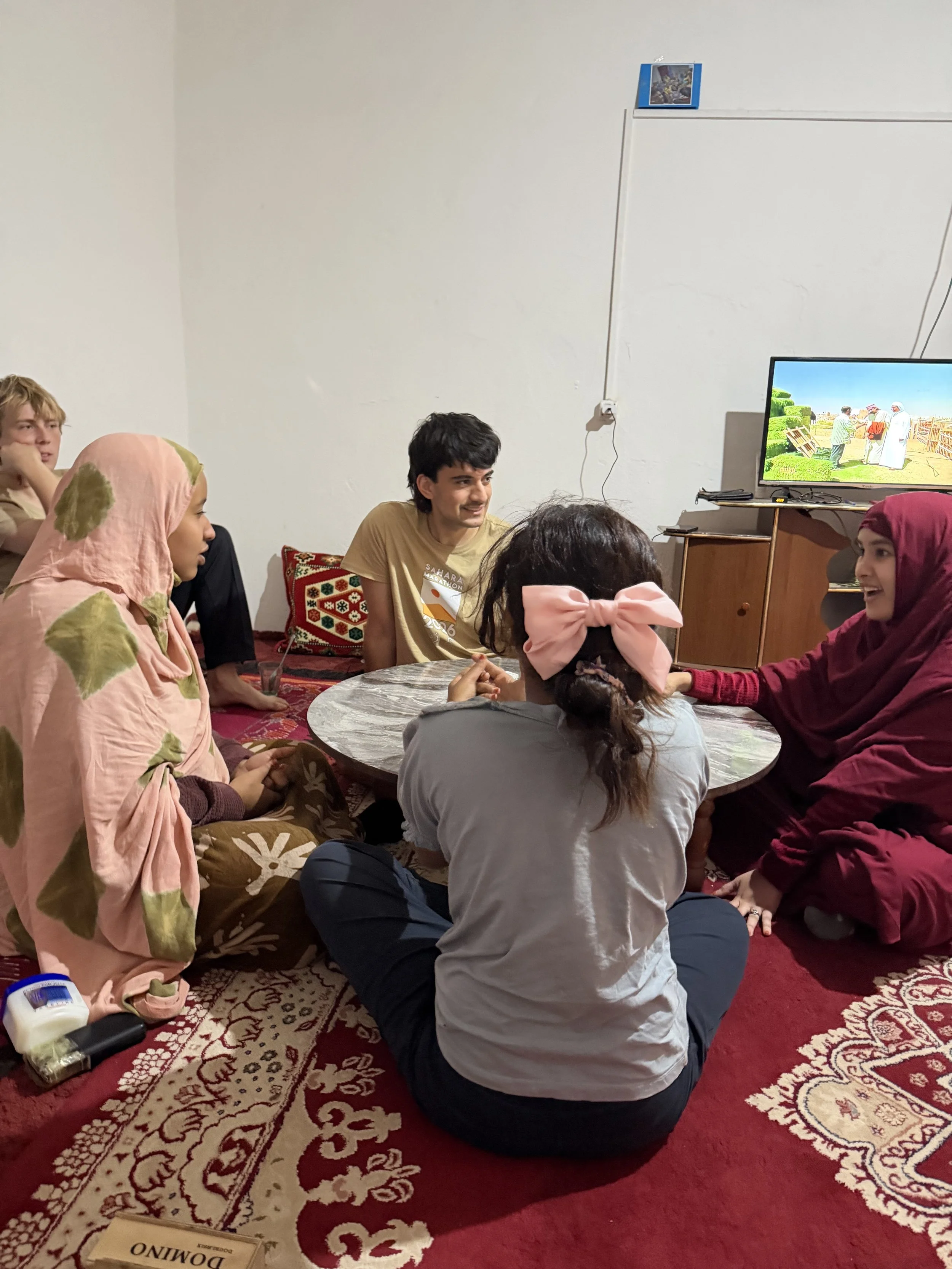
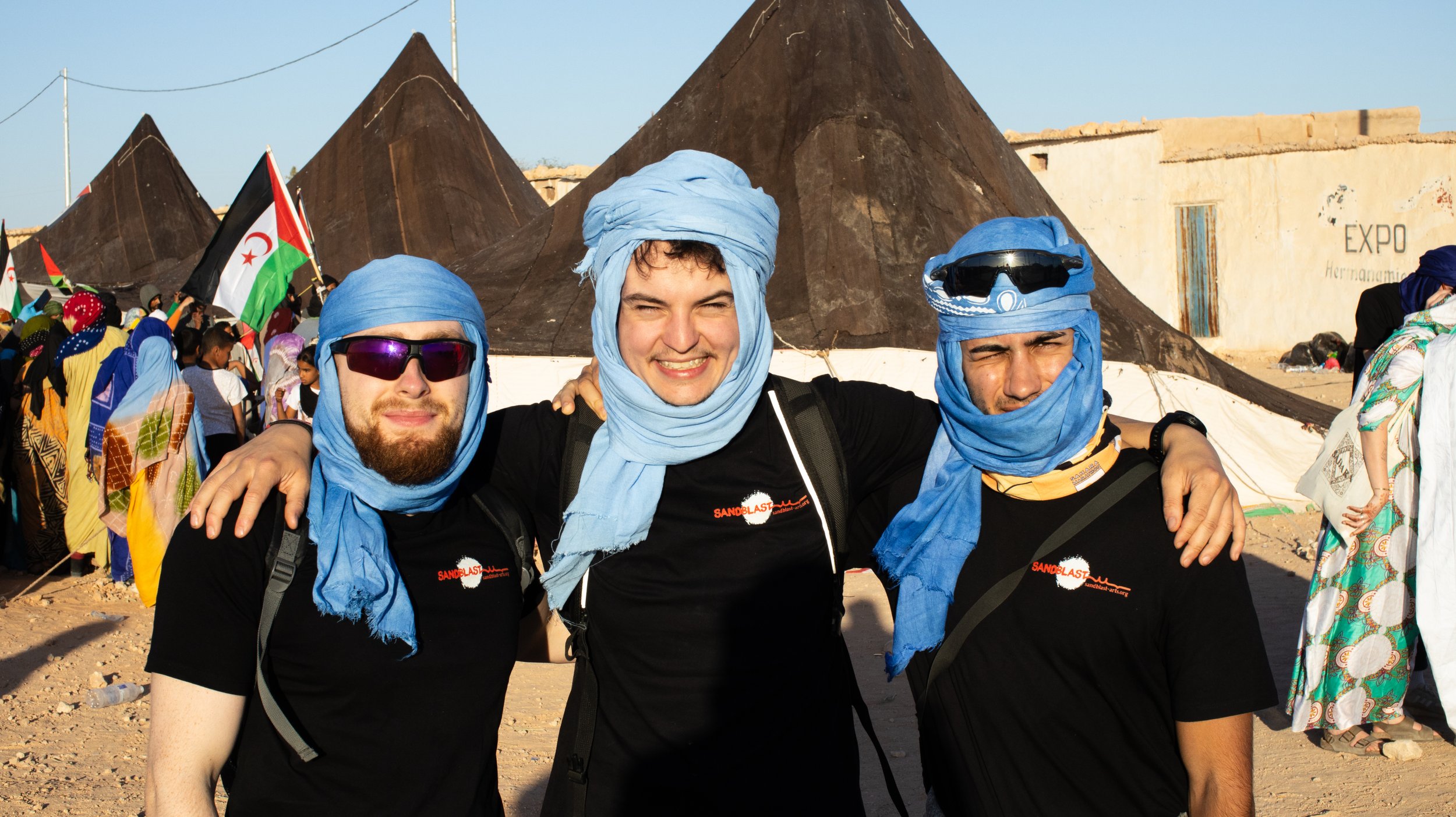
Volunteers, Sandblast Staff, and a Saharawi host family all together in local styles
Whether you’re volunteering as a teacher trainer, leading a creative workshop, or joining us to run the Sahara Marathon, working with Sandblast on the ground offers a unique opportunity: a homestay with a Saharawi host family.
It can be difficult to know what to pack for any trip, especially for a long stay in the desert! To help paint a picture of what to pack, what the weather will be, and the guidelines for modesty in a Muslim community, we created this Part 2 of our Homestay Series.
In case you missed it, check out Part 1: Inside the Tents of Saharawi Homestay
The Climate: Desert Days and Nights
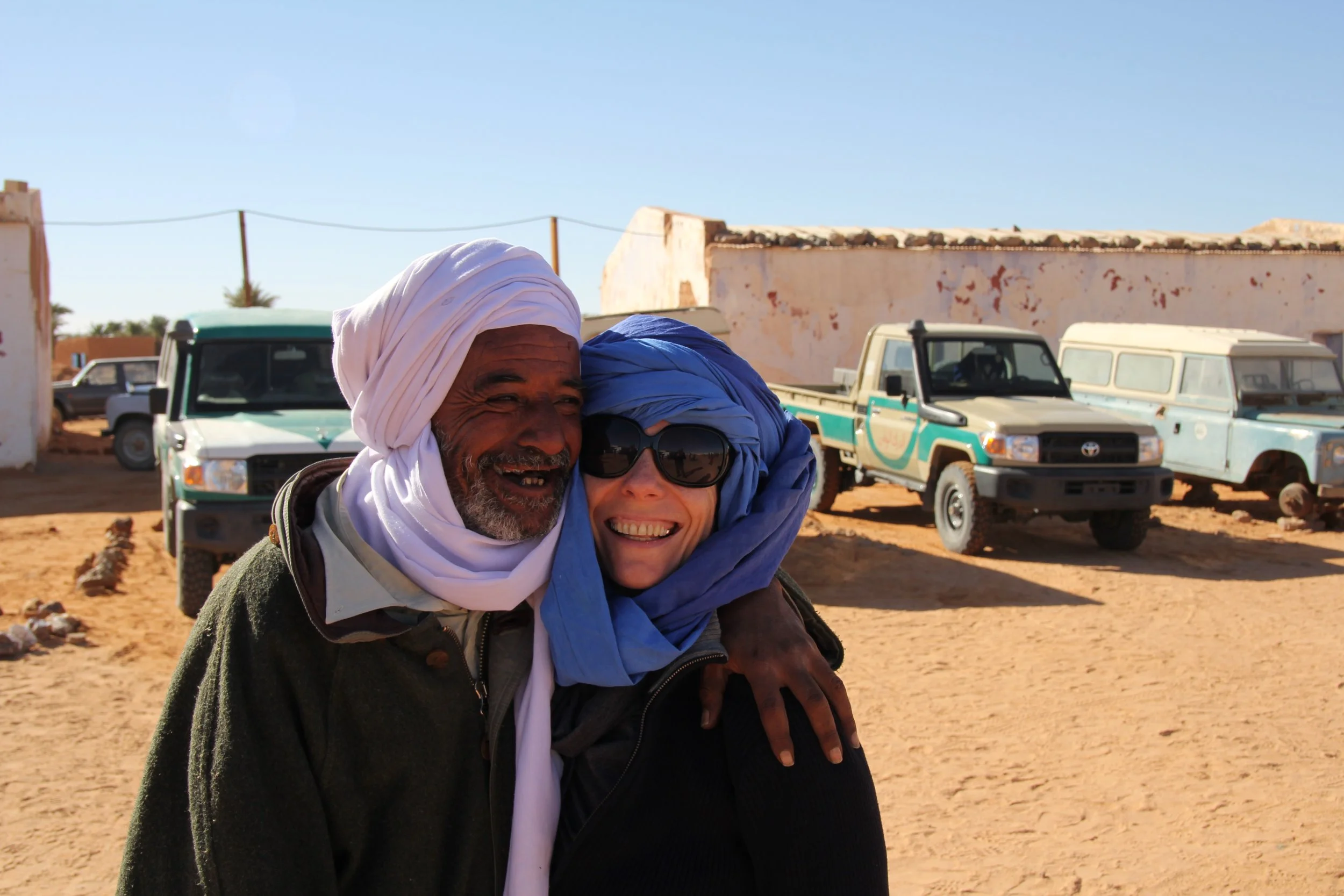
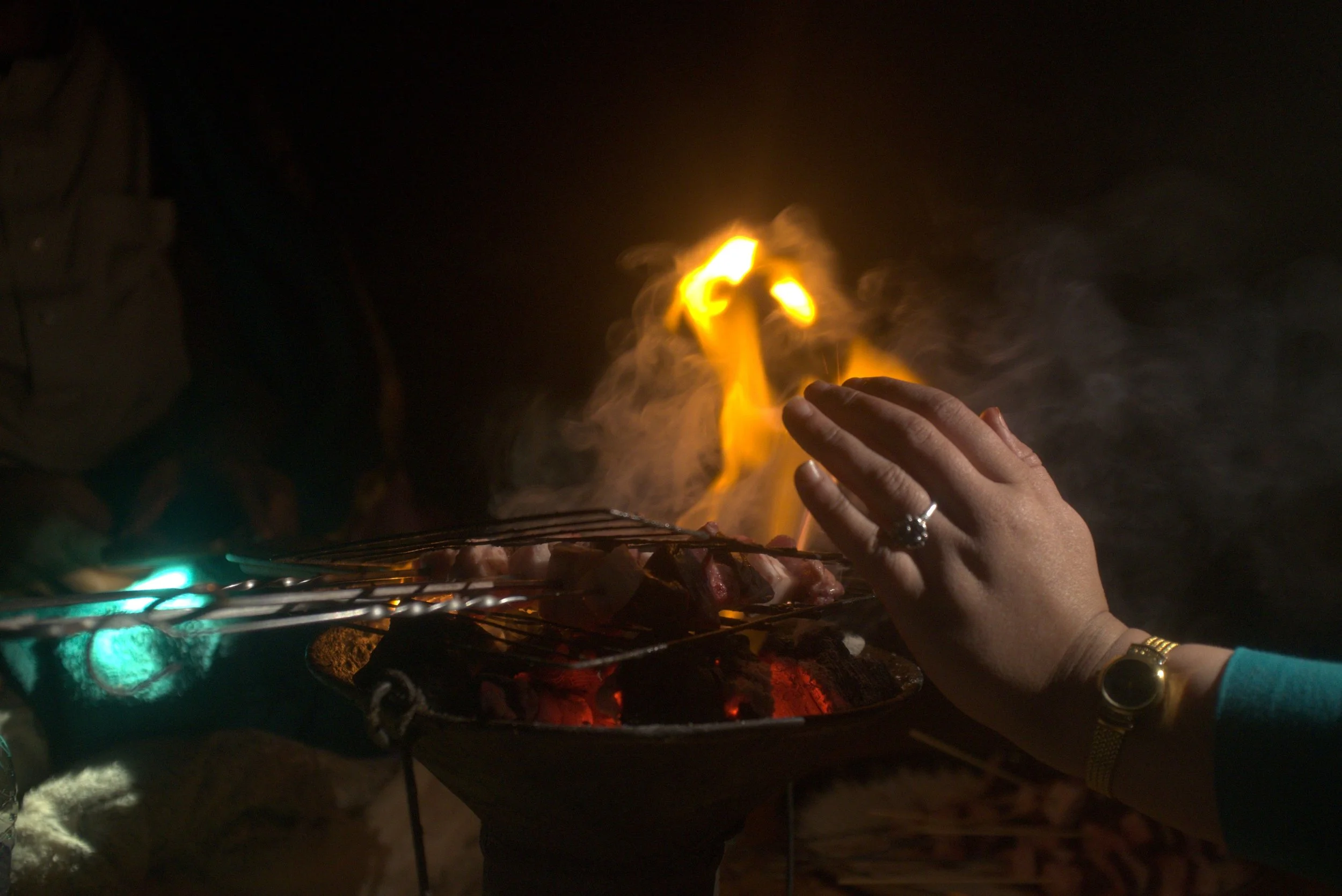
Many people have concerns about the environment itself, and truthfully, the experience isn't always comfortable. The refugee camps are in the Hamada, one of the harshest desert environments in the world, with little to no vegetation. Temperatures in the camps can reach over 62 degrees Celsius in summer, freezing in the winter, and there are harsh sandstorms throughout the year.
Don’t worry! After years of traveling to and from the camps, we only schedule volunteers during the milder times of year. Your on-boarding process will keep you informed about what to pack for the season you’ll be staying with us. Keep reading to learn more about what to wear and what temps to expect during your stay.
What to Wear
If this is your first trip to a Muslim community, you might find that the Saharawis are more relaxed than you’d expect. Saharawis are understanding of the international and cultural differences of volunteers, though clothing expectations, for both men and women, still lean towards conservative choices.
These styles are shaped by the climate, not just social norms!
In a dry heat with no humidity, direct sun on your skin absorbs into your body and makes you hotter. Our Programmes Coordinator, Kerri Molloy, who’s spent a collective 9 months in the camps, shares “Something that people don't expect is it's easier and more comfortable than western clothes in the camp setting, because it is very breathable. It's very comfortable. It keeps the sun off of you. The more you cover your skin, the cooler you will feel.”
The best way to know what to wear is to be sure of covering shoulders and knees, and lean towards loose fitting whenever possible.
For men: Plan to wear long pants, as you won't see many men in the camps wearing shorts, though T-shirts are fine, and you'll blend in comfortably.
For women: Light, breezy skirts, linen or cotton trousers, and cargo pants are all solid choices. Leggings are a great base-layer for colder months, and should be paired with a sarong around the waist for additional modesty.
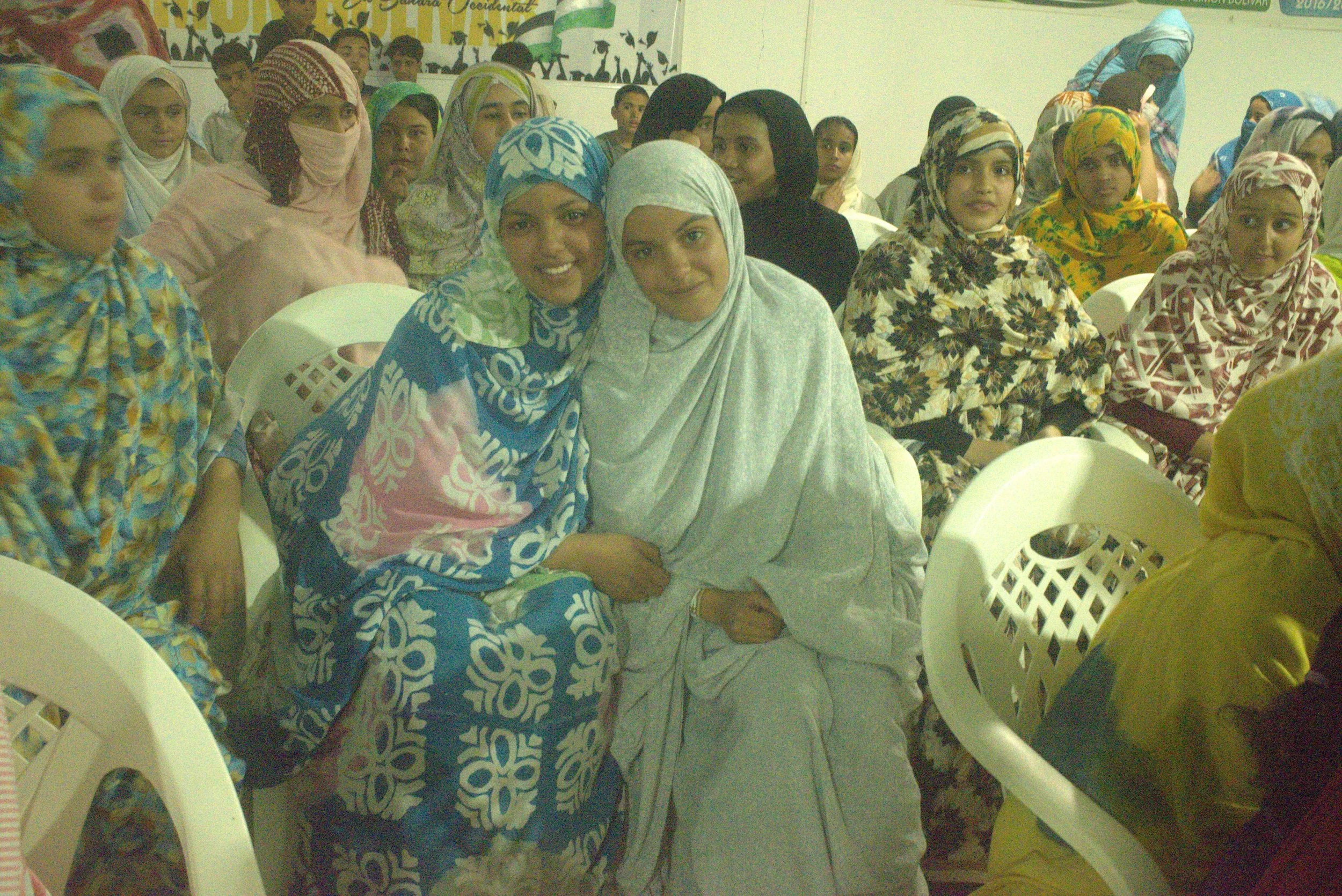
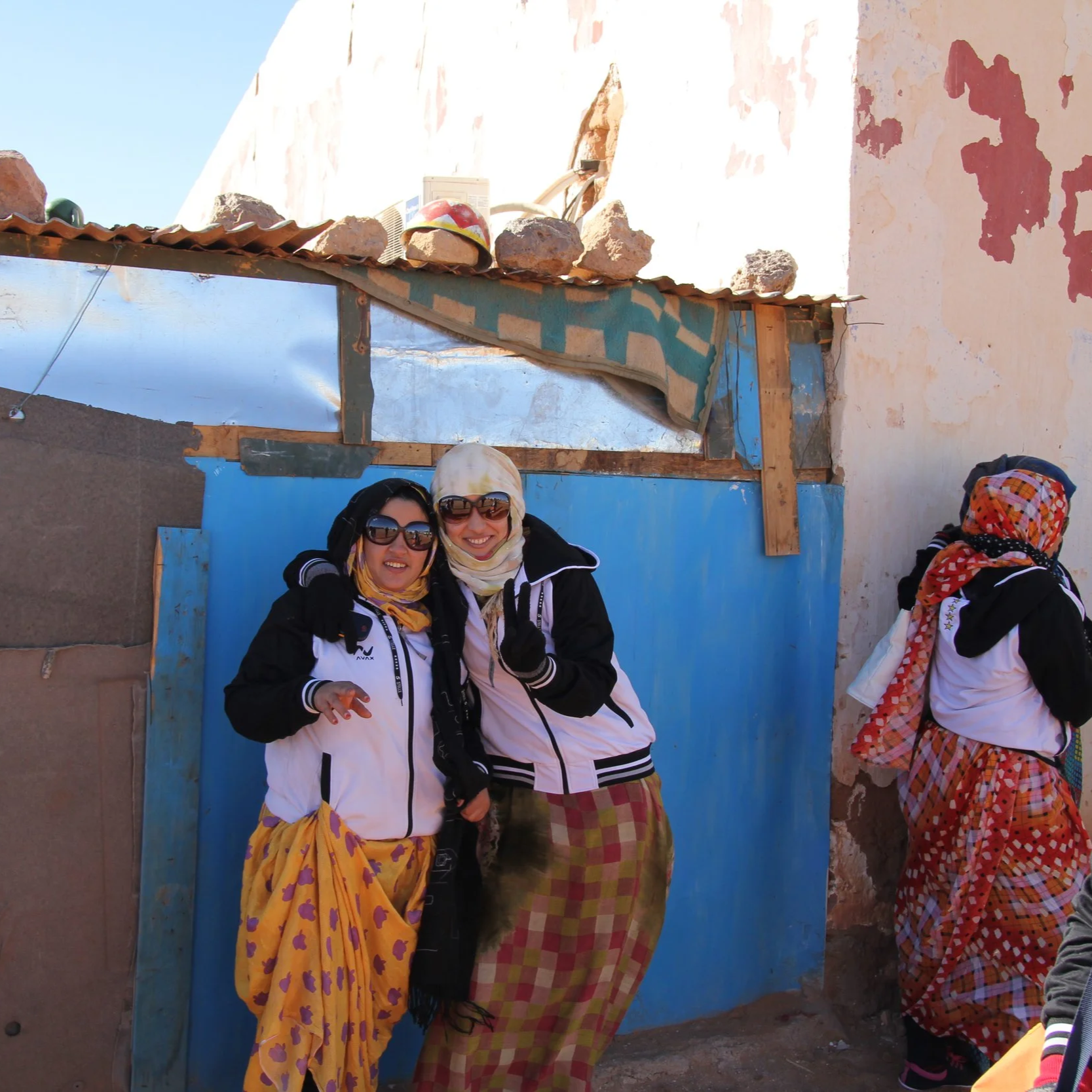
Here, you can see the popularity of melfas, and the personality that each design boasts!
Head Coverings: Melhfa
One thing that surprises many female volunteers is that covering your head is not as strictly expected as you might imagine.
"I didn't cover my head plenty of times," shares Kerri, "and I didn't really feel like I was ever treated differently by the adults. Children might sometimes make comments, but out of curiosity rather than judgment.”
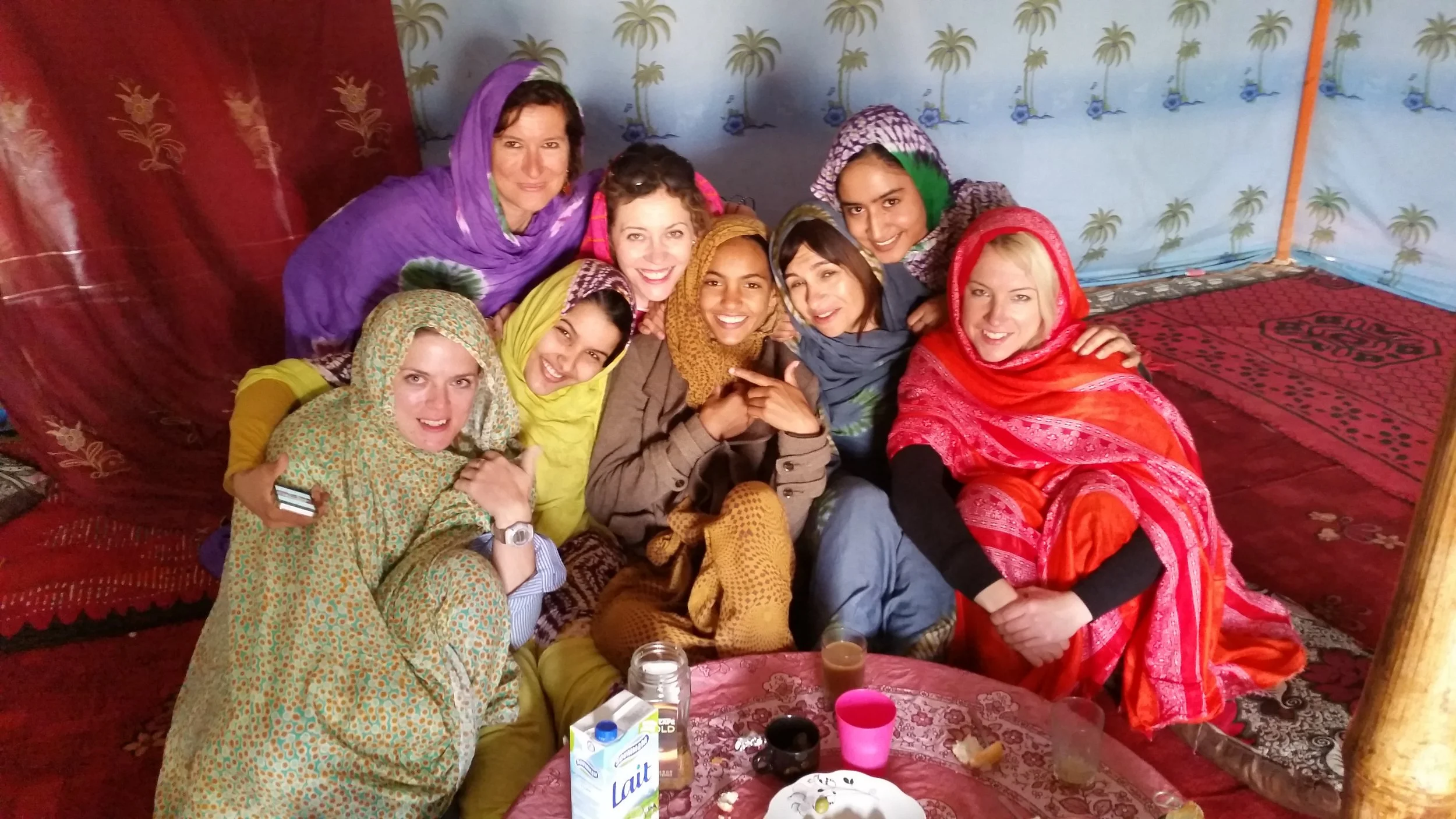
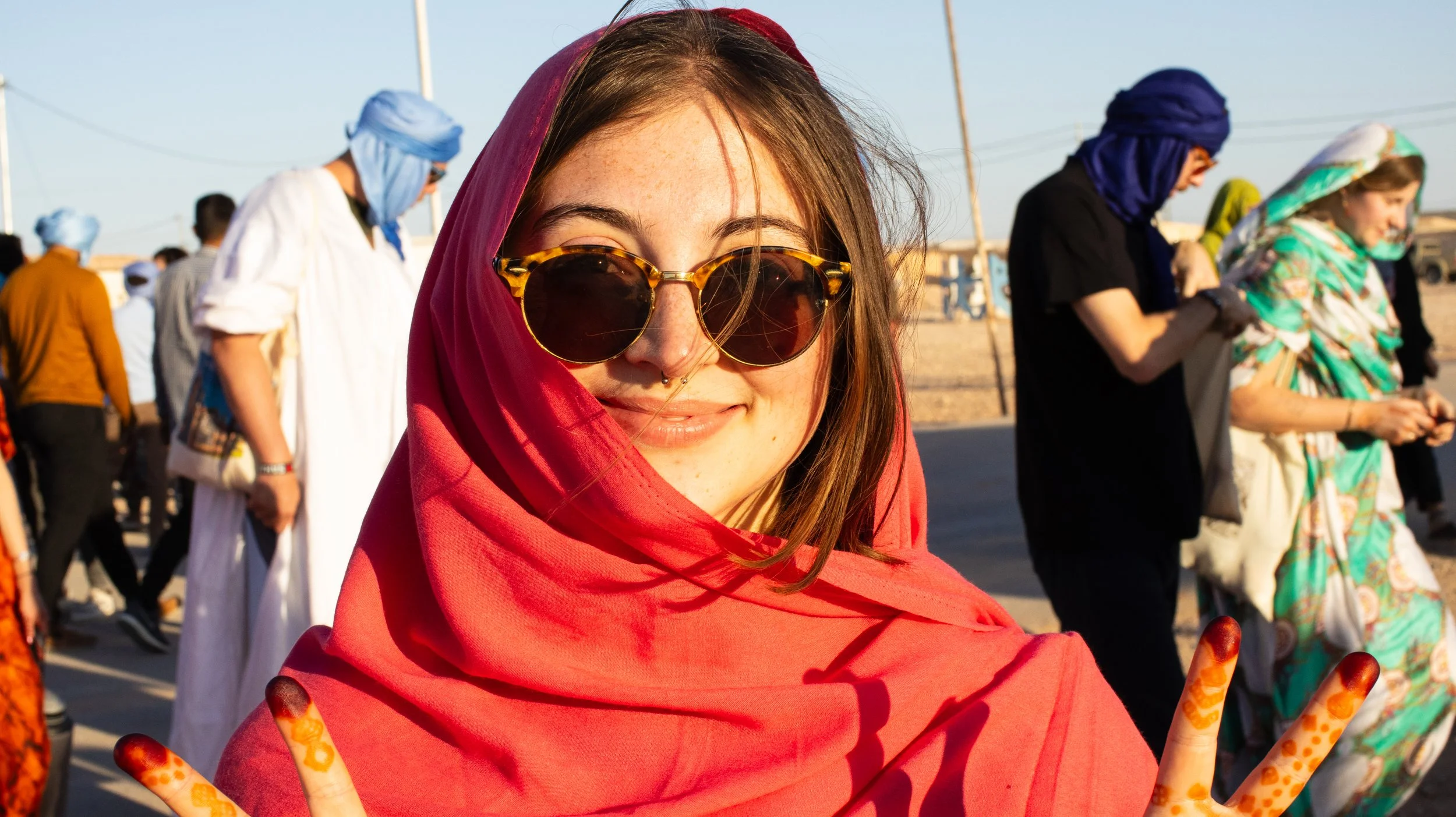
Here are some of our volunteers styling their own melfas during their homestay!
Many volunteers find that wearing the traditional Saharawi headscarf, the melhfa, becomes one of the highlights of their experience. There is no pressure to wear the melhfa, but there is an invitation to partake in the culture, and Saharawis enjoy seeing their culture celebrated and enjoyed by guests.
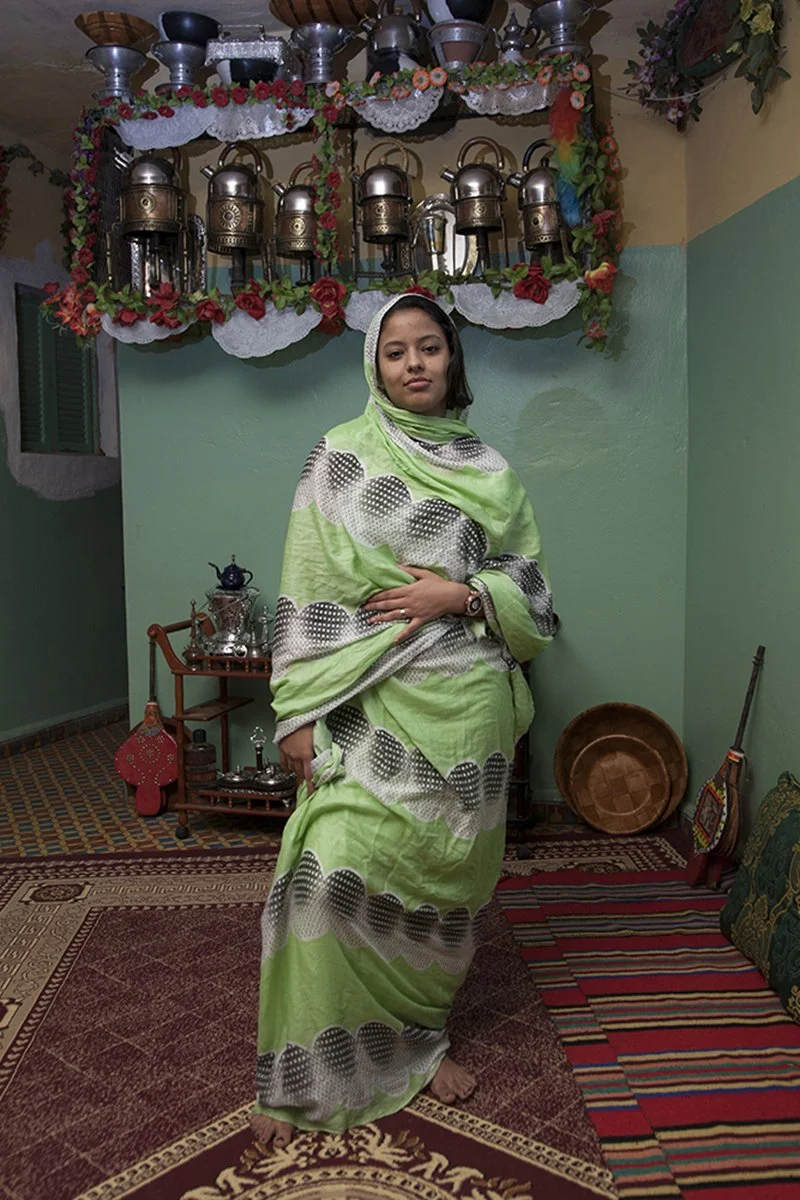
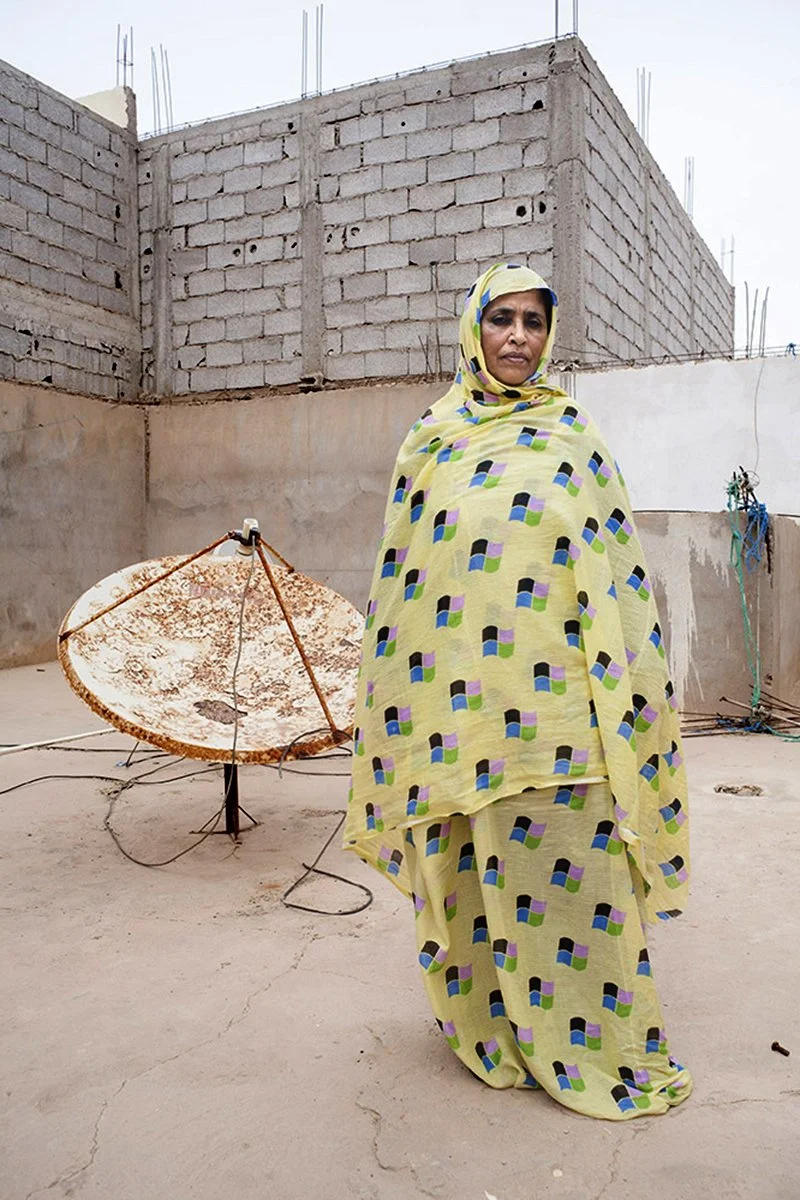
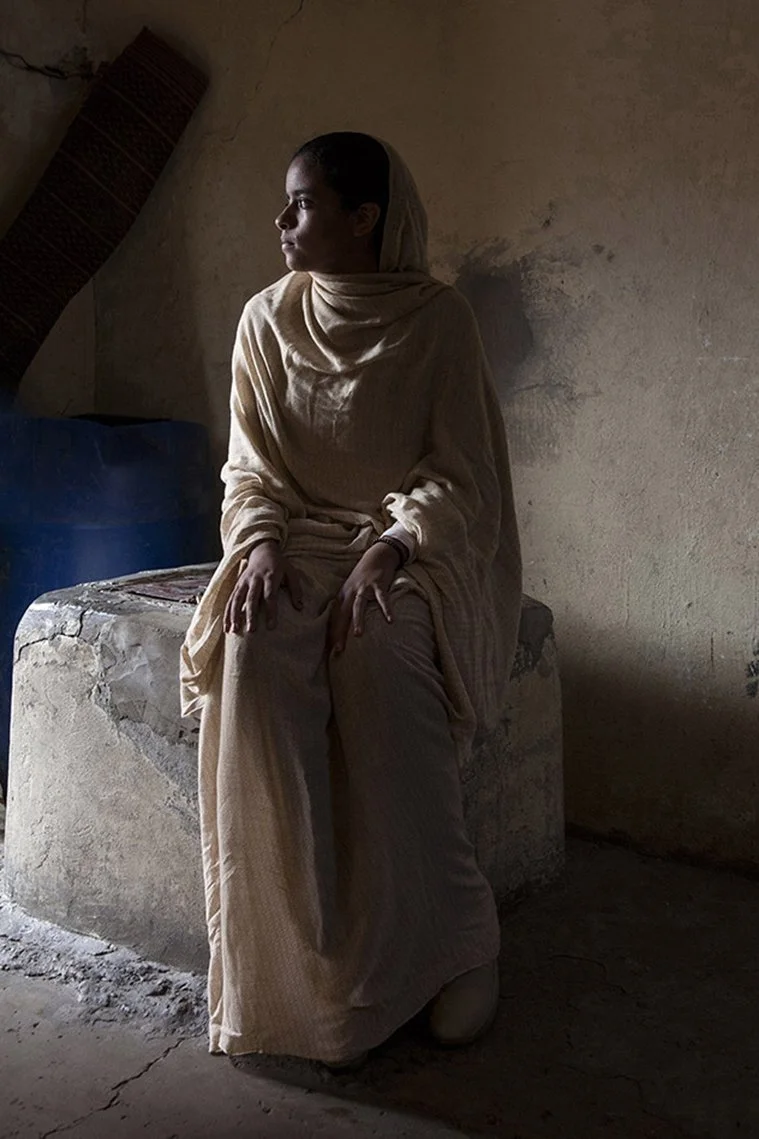
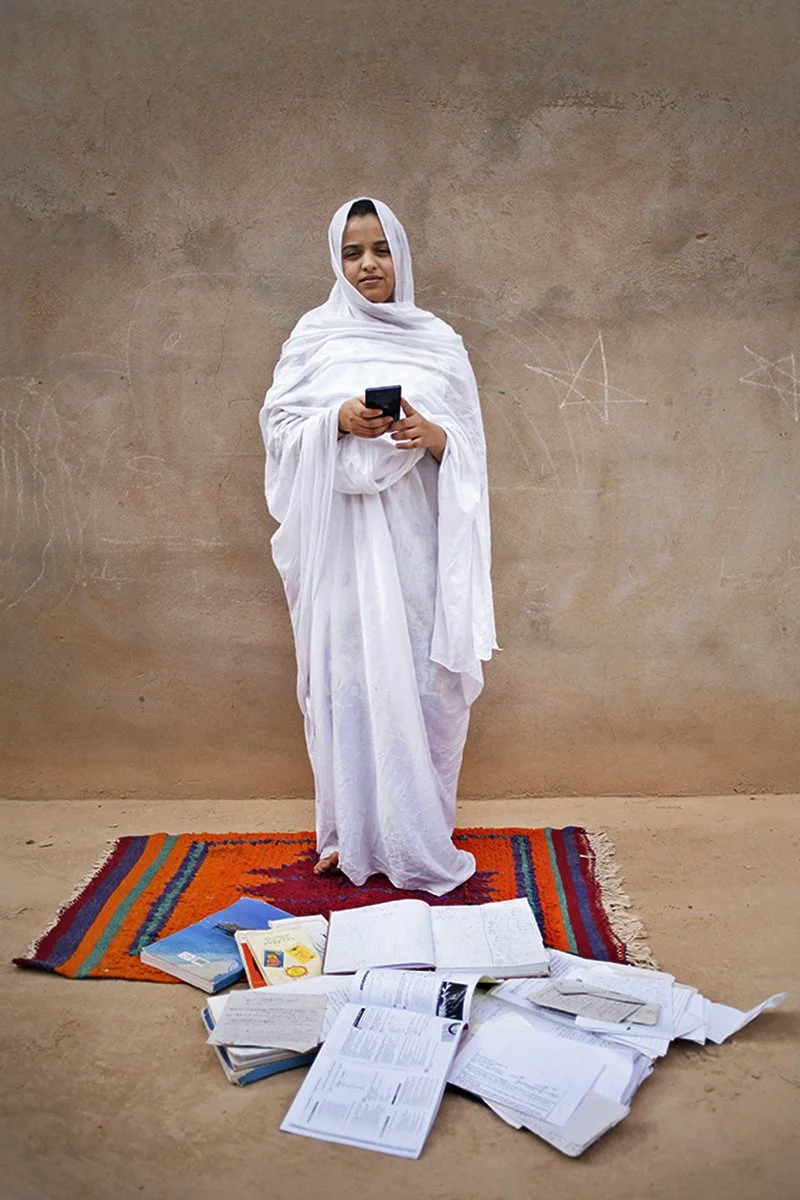
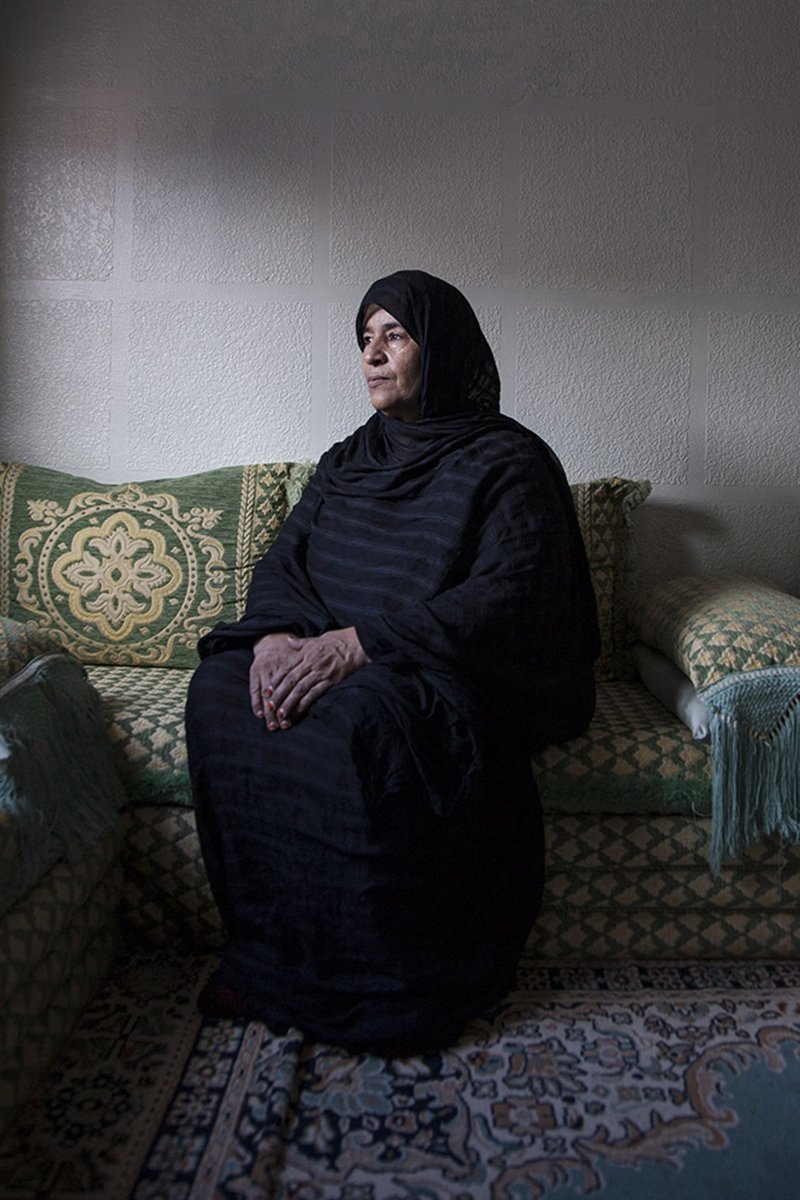
Melfas are beautiful garments, with wrapping designs and blending colors, they are a singular piece that wraps the body, and are markedly different from an abaya or hijab. They move beautifully in the desert wind, and each one is unique, with its own personality and palette. Although, you can wear any scarf of your own too, and your host mom will be glad to share all the different ways you can wrap and style it.
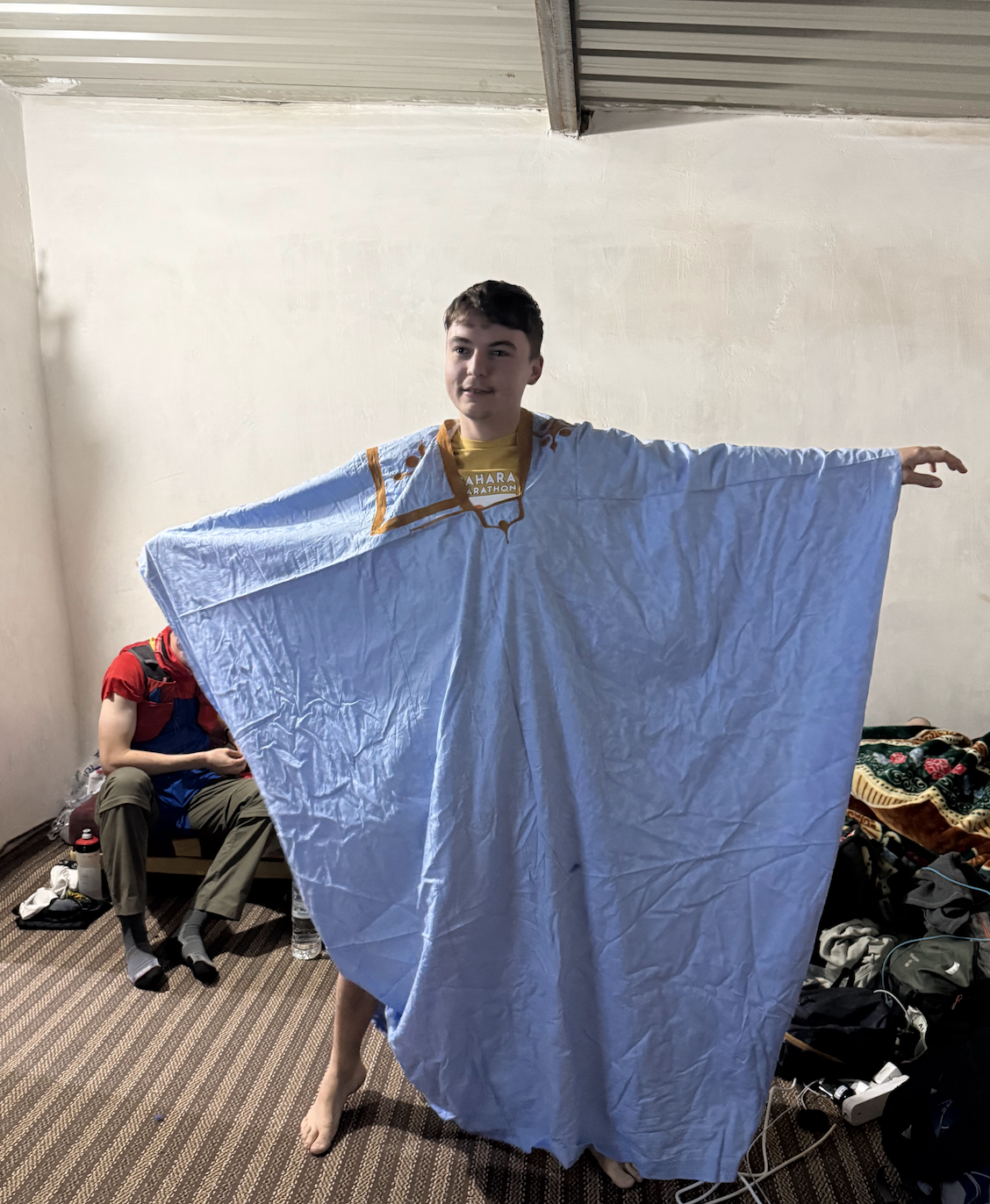
Have fun! Saharawi fashions are for everyone.
For men interested in exploring cultural styles, there are options too! With opportunities to buy daraas, a Saharawi men’s garment, there are lots of options to explore. In the winter, women and men can both buy jelabias, which are comfortable, thick jackets that extend to the knee or ankle, that many people wear there to keep warm in the wind.
"The lucky thing we have as guests in the camps, is that we can try on different identities while traveling. Our identity when we go back home will always be there to take up again. So I see it as a benefit—and as a privilege—to partake in the expectations and standards." Shared Kerri.
She encourages future volunteers to not see it as sacrificing your values, “in a way you're not, you have the freedom and the privilege to live in a country where you can practice those the majority of your time.”
Fashion is one of the best ways to connect cross culturally. You’re able to explore the ancestral crafts that go into garment making, while freely expressing curiosity about the personal style choices of those around you. You can connect with vendors, discover new styles, and learn about daily life in a new way.
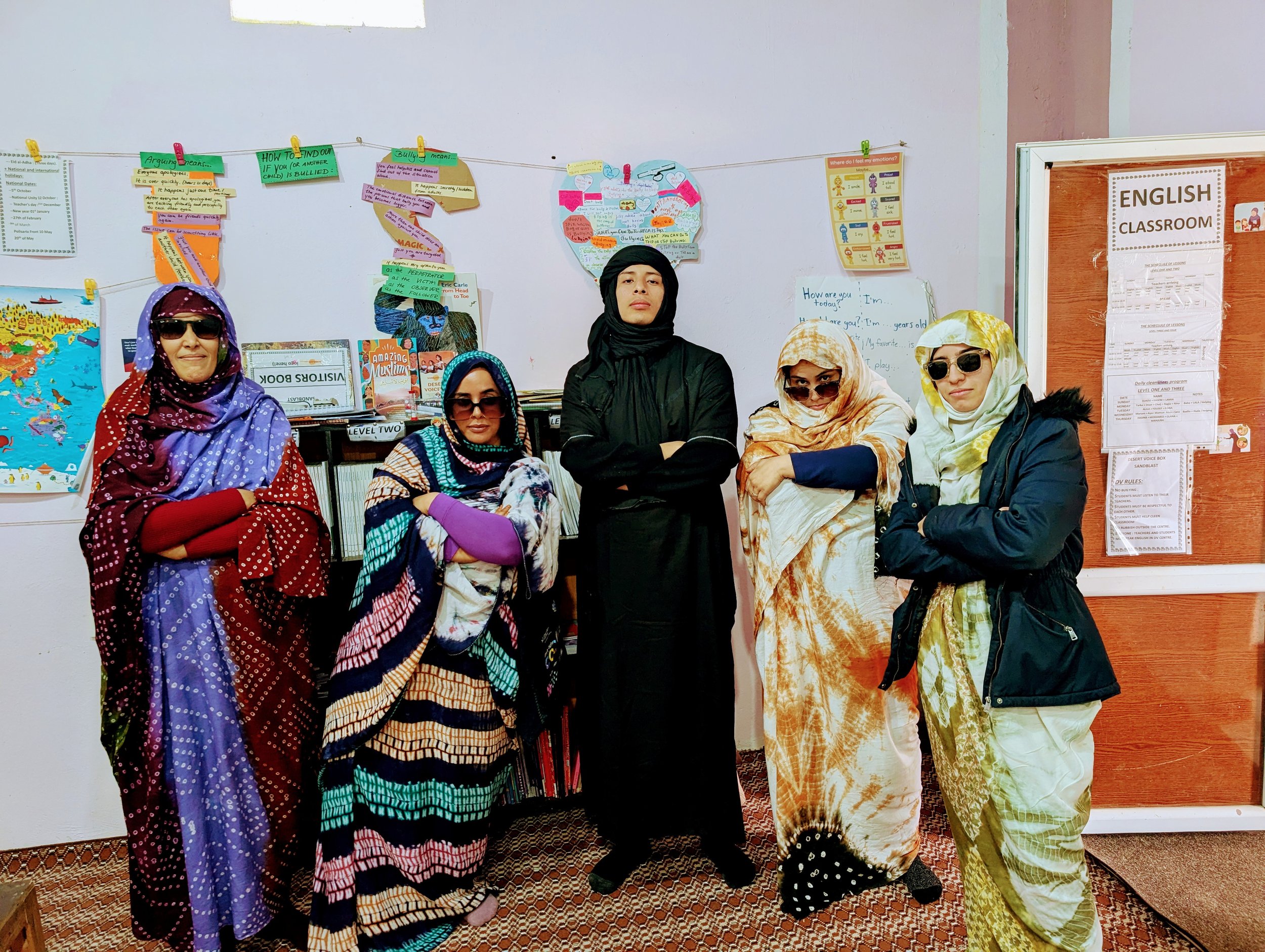
Our volunteer Raymundo, looking very stylish alongside Desert Voicebox staff
Wearing a melfa or daraa offers a shift in perspective, and grants an opportunity to see the world through a different lens, while helping you feel more comfortable and connected to the greater community. When you dress like your hosts, you show that you value their culture, and are interested in going beyond just understanding, but truly embracing and participating in their way of life. You might even discover that the local style becomes your favourite part of the experience.
Packing Suggestions
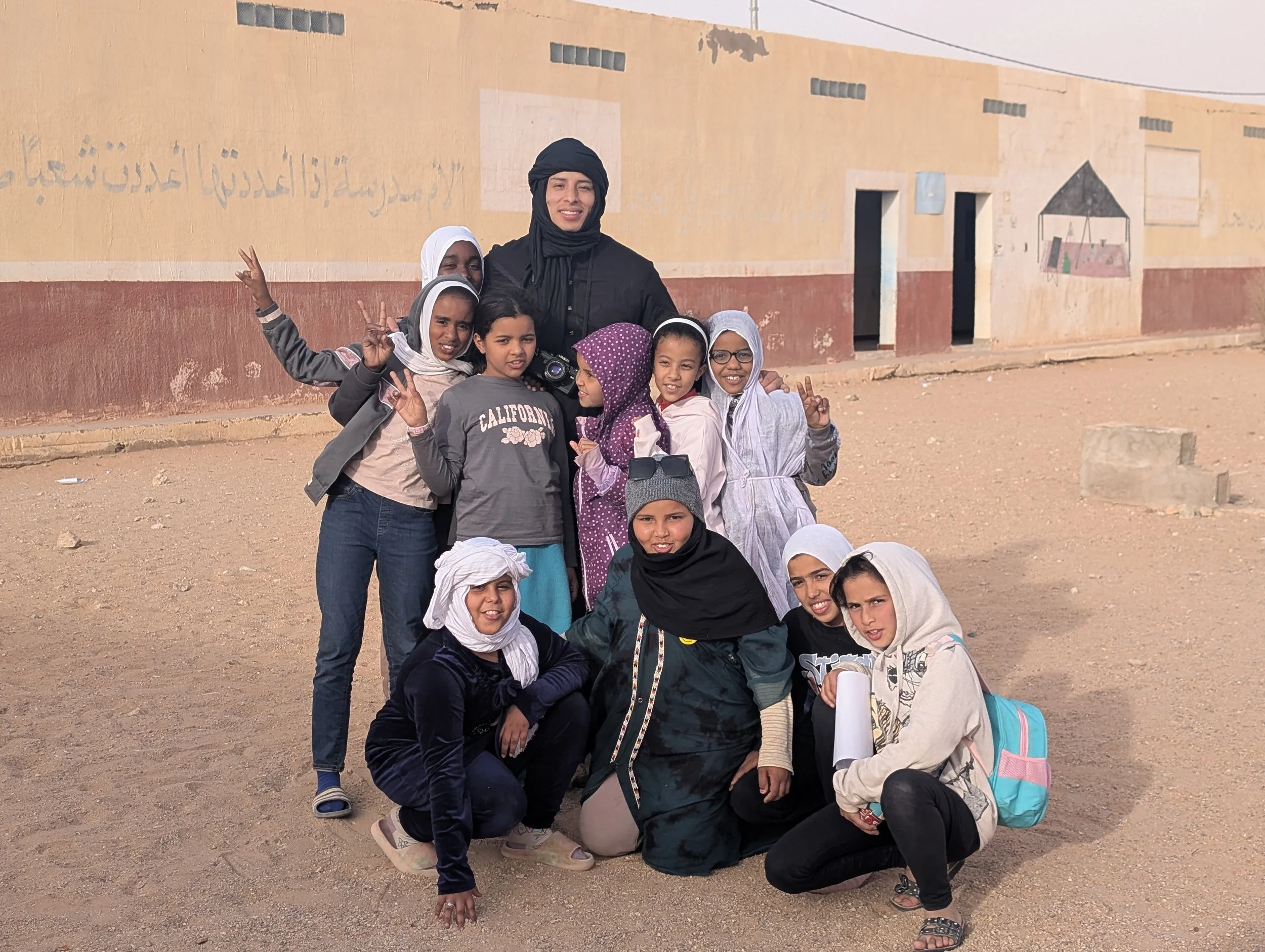
There’s no pressure to don Saharawi attire if that’s not your style. Western clothing, and what’s already in your wardrobe, are welcome too. It is very common for Saharawis to wear a mix of western style clothing with their more traditional garments. You’ll see tons of combinations in the camps, like hoodies or jackets layered over melfas, paired with bold sunglasses, or men wearing classic jeans and a graphic tee.
While you’re packing, we always encourage questions. Our team is happy to help any pre-flight panic you might have. The suggestions below aren’t a complete list, and you know your closet best! The most important thing to remember is layers! Plain basics are always a trustworthy choice.
General Packing Tips:
Loose cotton and linen are your best materials
Elastic waistbands are a blessing for comfort and functionality
Don't forget a scarf or shawl! For sun protection, modesty, and warmth.
Comfortable shoes are a must for the sandy, uneven paths
A hat, sunglasses, and sunscreen are essential year-round
March to Mid-November: the sun is as strong as you’d imagine
T-shirts, loose tops, and layers
Light, breathable fabrics are your best friend
A light pullover for cooler evenings is still necessary! (Yes, even in the desert!)
Mid-November to Late February: be prepared for the chill
Bring sweaters: lots of them! Crewnecks and comfortable pullovers are best
A warm winter jacket (a simple, puffy jacket is highly recommended)
Base layers, like leggings and camisoles are essential for keeping in the heat
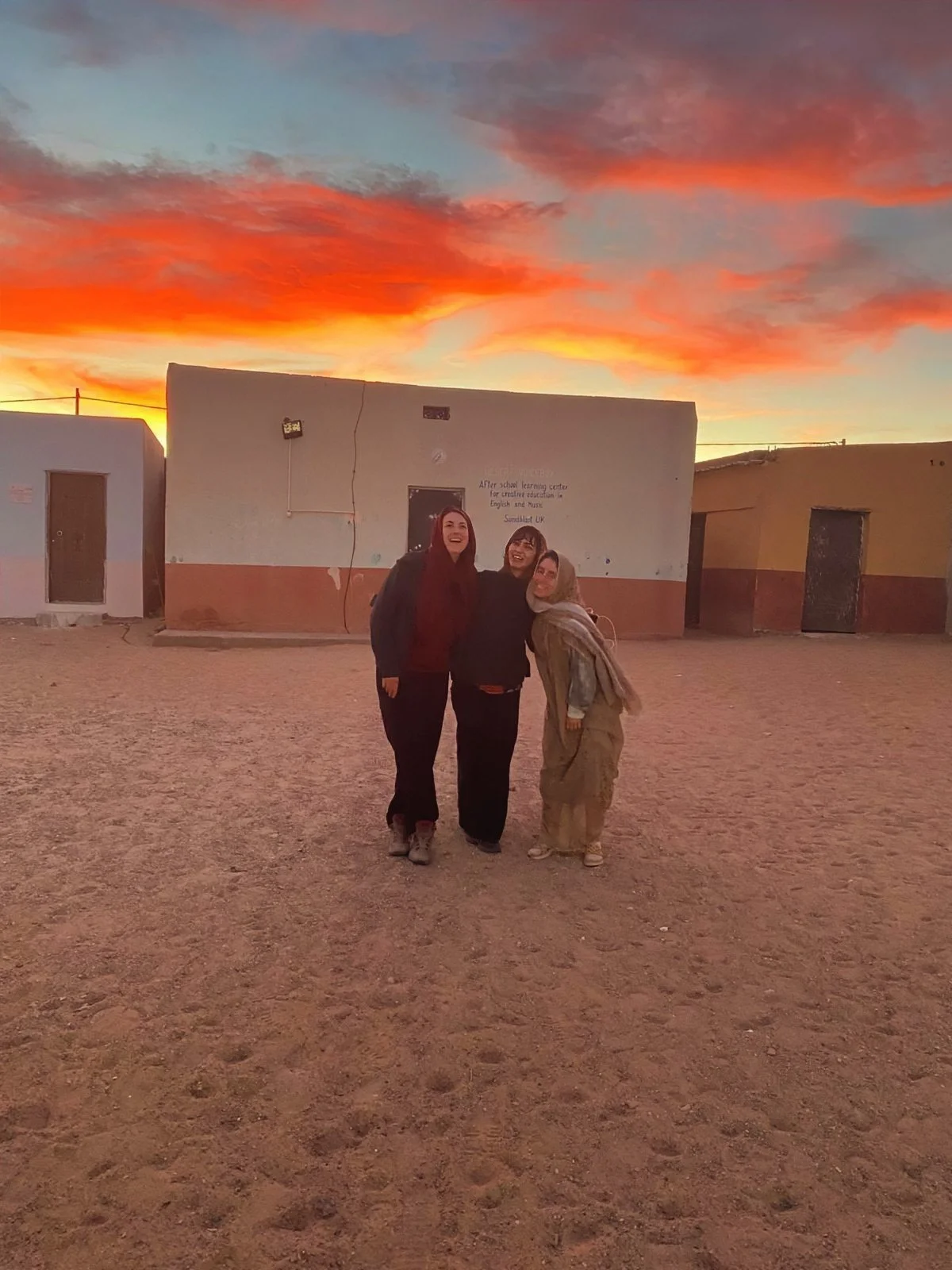
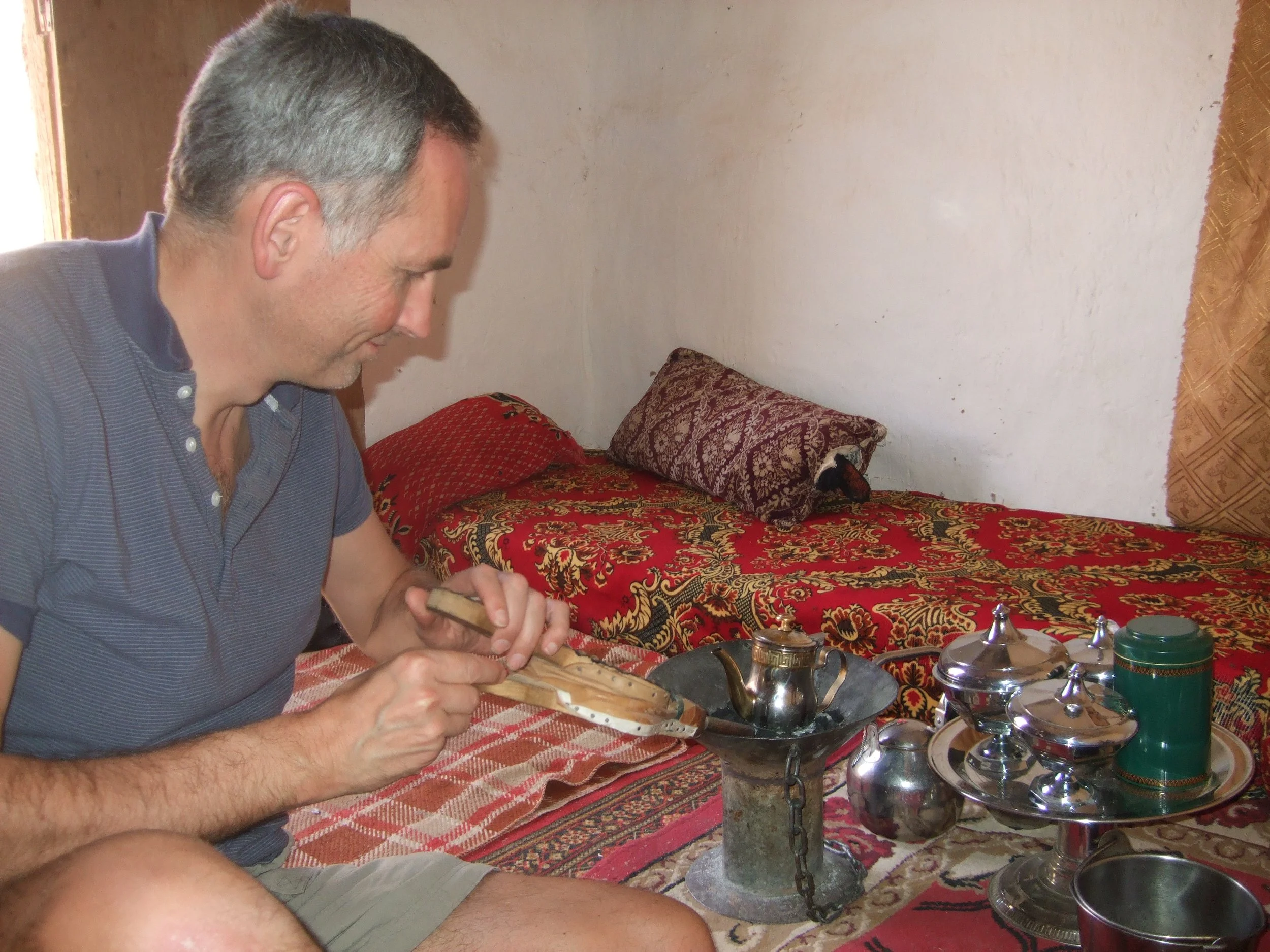
The Saharawi homestay experience isn't for everyone.
Traveling to the camps is a long and arduous journey, and the stay requires a sacrifice of simple comforts many of us take for granted. Your stay will require flexibility, understanding, and a willingness to sit with discomfort.
For the right people, they'll find something rare: a community that welcomes you as family, shares their stories freely, and invites you to be part of their journey towards freedom.
