
One of the greatest rewards of volunteering with Sandblast is the opportunity to join the Saharawi community on the ground in Boujdour camp.
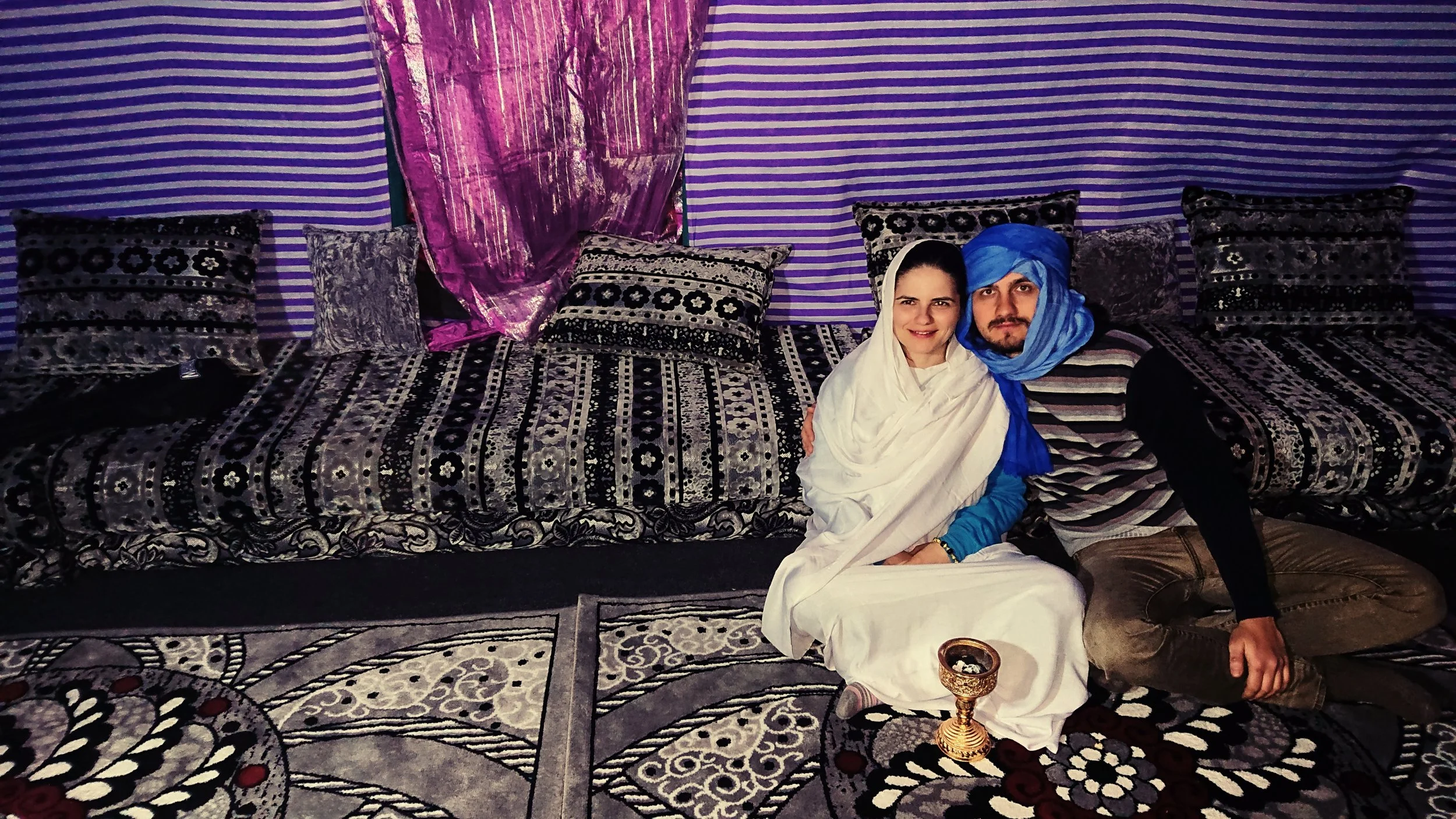
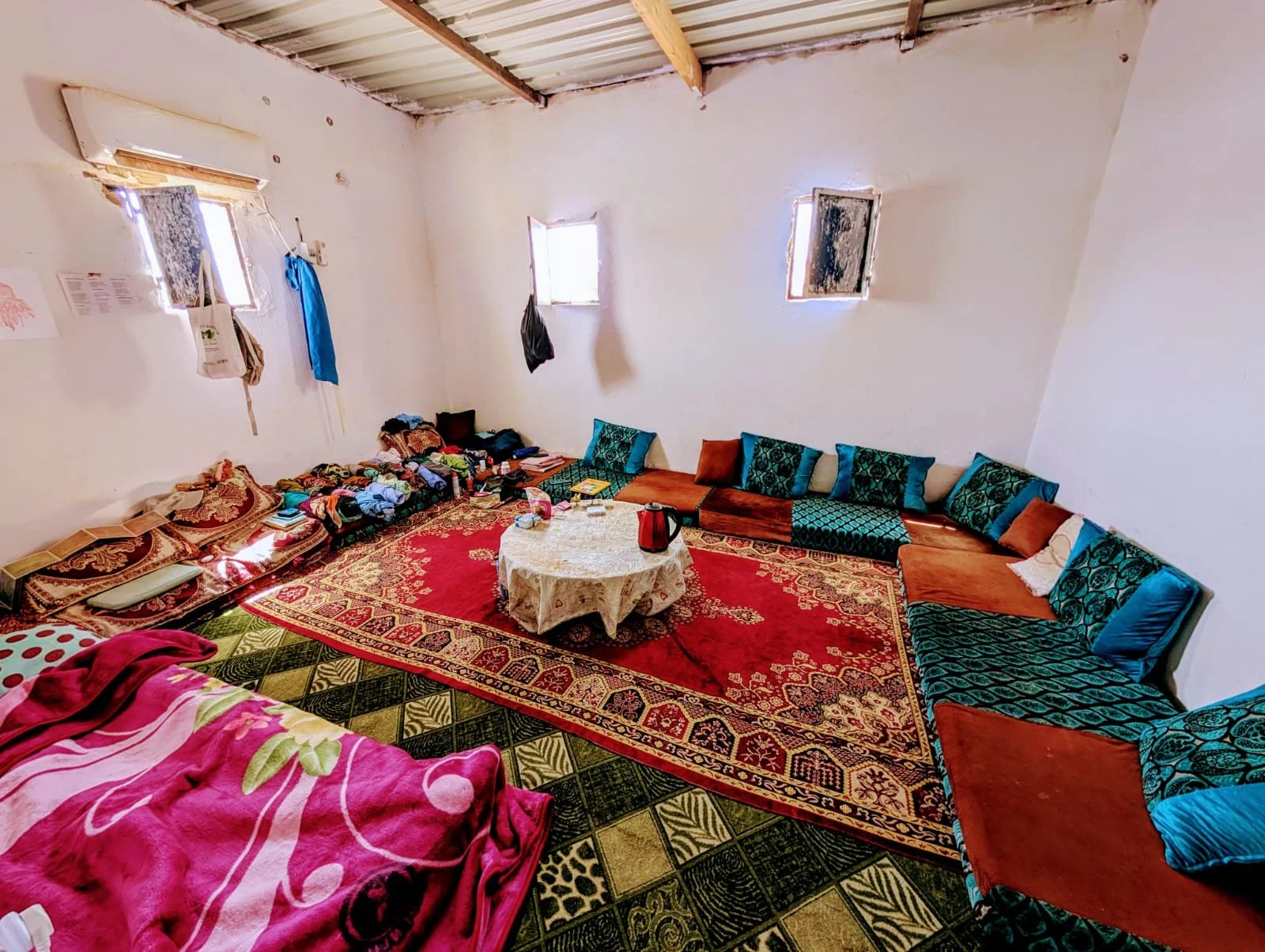
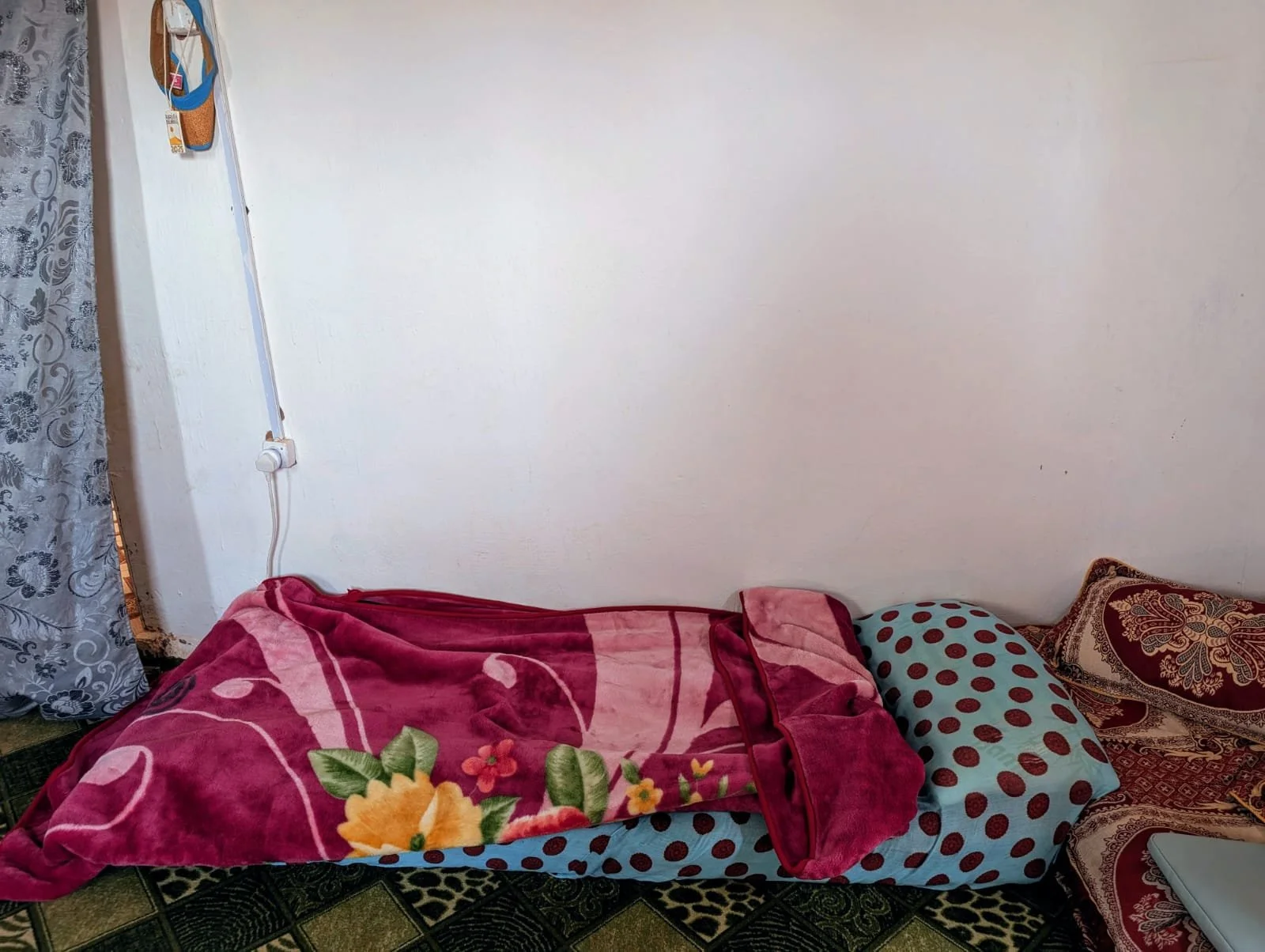
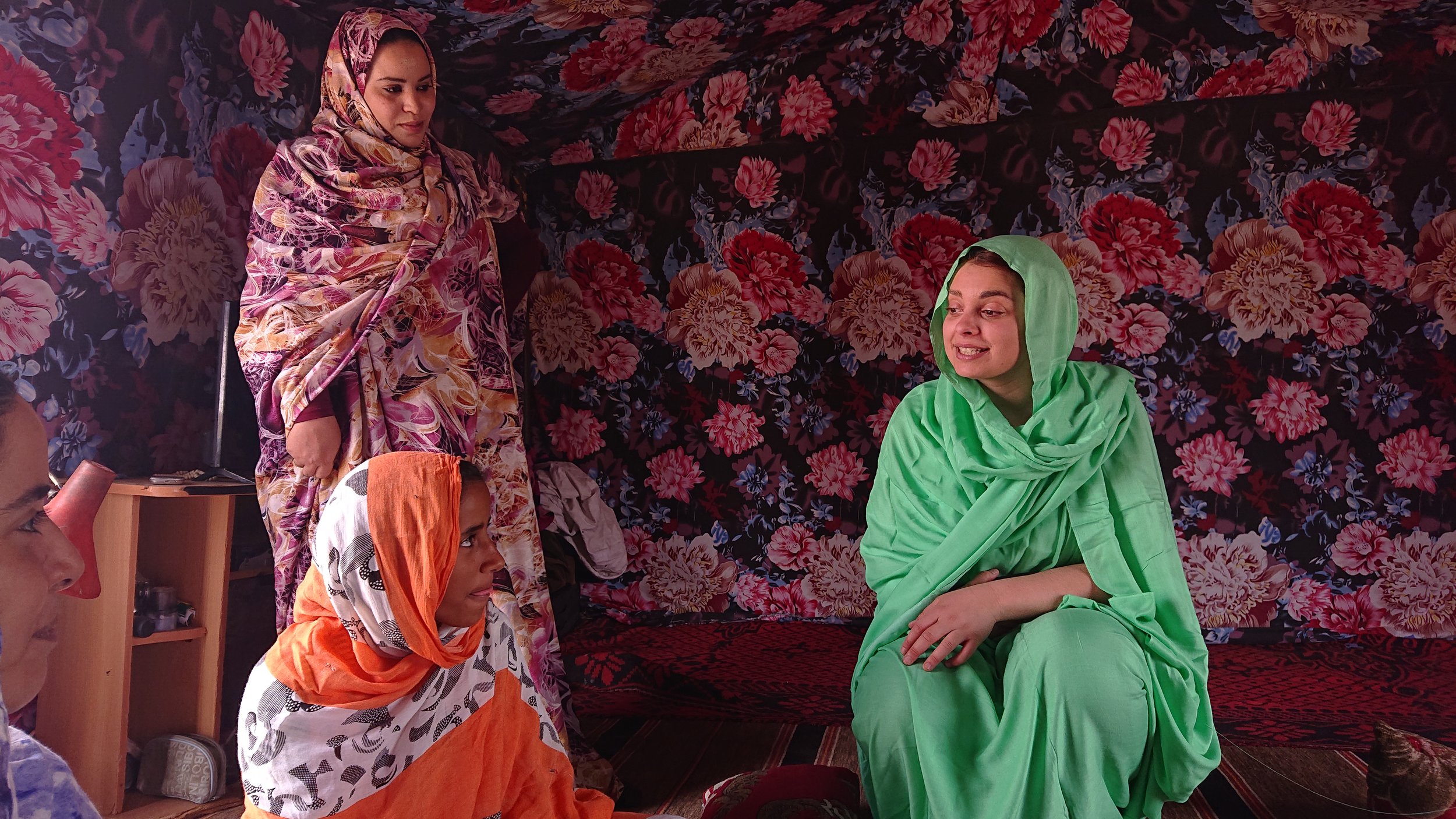
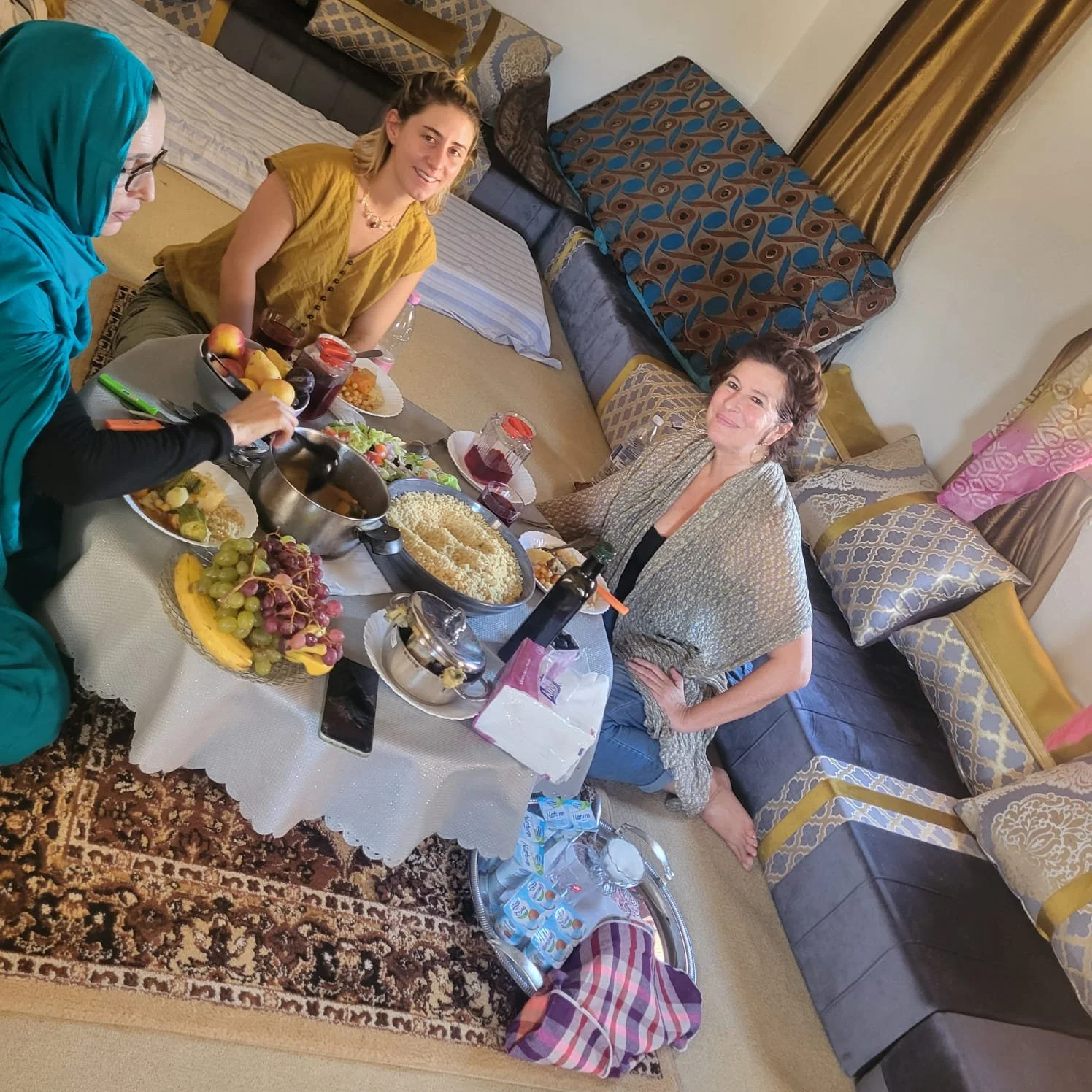
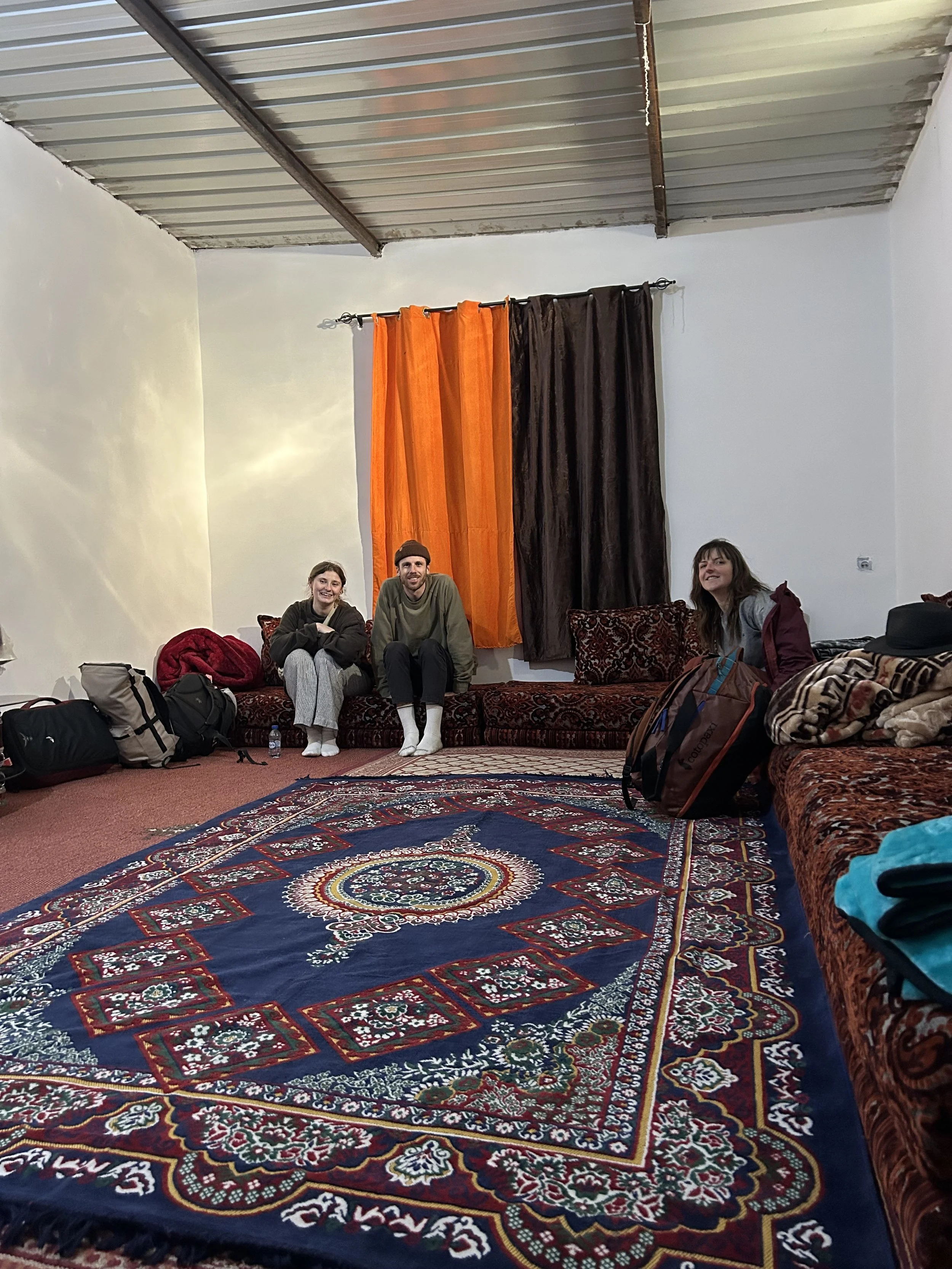
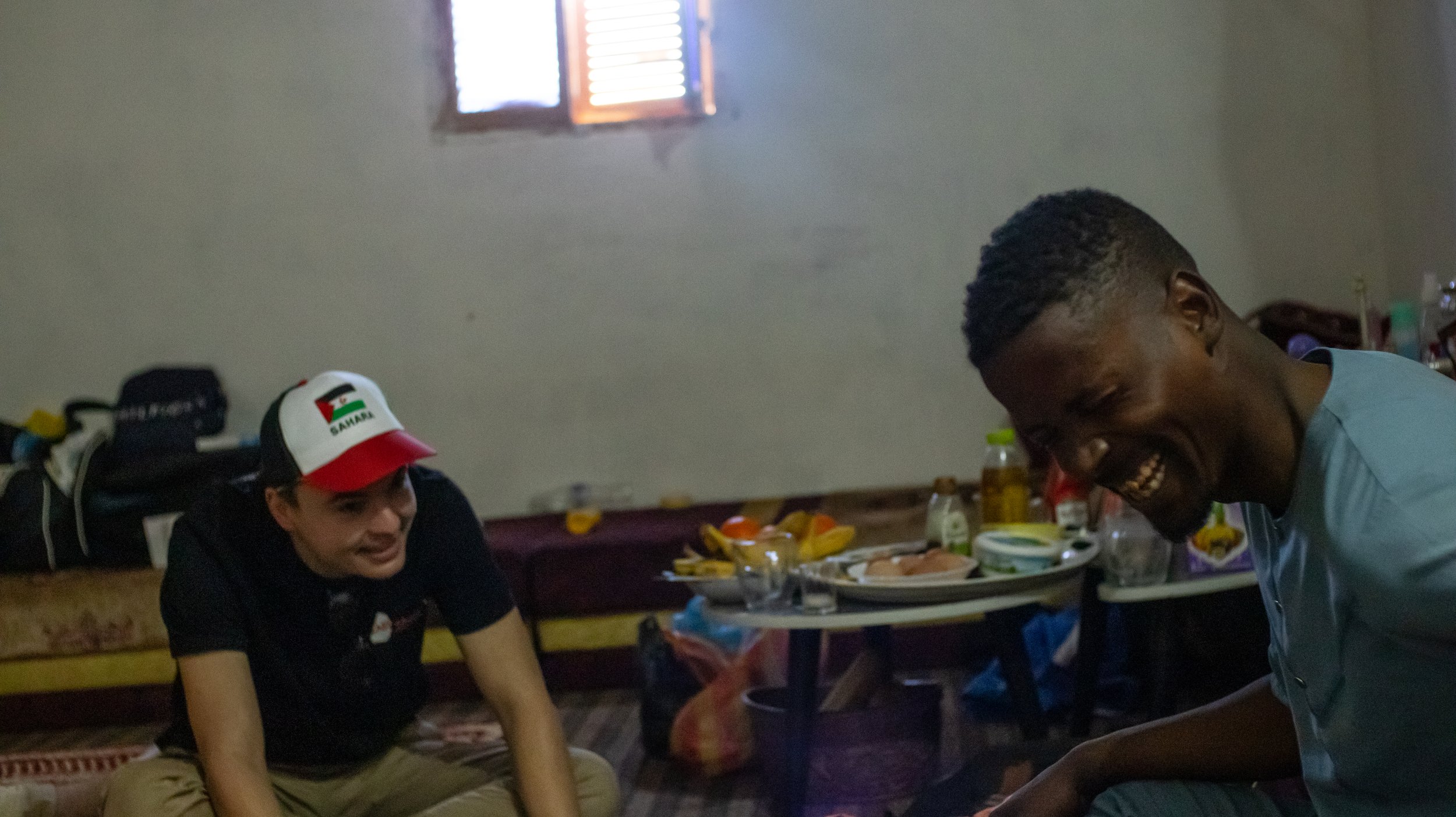
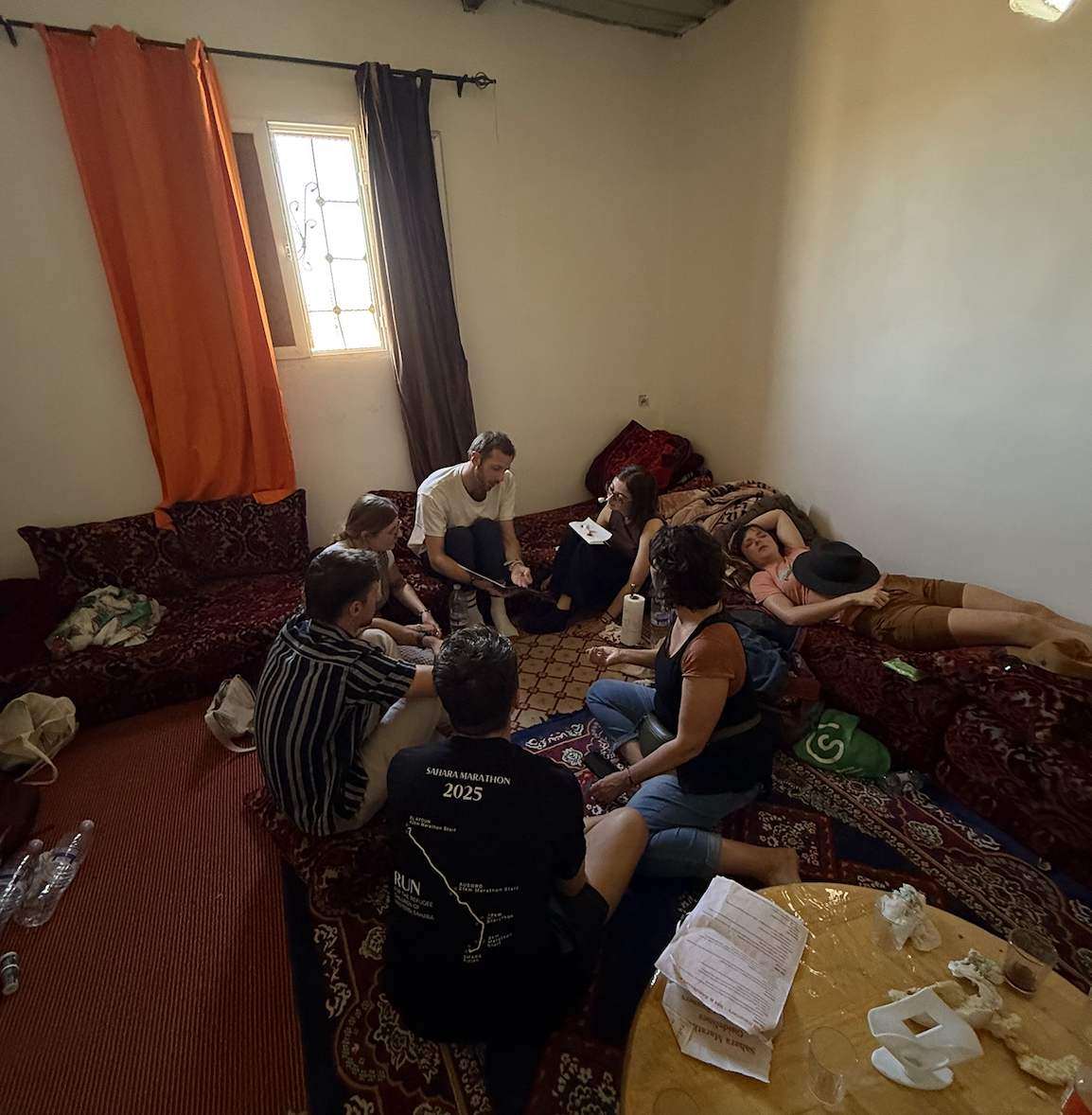
A Saharawi host family's livingroom
Whether you’re volunteering as a teacher trainer, leading a creative workshop, or joining us to run the Sahara Marathon, working with Sandblast on the ground offers a unique opportunity: a homestay with a Saharawi host family.
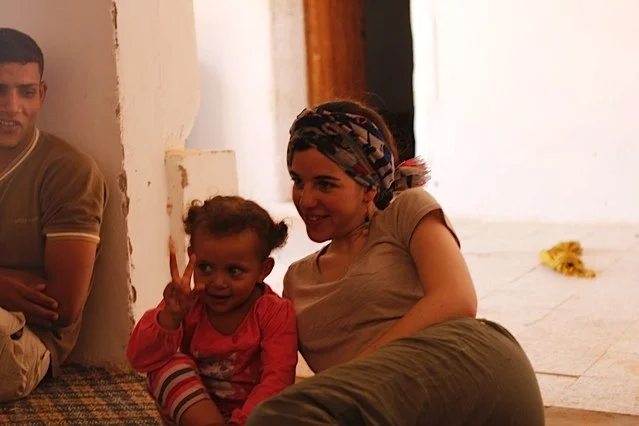
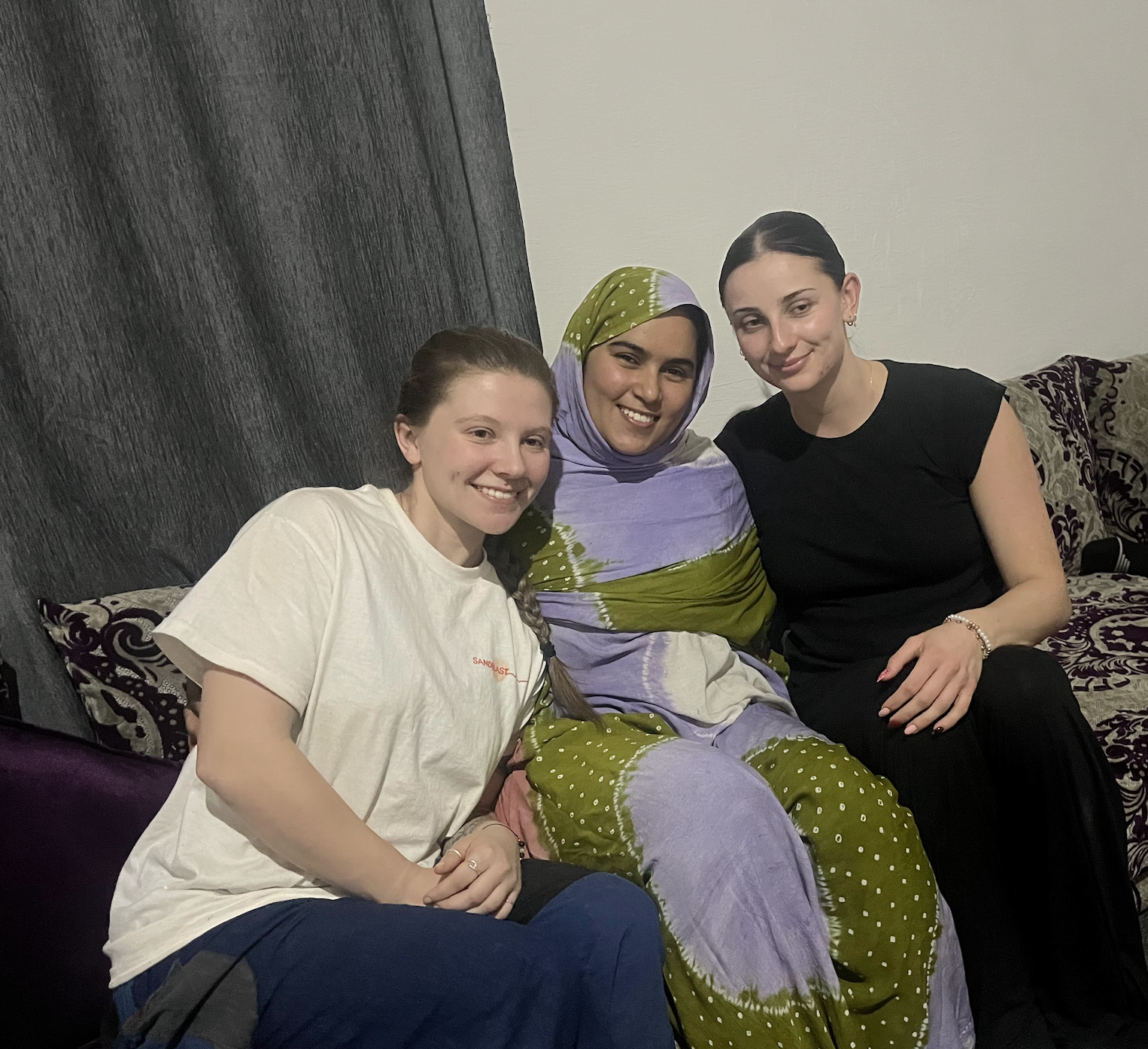
One of the most powerful ways to learn about the Saharawi fight for justice, and the preservation of their culture, is to experience Saharawi life firsthand. For Sandblast Volunteers who travel to the Saharawi refugee camps near Tindouf, Algeria, the experience goes beyond being guest, they become a part of the Saharawi community.
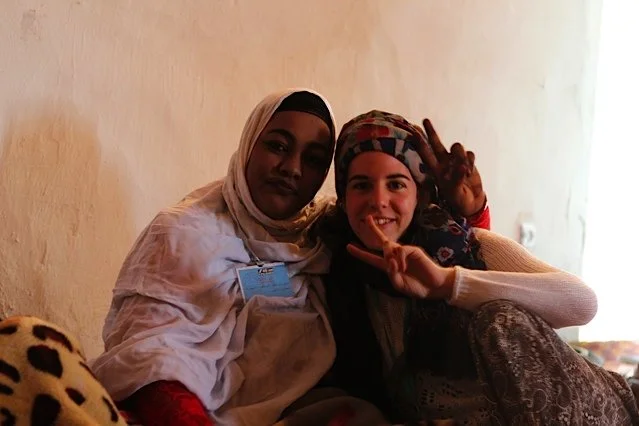
"I was treated like a family member from the first moment," shares Anastasia Oleinik, an art and music volunteer. "The generosity and hospitality is part of who the Saharawis are"
It can be difficult to imagine what a homestay in a refugee camp might be. To help paint a picture of what a homestay with a Saharwi family is like, we’ve outlined what to expect. Everything from what you’ll eat to where you’ll sleep are detailed below.
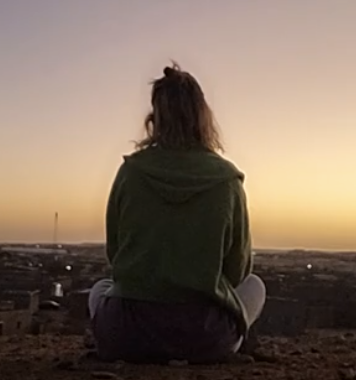
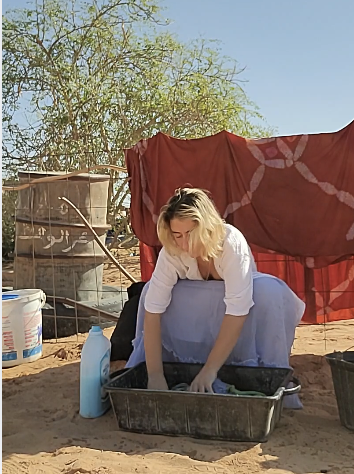
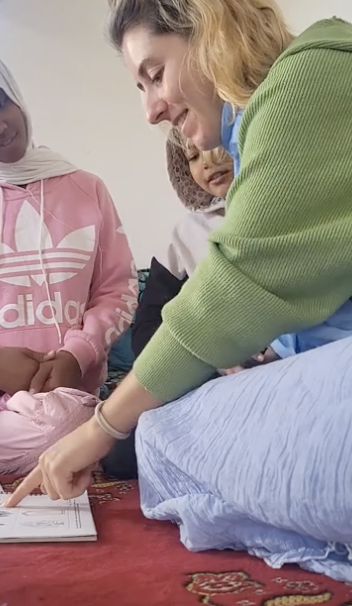
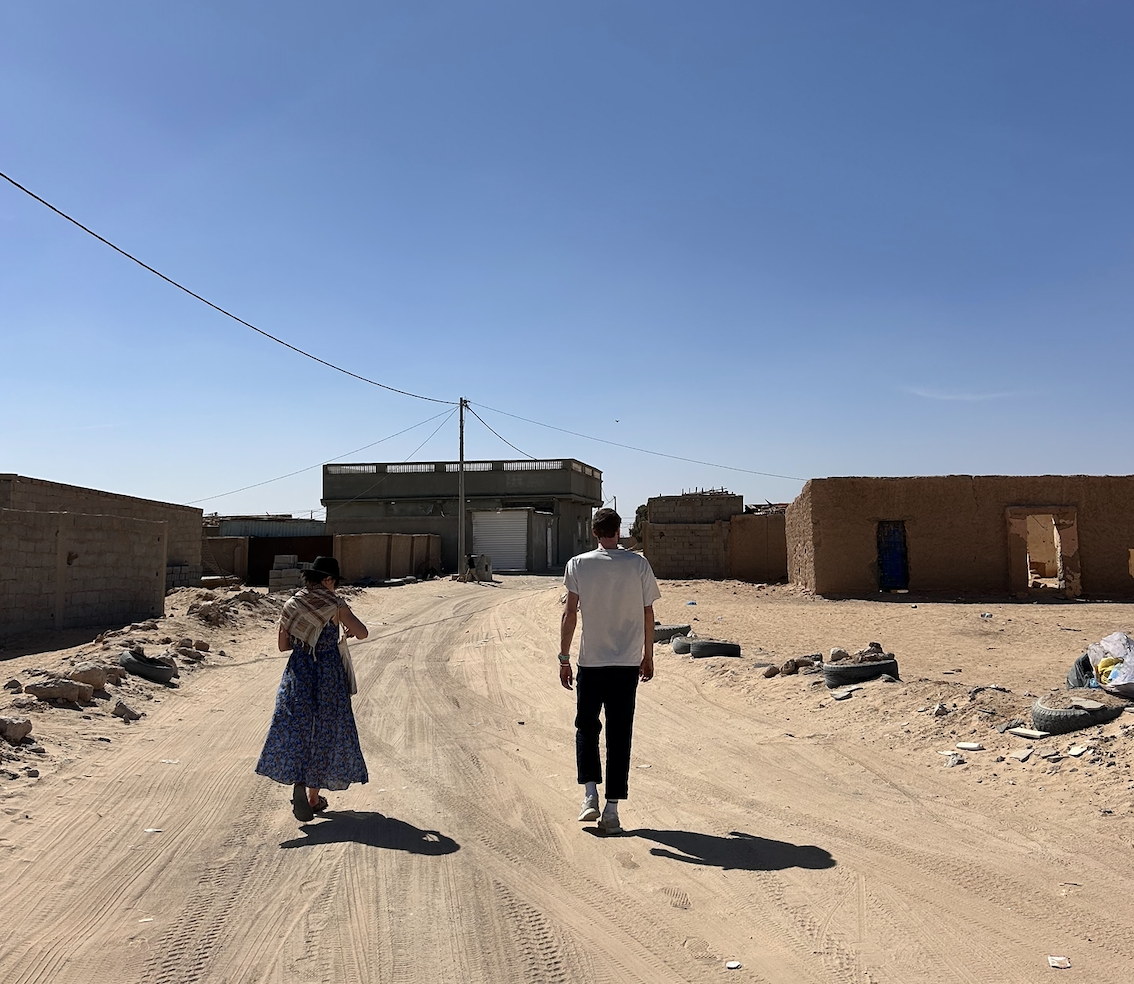
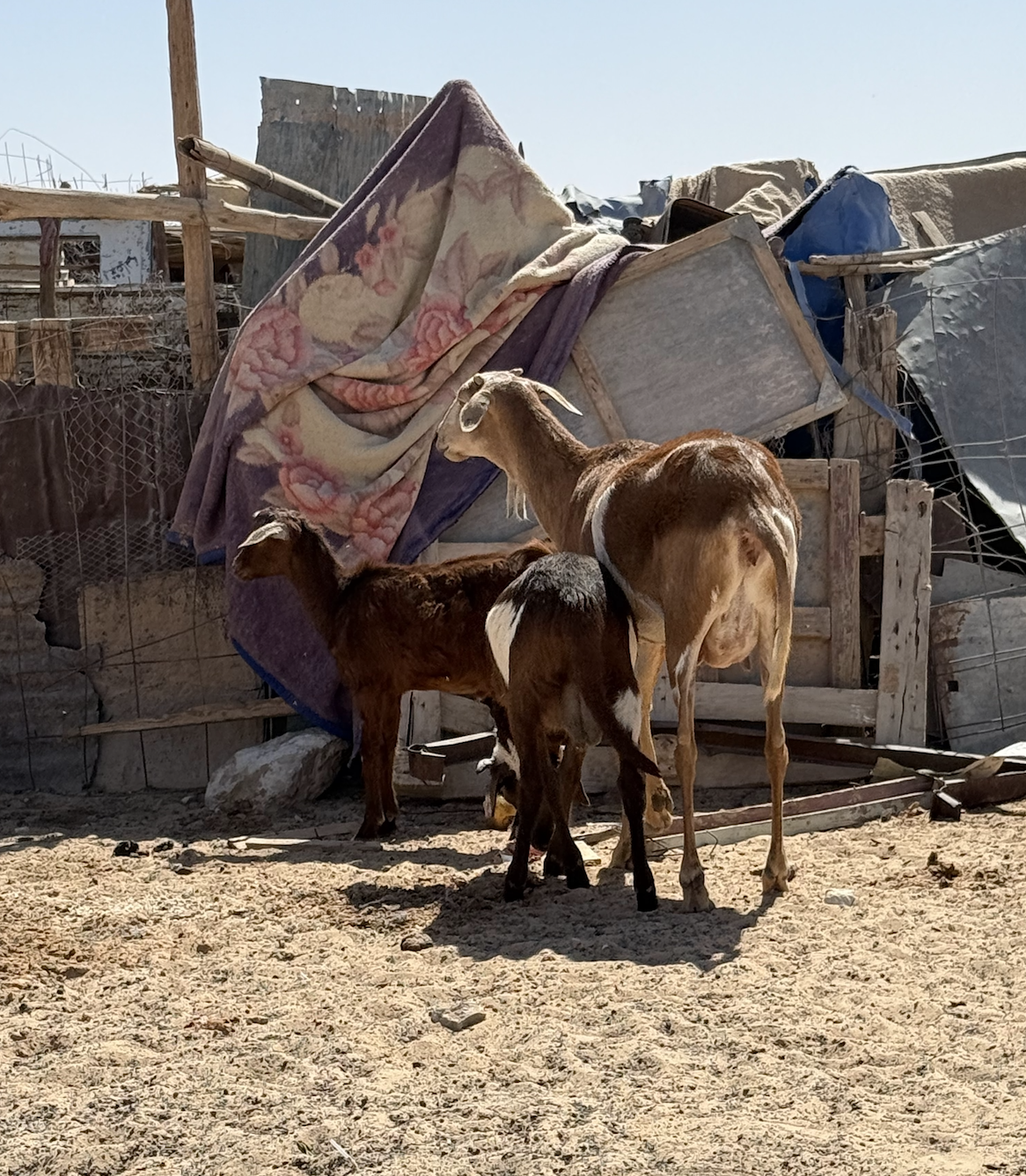
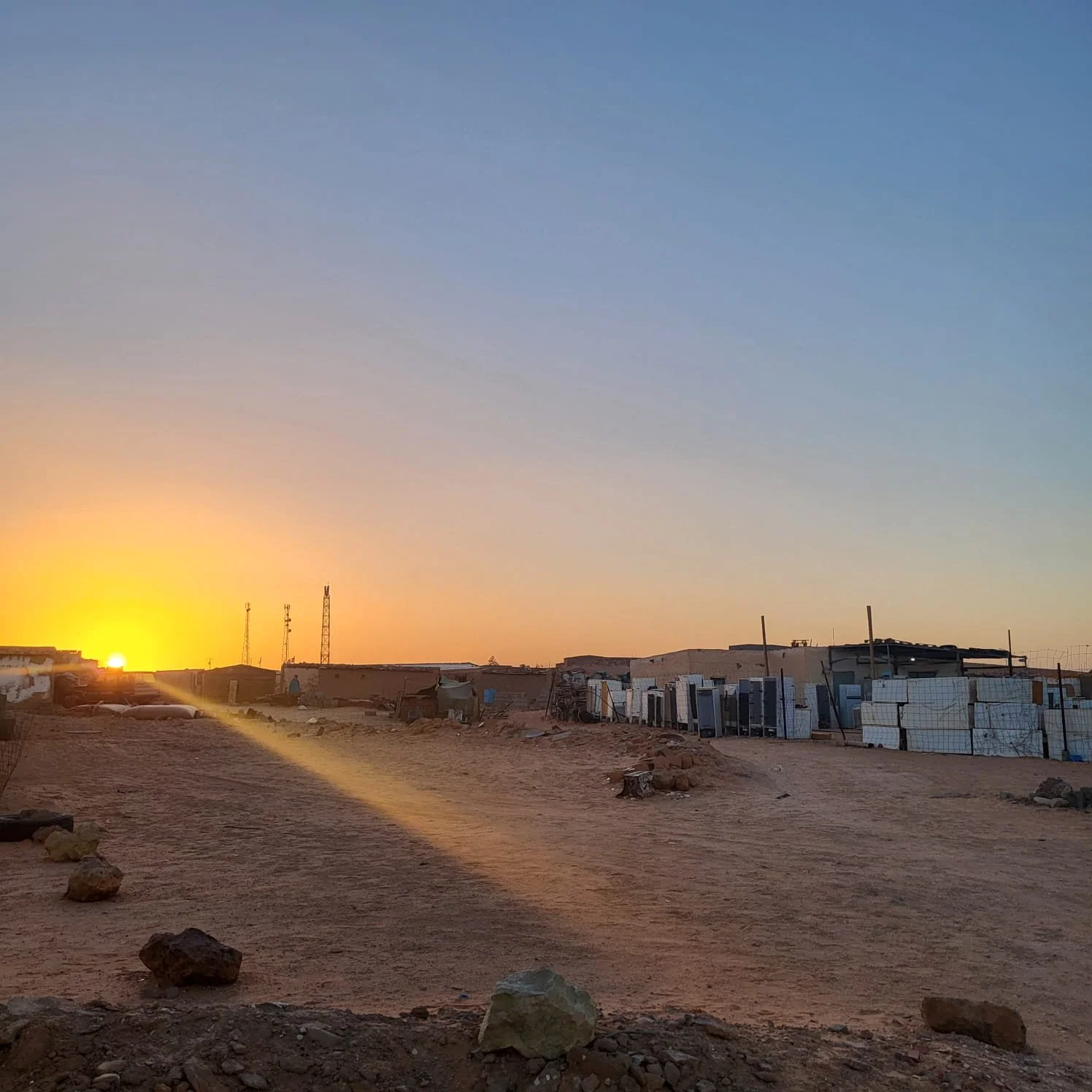
Understanding the context of a refugee camp
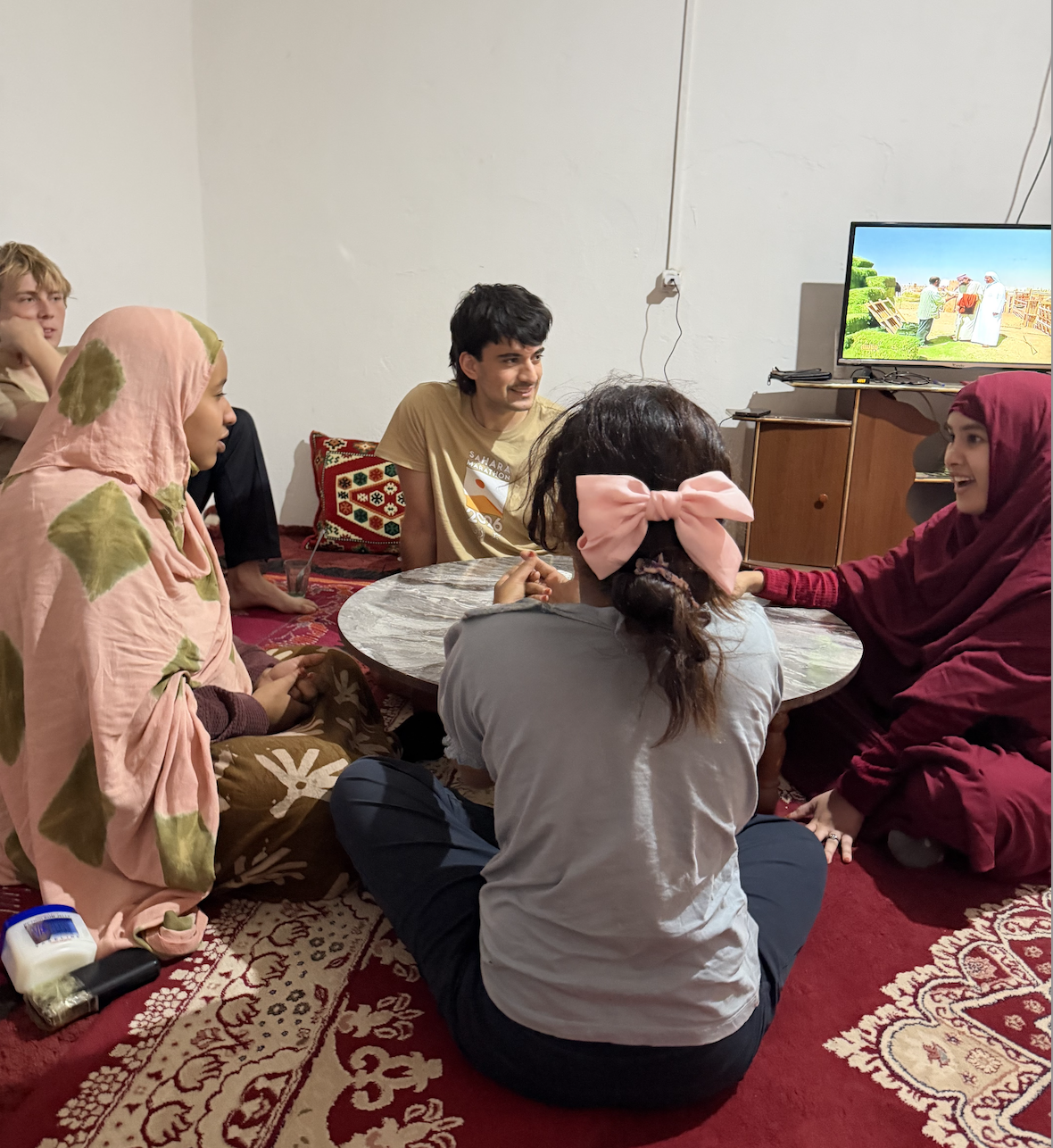
Camp life moves at its own pace, and is far slower, warmer, and more connected than what many of us are used to. There are the late nights, the afternoon naps, and long meals and moments shared together around steaming cups of tea. During your stay, it is important to maintain an open mind to the differences and embrace the experience of desert life.
Arriving in the Camps
It’s a long journey to arrive, but once you do, you’ll feel welcomed and encouraged to feel at home. Your host mom will speak English, though Hassaniya is the Arabic dialect spoken by Saharawis. Other dialects of Arabic, like Levantine, are also mutually intelligible, though you might not understand many of the unique Hassaniya words! Spanish is the second most commonly spoken language in the camps, due to their history as a former colony of Spain. When exploring the area and meeting other members of the community, you’re encouraged to share friendly greetings in Arabic.
Where You’ll Stay
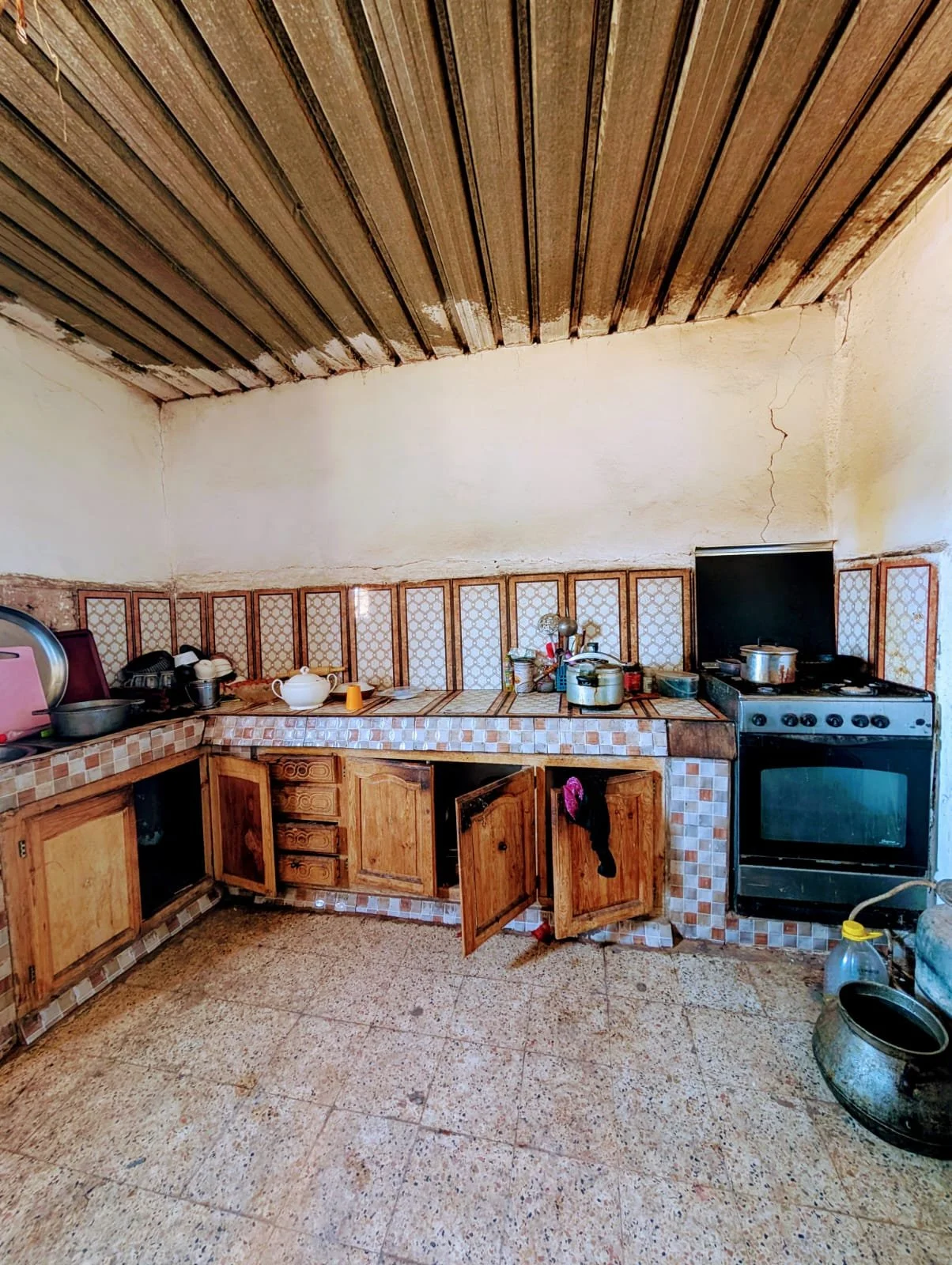
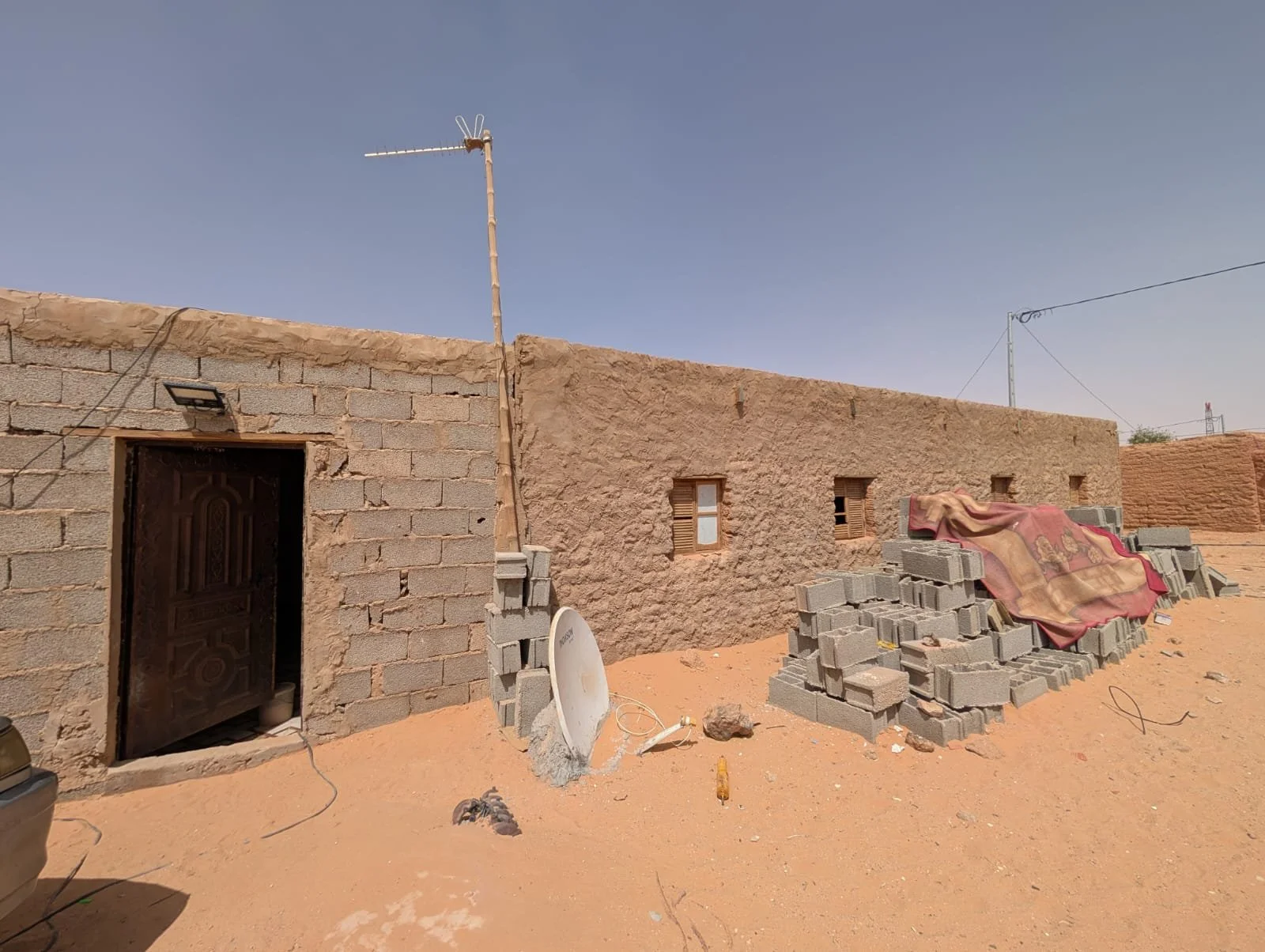
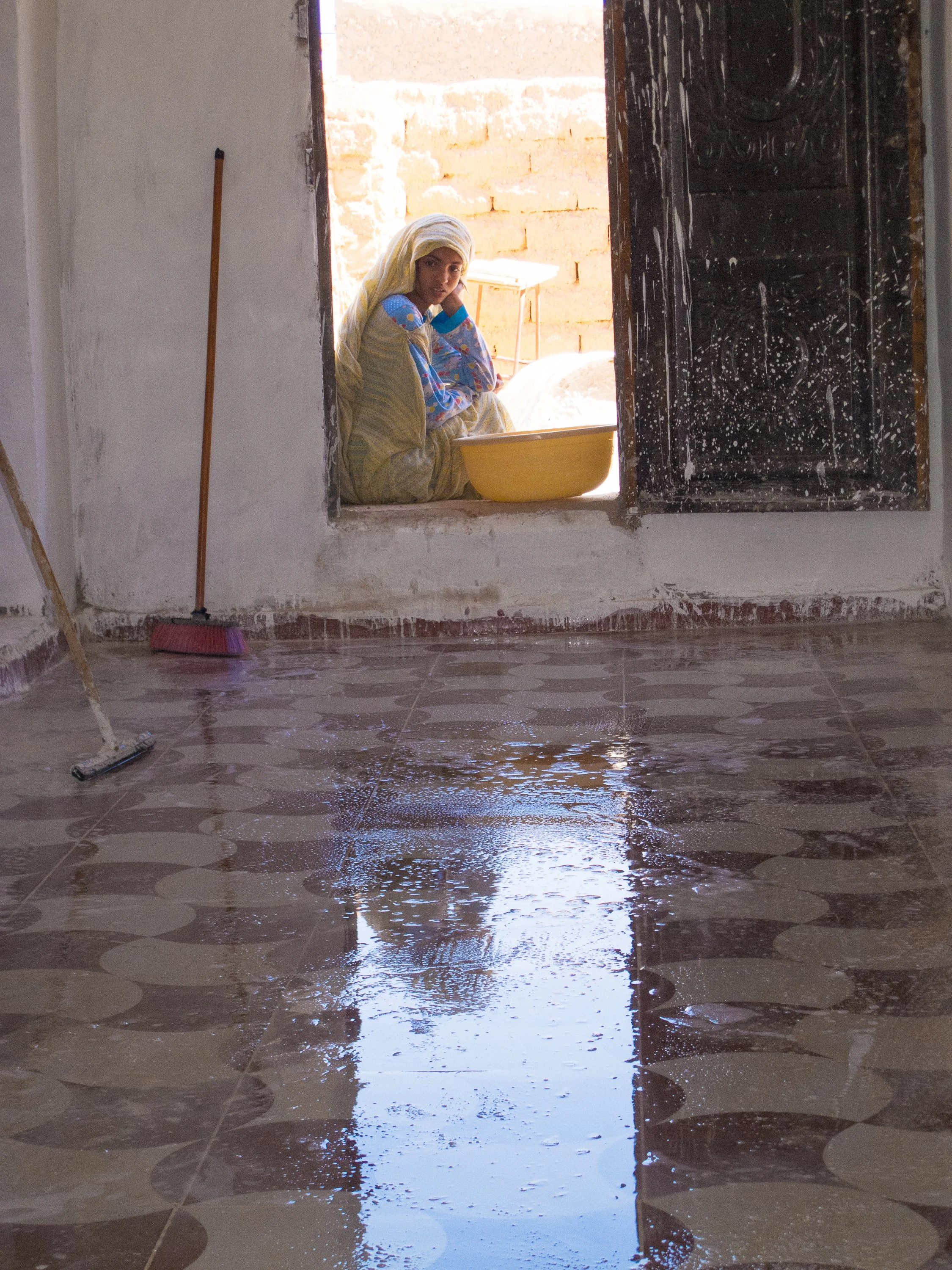
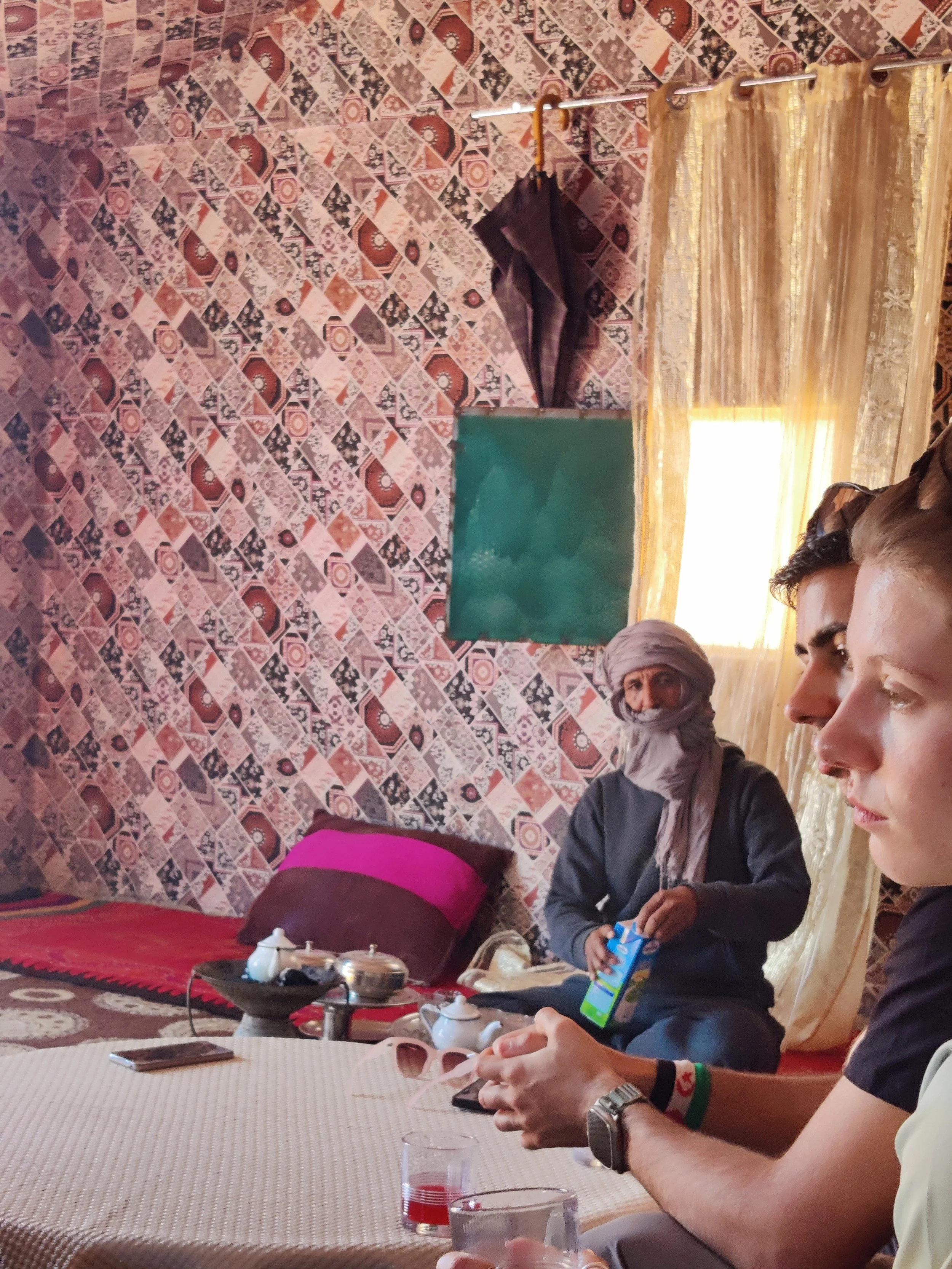
Saharawi homes in the refugee camps have evolved over the course of 50 years of their displacement. When they first arrived, the Saharawi refugees lived in tents, made from canvas and colorful patchwork materials. As the camps expanded and populations grew, each generation built upon the foundations of the last.
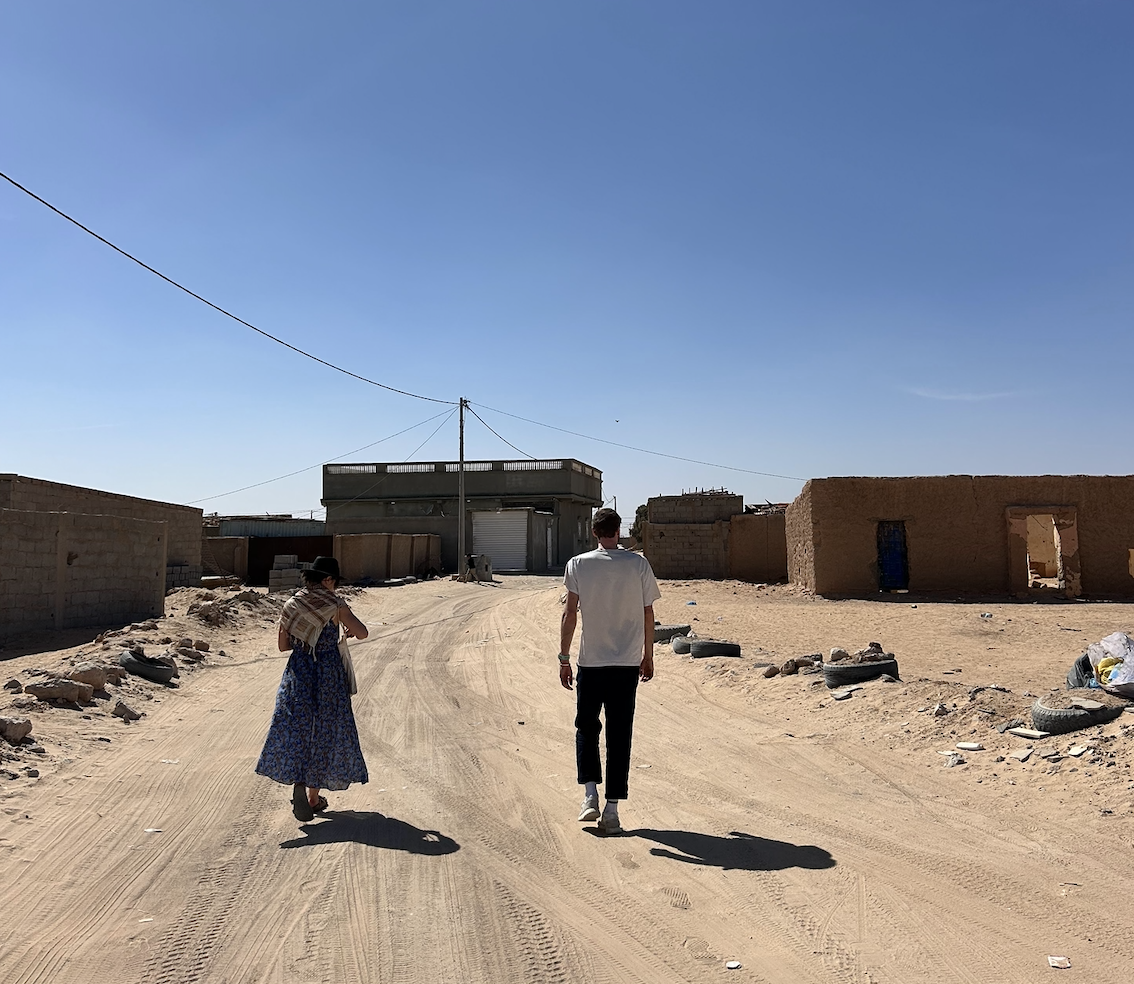
Today, many homes are permanent structures, constructed in an Adobe style, and are fully equipped with electricity.
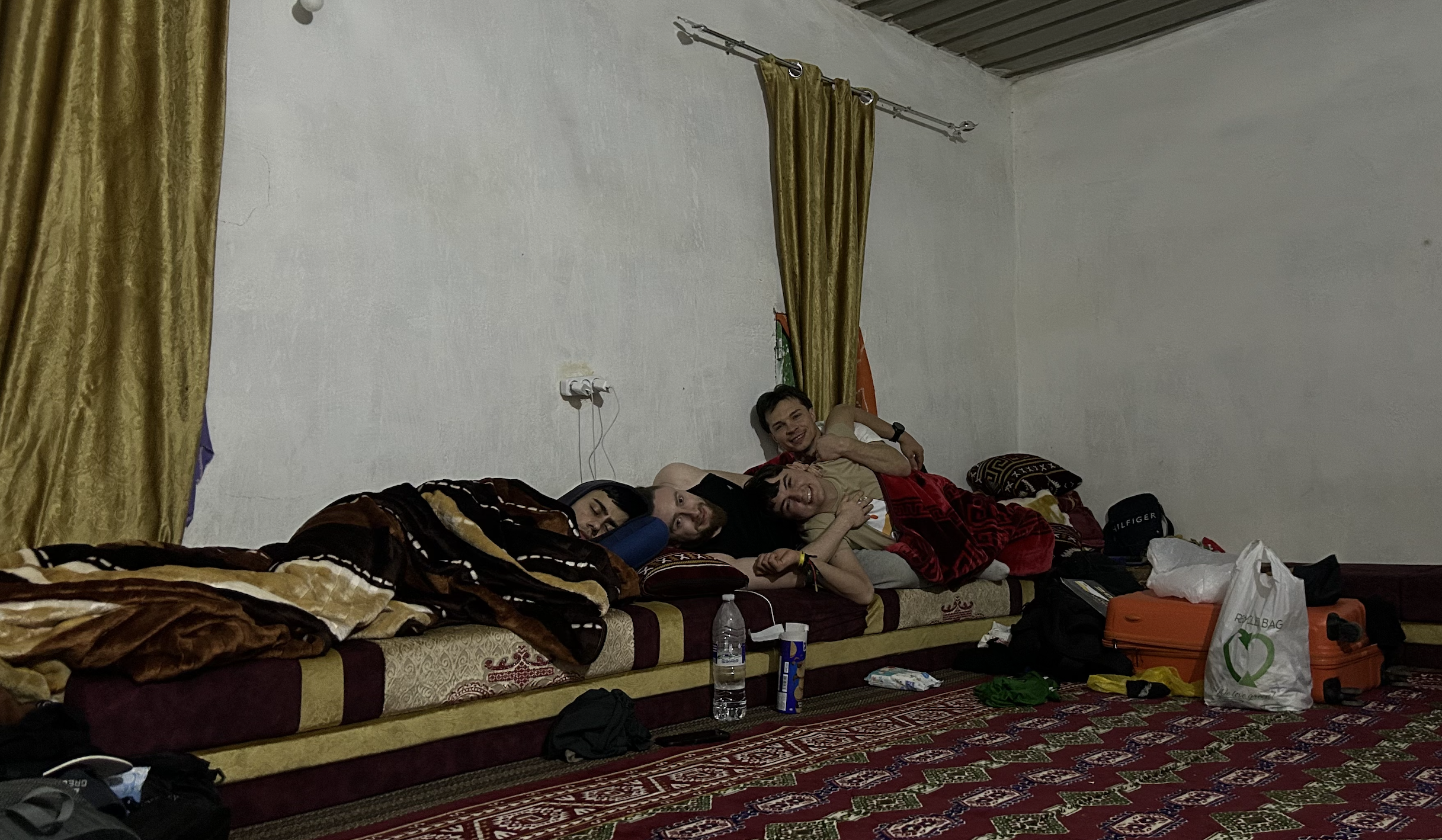
Within the homes, there are bedrooms, though expectations of privacy are more lenient. If you’re joining during the Sahara Marathon, you’ll be sharing a room with other runners, sorted by gender.
Mealtime
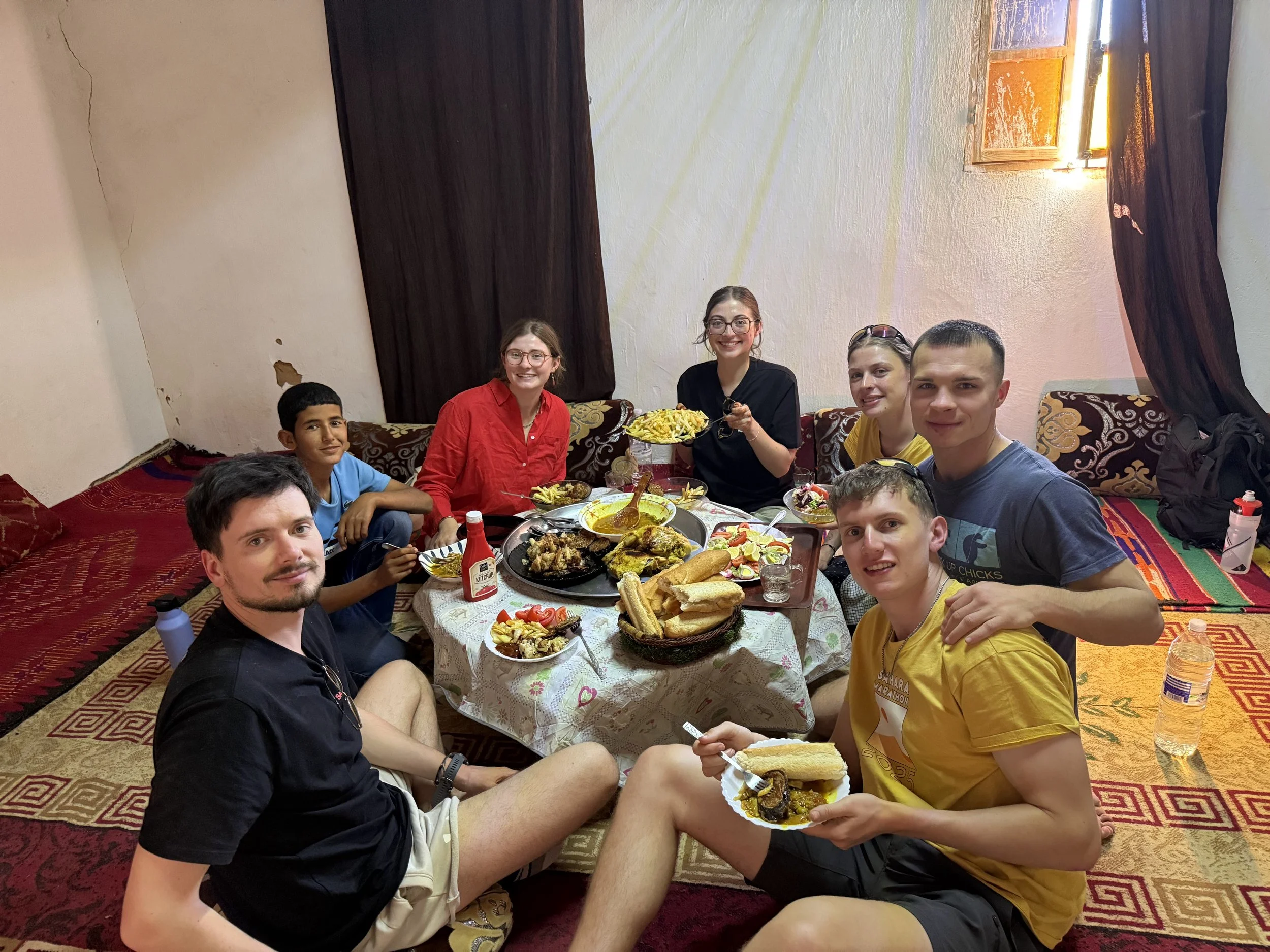
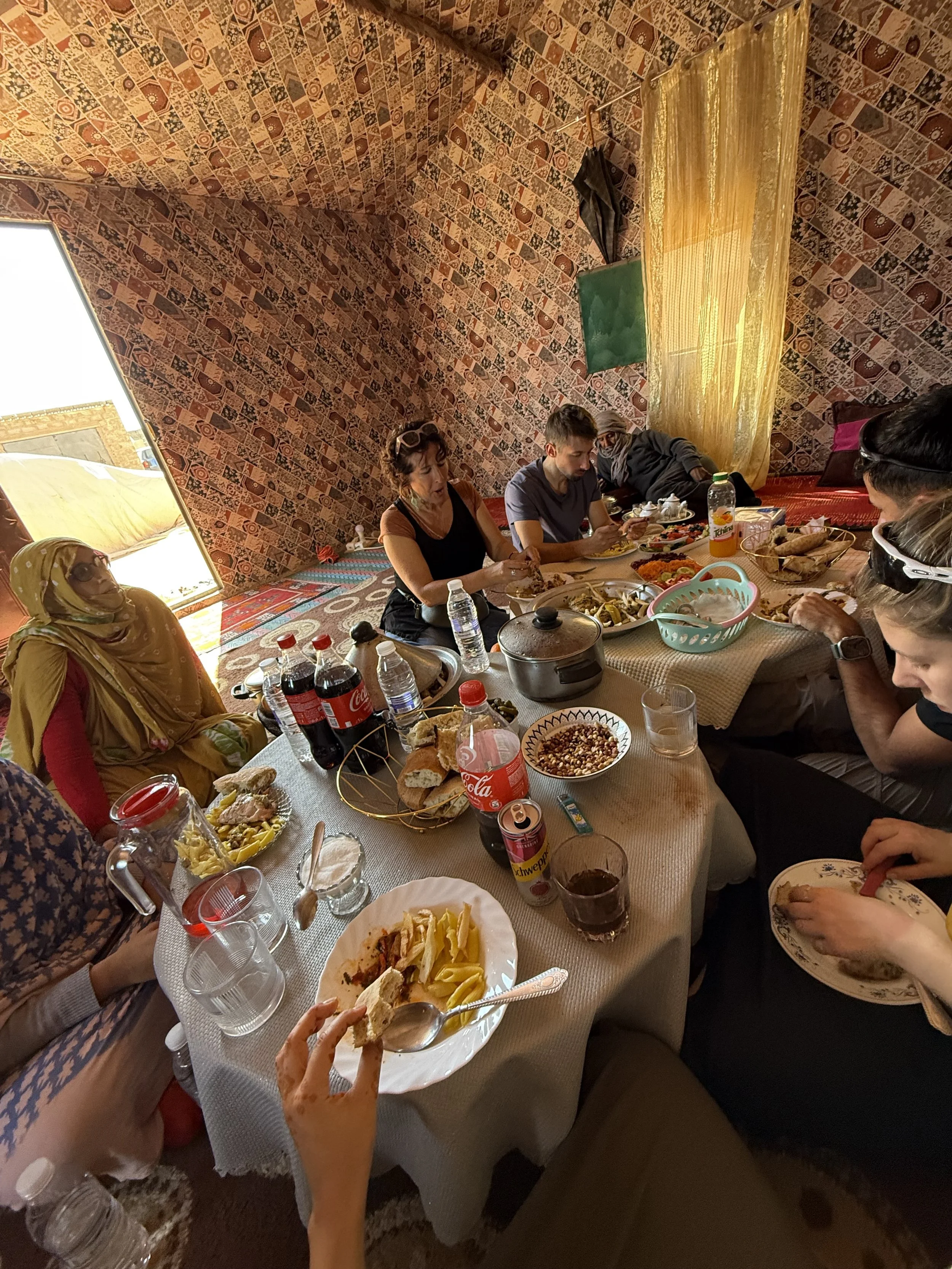
Food is at the heart of Saharawi hospitality, but the routine of meals in the refugee camps might be different from what you're used to. Meals are served on low tables, and you'll eat sitting on the floor, either cross-legged or on a cushion.
One of the most surprising things is how late dinner is! With breakfast around 9:00AM, and lunch in the afternoon around 3:00PM, dinner is often served around 10:30PM!
It's certainly a culture of going to bed late and rising late. Breakfast is one of the longer meals, with ample time to relax and start your day slowly at your own pace. Meals can take an hour or more, and the slow and unhurried approach can be notably different than many of the cultures our volunteers come from.
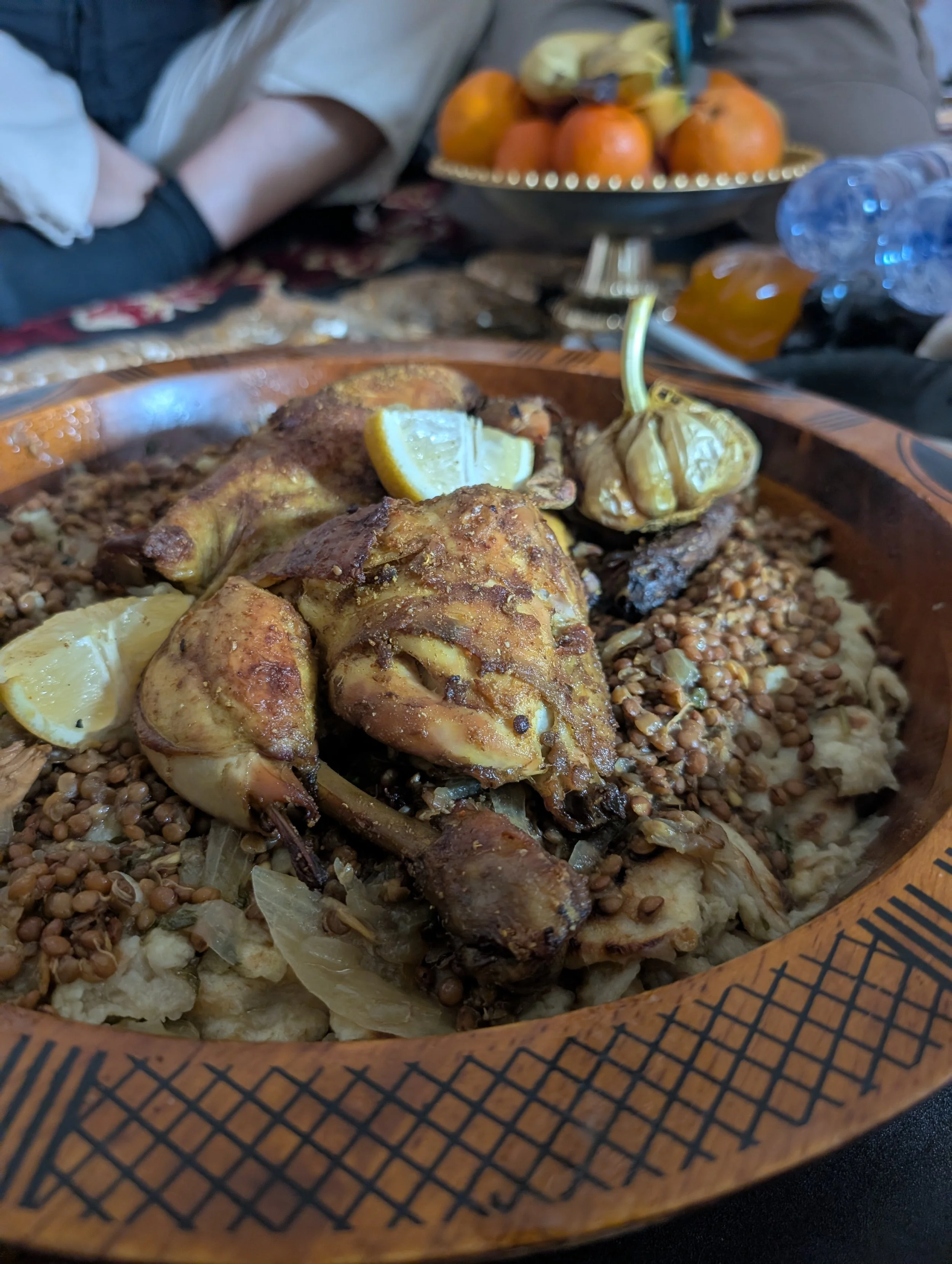
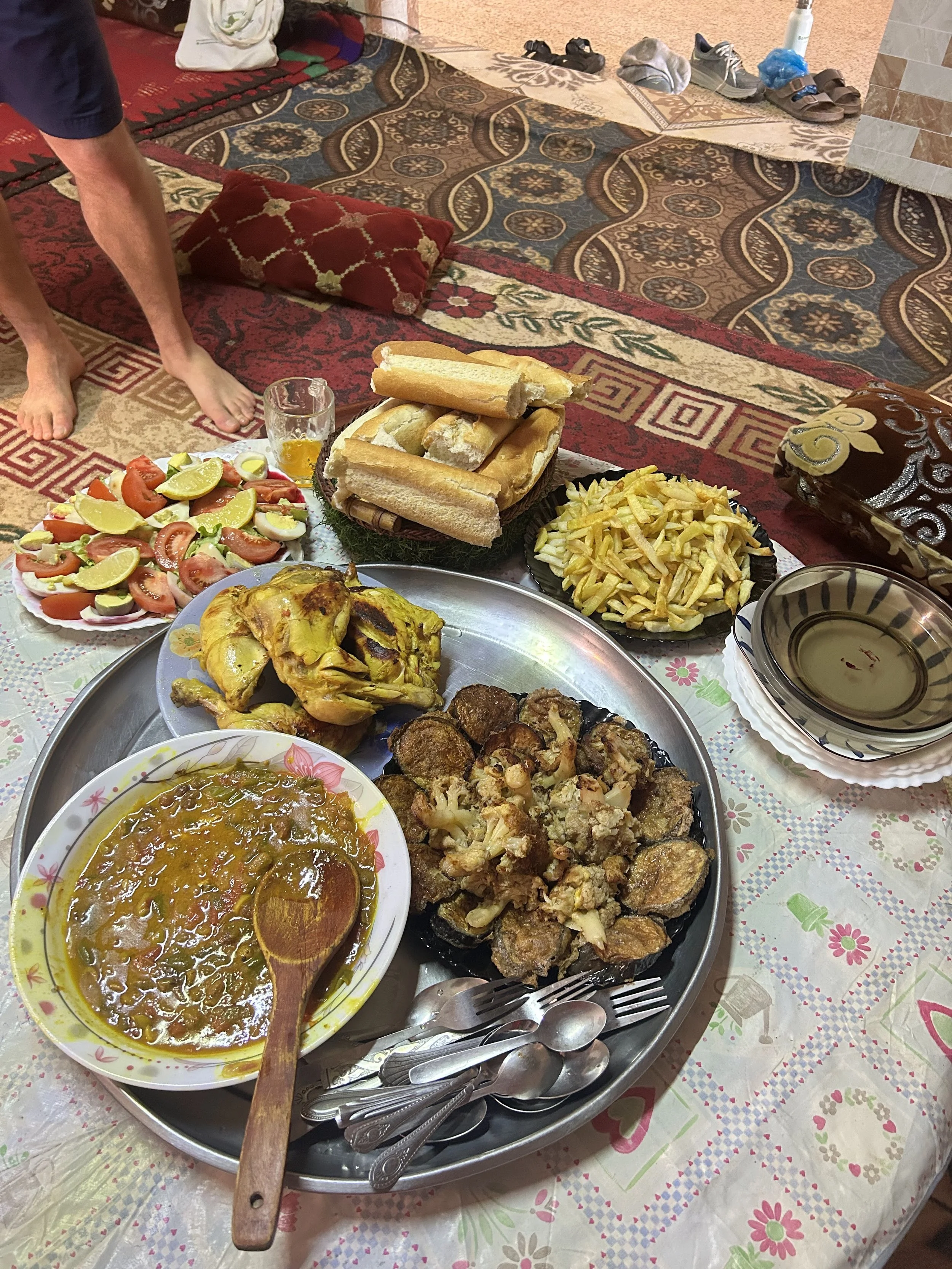
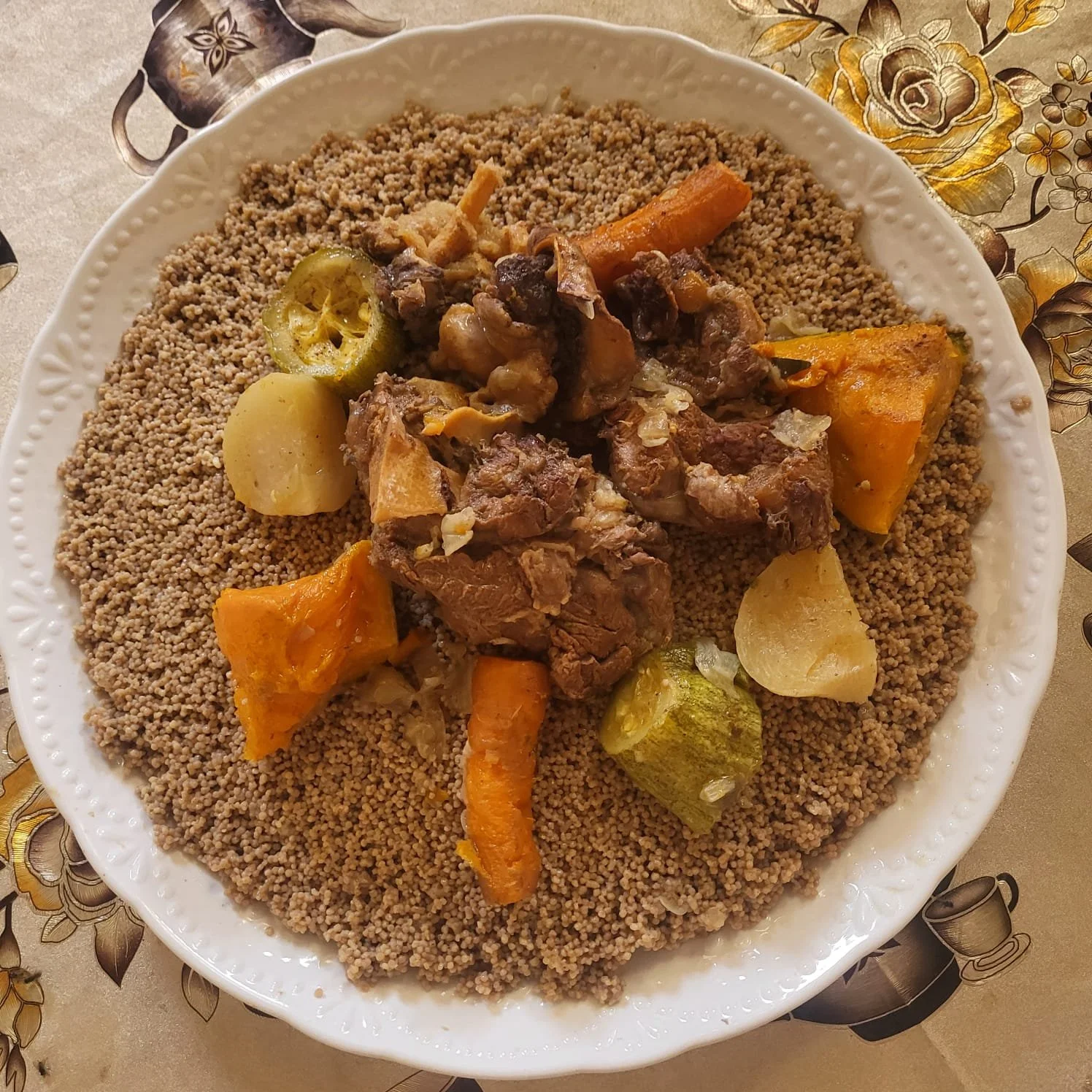
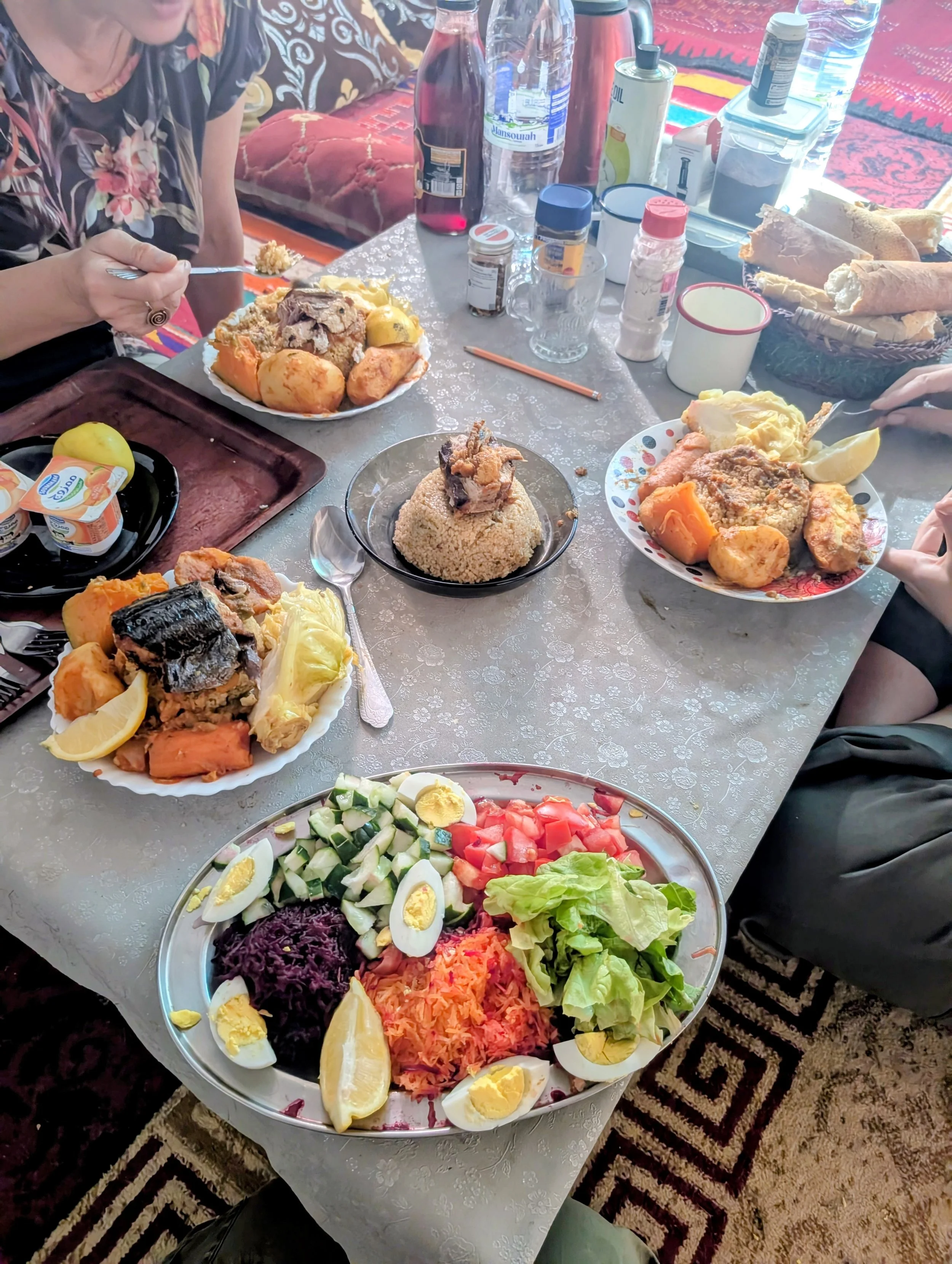
Yes, dinner is late! The desert heat shapes daily life, and evening meals become a relaxed, unhurried affair. It's a routine you'll quickly adapt to, and you might even find yourself missing those late-night dinners when you return home.
Something else that might come as a surprise, is that you might not eat family style the way you’re used to. Your host mom is a mom to many! Saharawi women often cook and share meals with extended family members and their own mothers, and are known to eat elsewhere. Families typically take turns cooking for the broader group and share food communally.
Guests (that's you!) are usually served in one area of the home, often your own room or the main room. Children are also served separately—they're kids, after all! They might eat while playing, lying down, or during their own routine.
At first, being served on your own might feel strange. You might wonder, "Don't they eat together like we do?" Or even feel as though you’re being excluded, but try to see it as a fascinating cultural window rather than taking it personally. We promise it isn't personal!
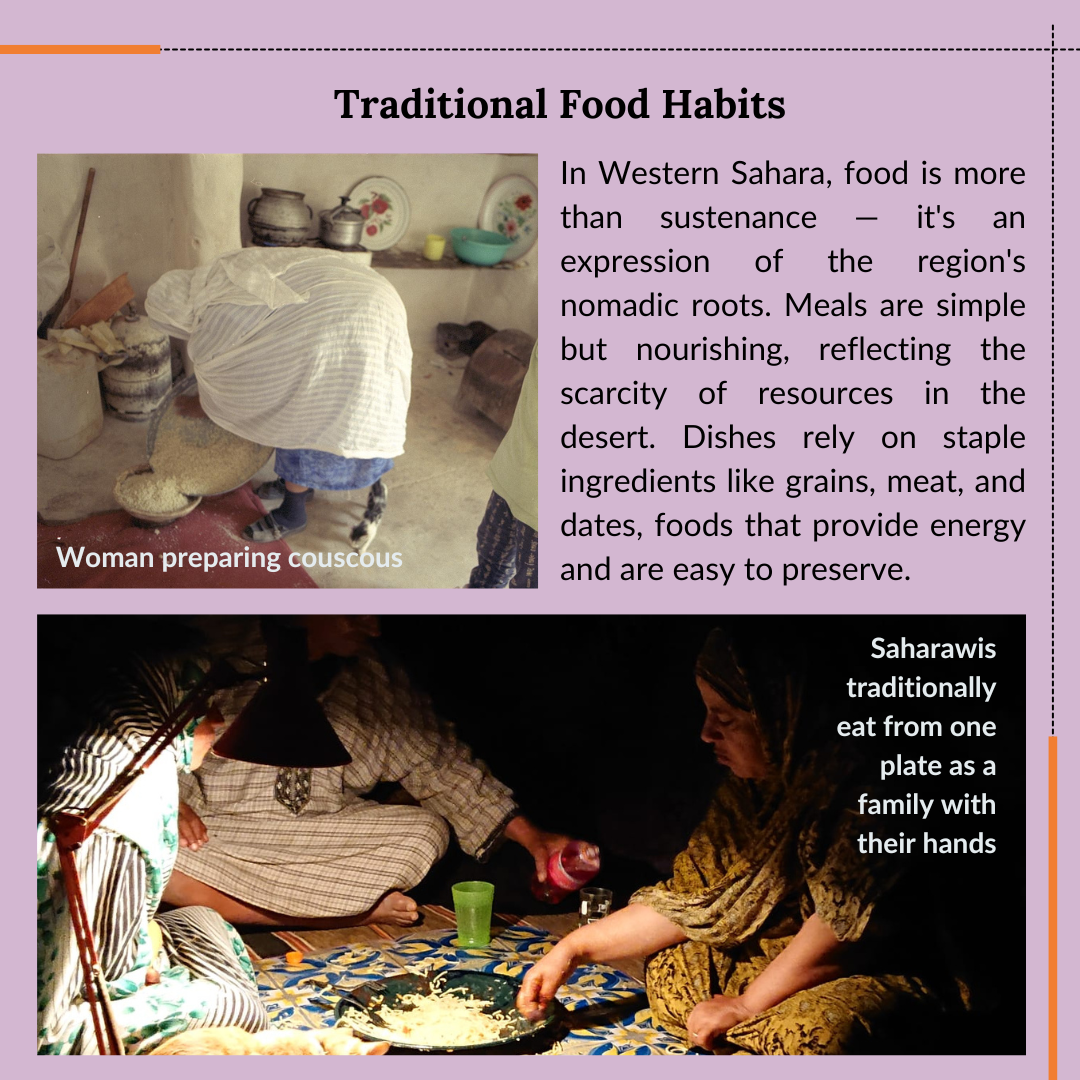
At a typical Saharawi family dinner, they often eat off of a shared communal plate, so providing individual plates for guests and children can make mealtimes smoother and leave everyone satisfied. There’s always tea time if you’re looking for some more quality time at the table.

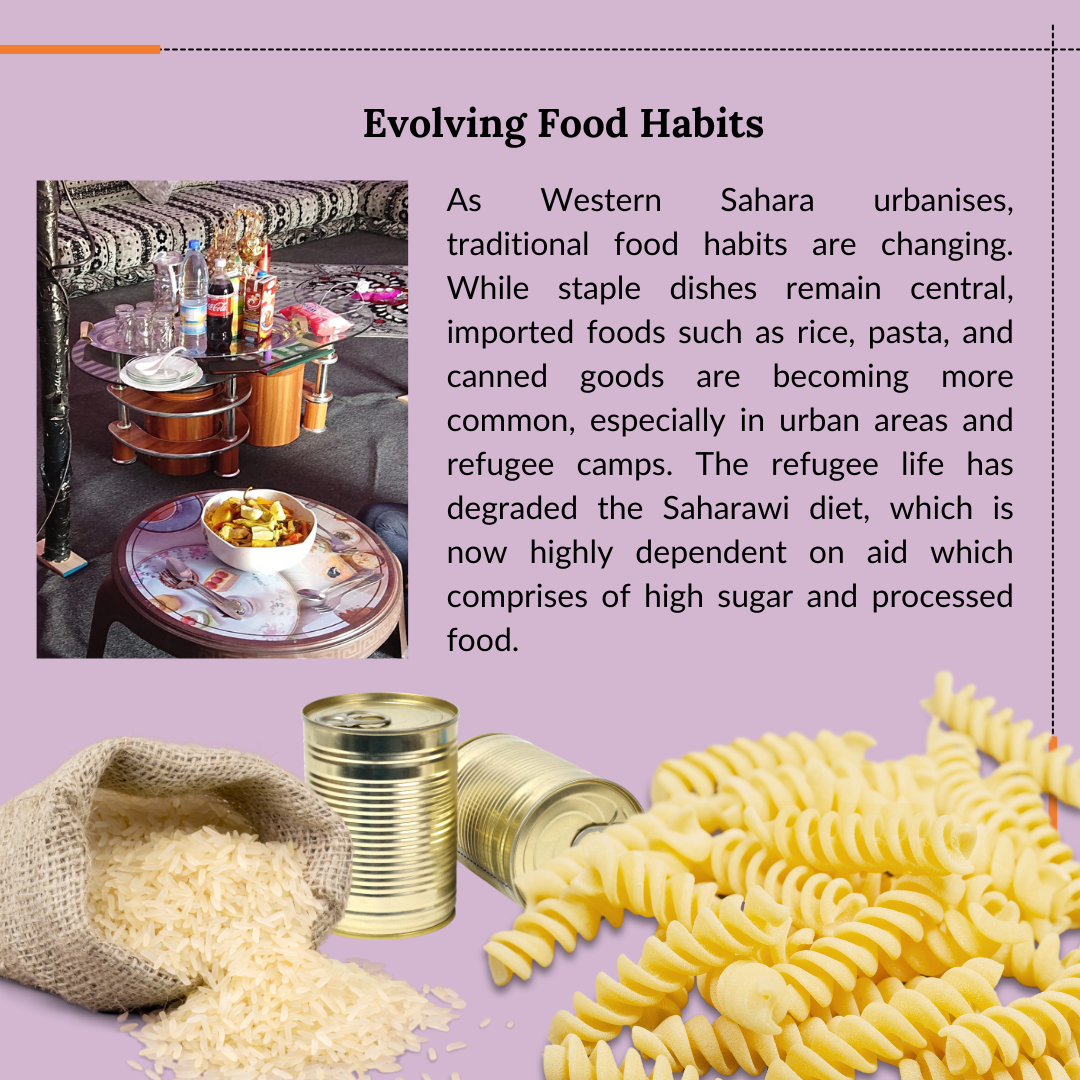
What’s on the menu?
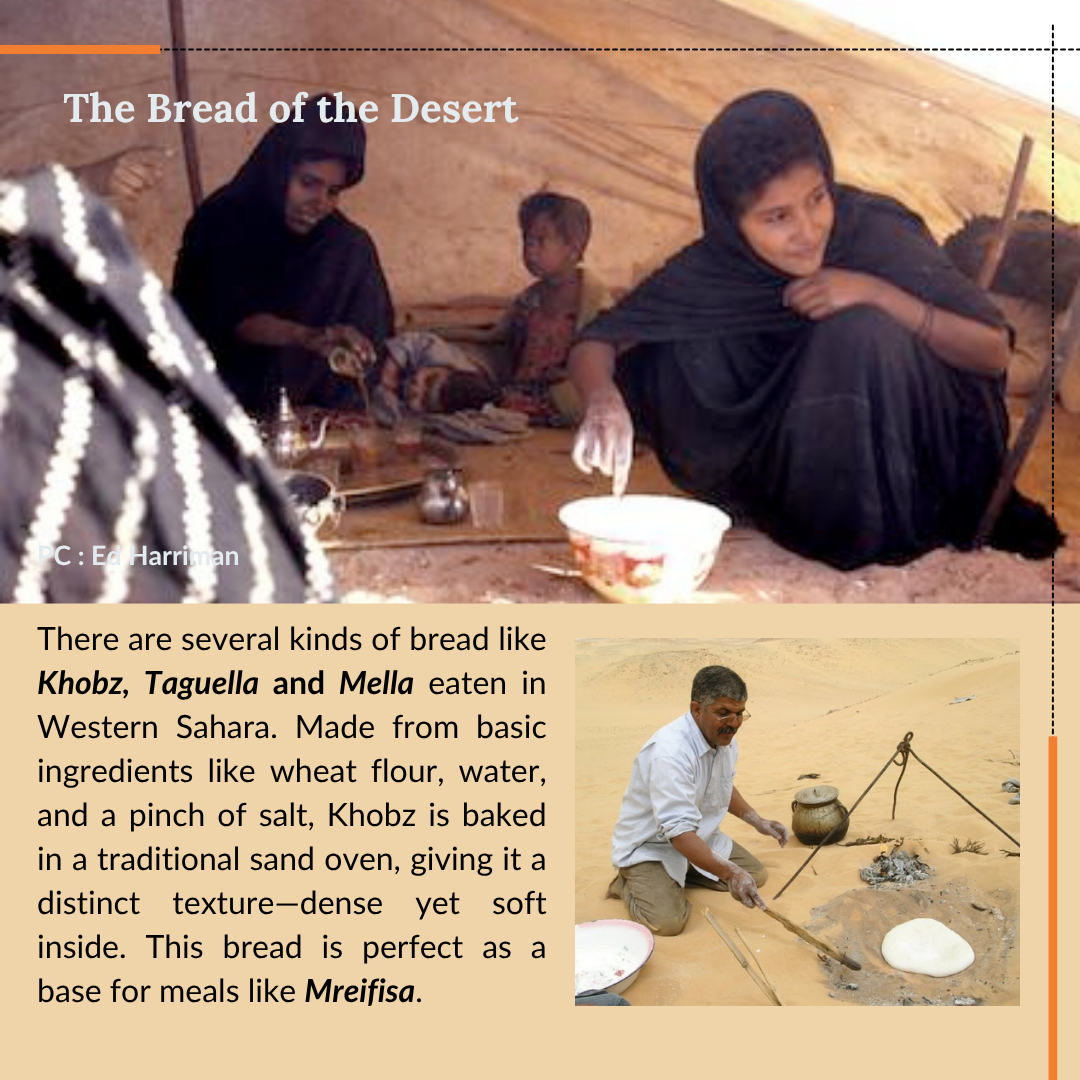
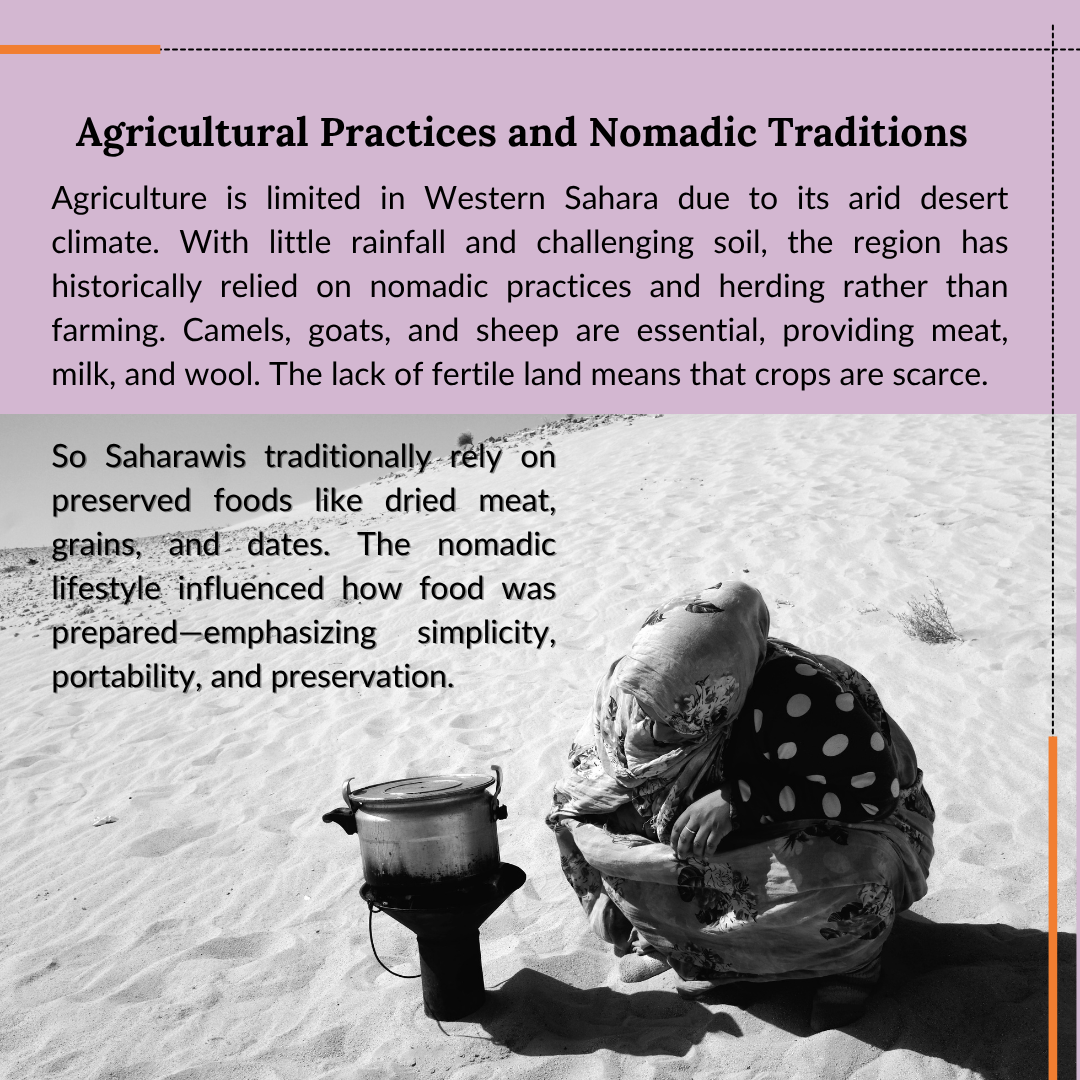
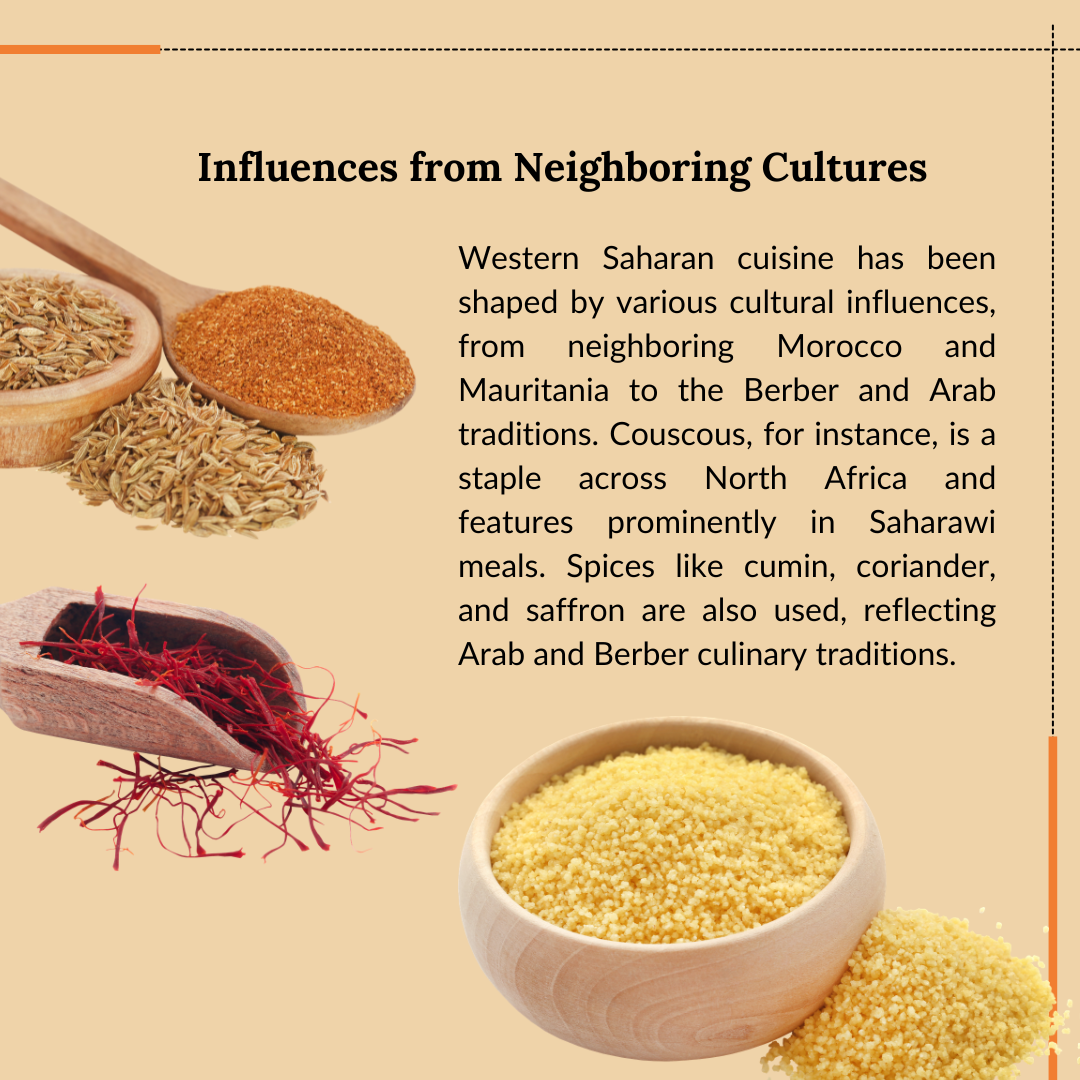
If you've never been to North Africa, you can think of the food as a Mediterranean-inspired diet with a Saharawi twist, though the limited resources in the refugee camp also shape the menu too.
Our host families are able to accommodate dietary restrictions like allergies and vegetarian portions, though vegan options are available, they are more limited. Here's are a few staples you can expect to find served in a Saharawi kitchen:
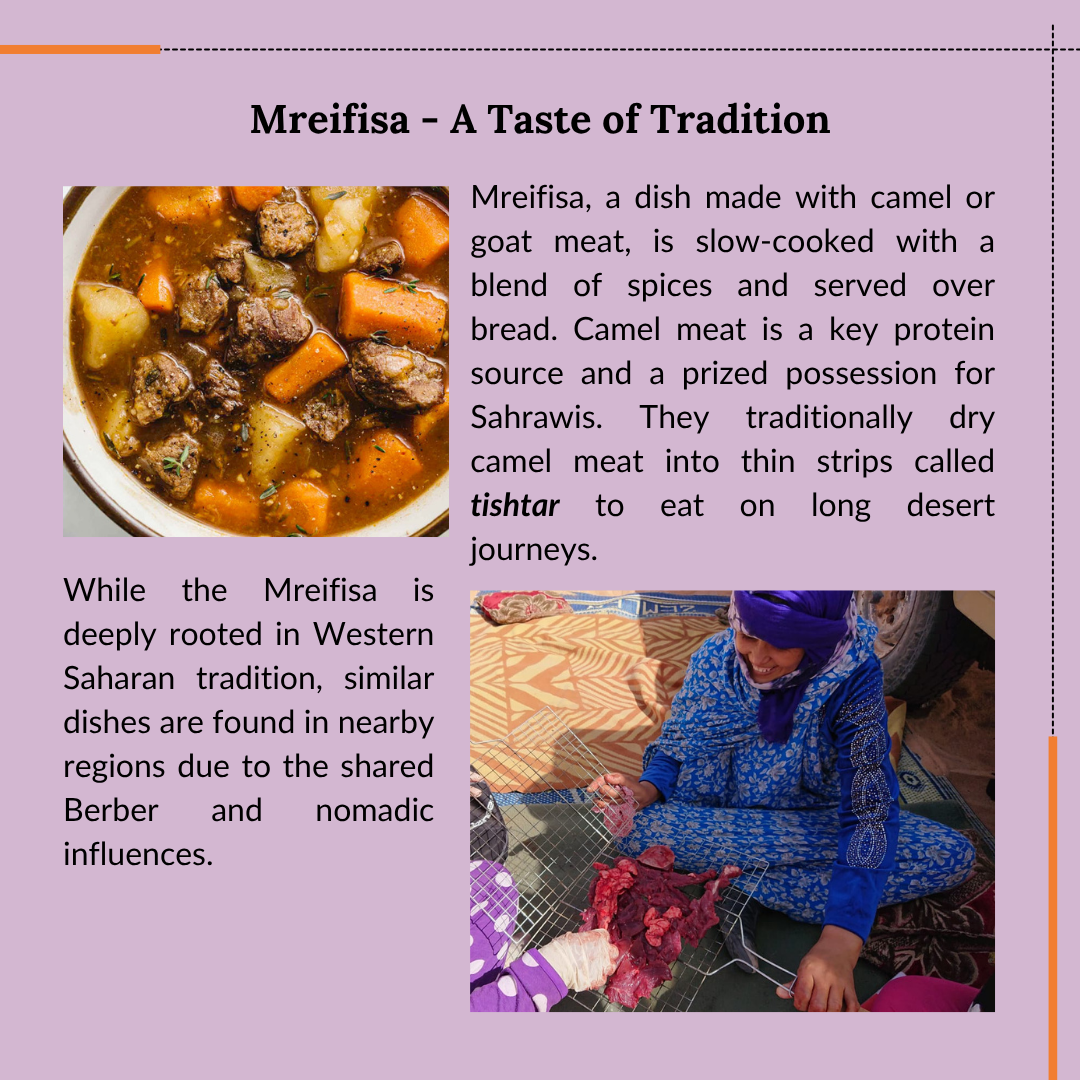
Couscous – a staple, served with vegetables and meat
Vegetable stews – hearty, flavourful, and often with beef
Lentils – plenty of delicious lentil dishes
Skewers – grilled over open flames, they serve chicken, beef, and even camel
Chicken – a common protein in daily meals
Camel – reserved for big, celebratory meals, often served over couscous
Salads – plenty of fresh vegetables are available
Fruit – oranges, bananas, and apples are the main fruits available
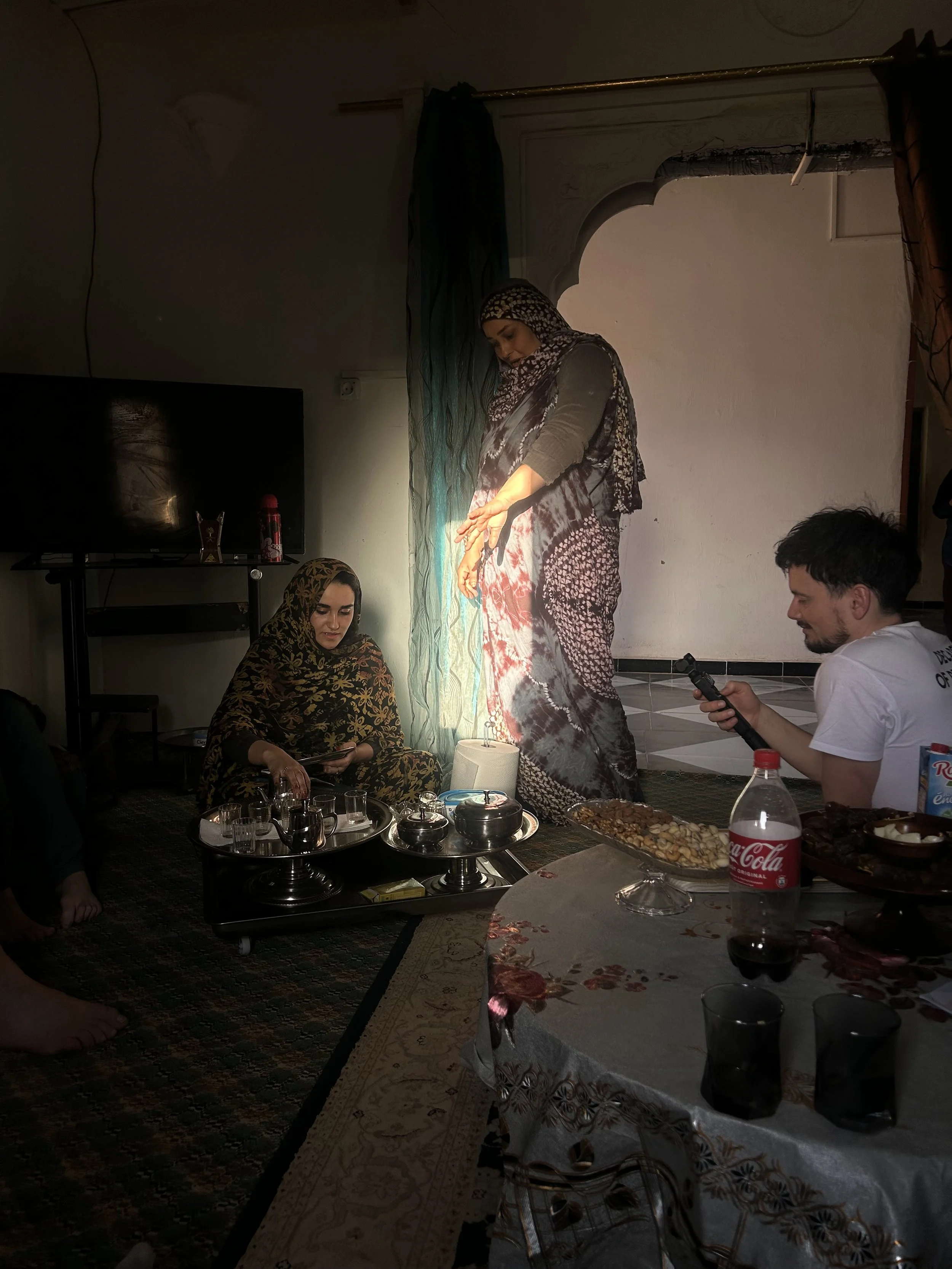
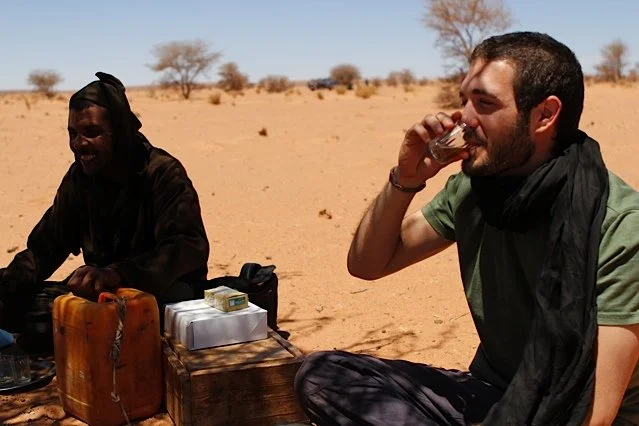
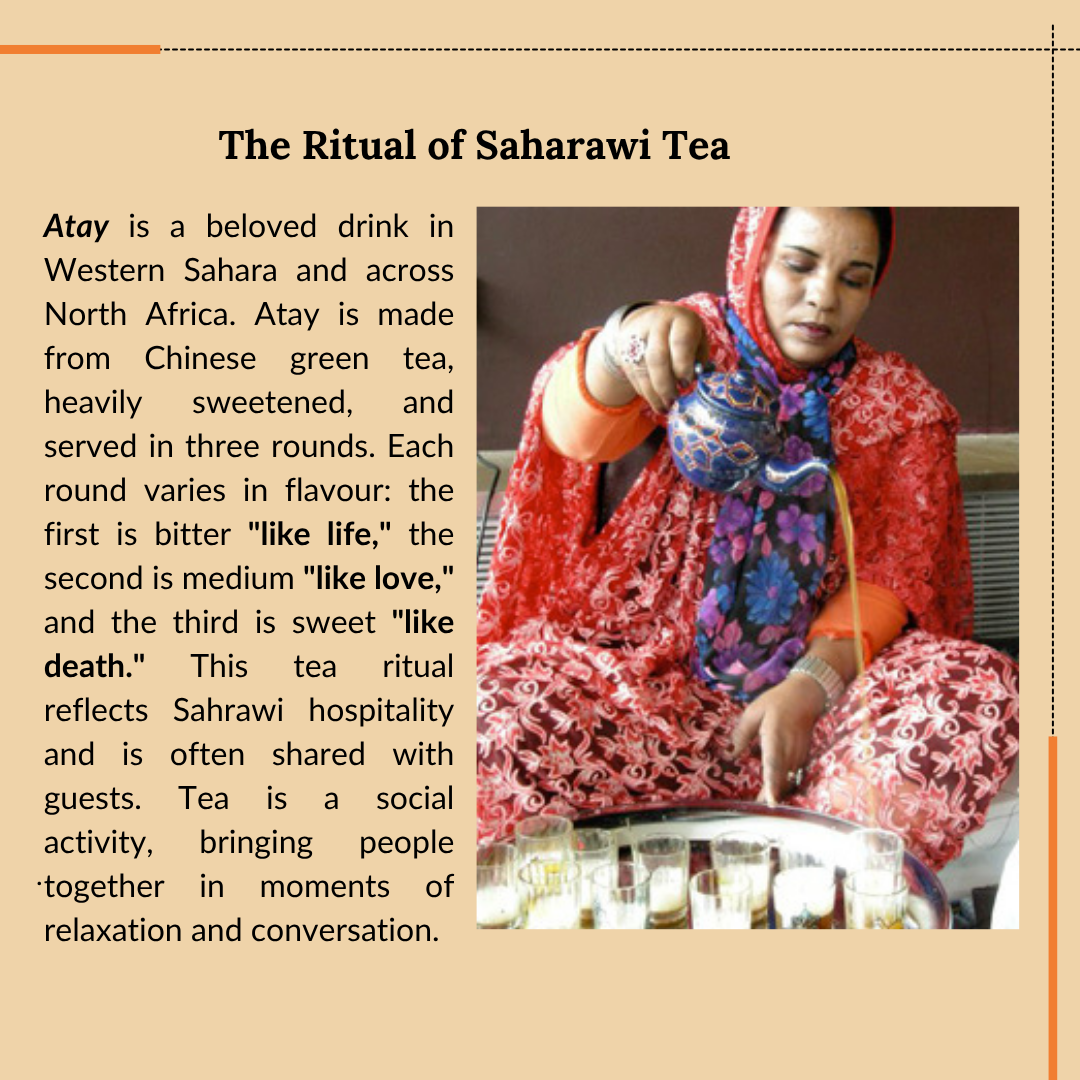
Enjoying conversation during a casual afternoon tea
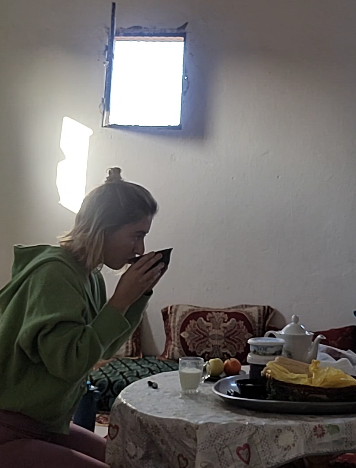
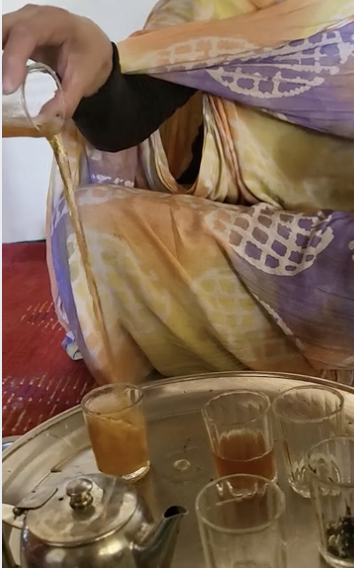
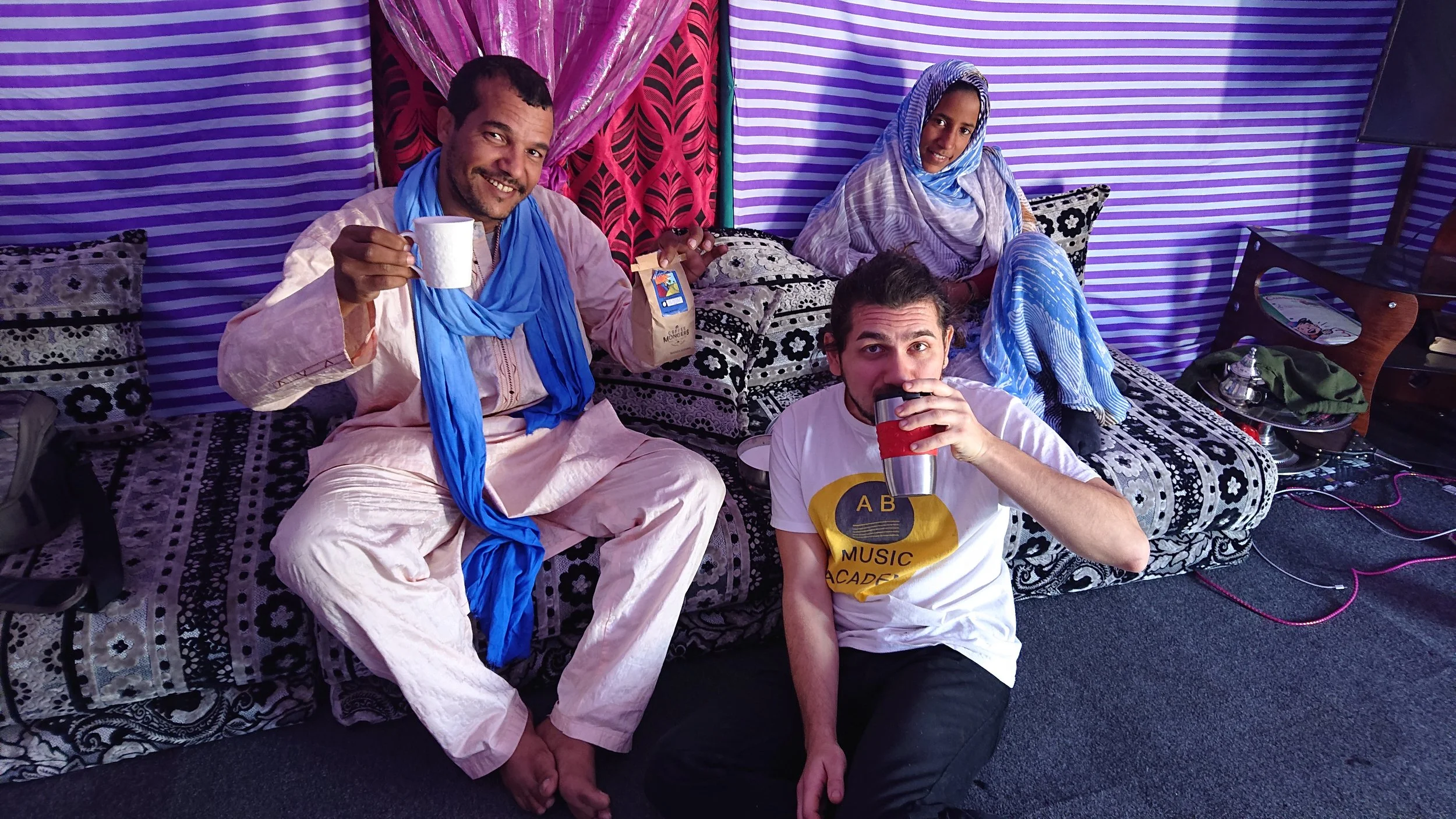
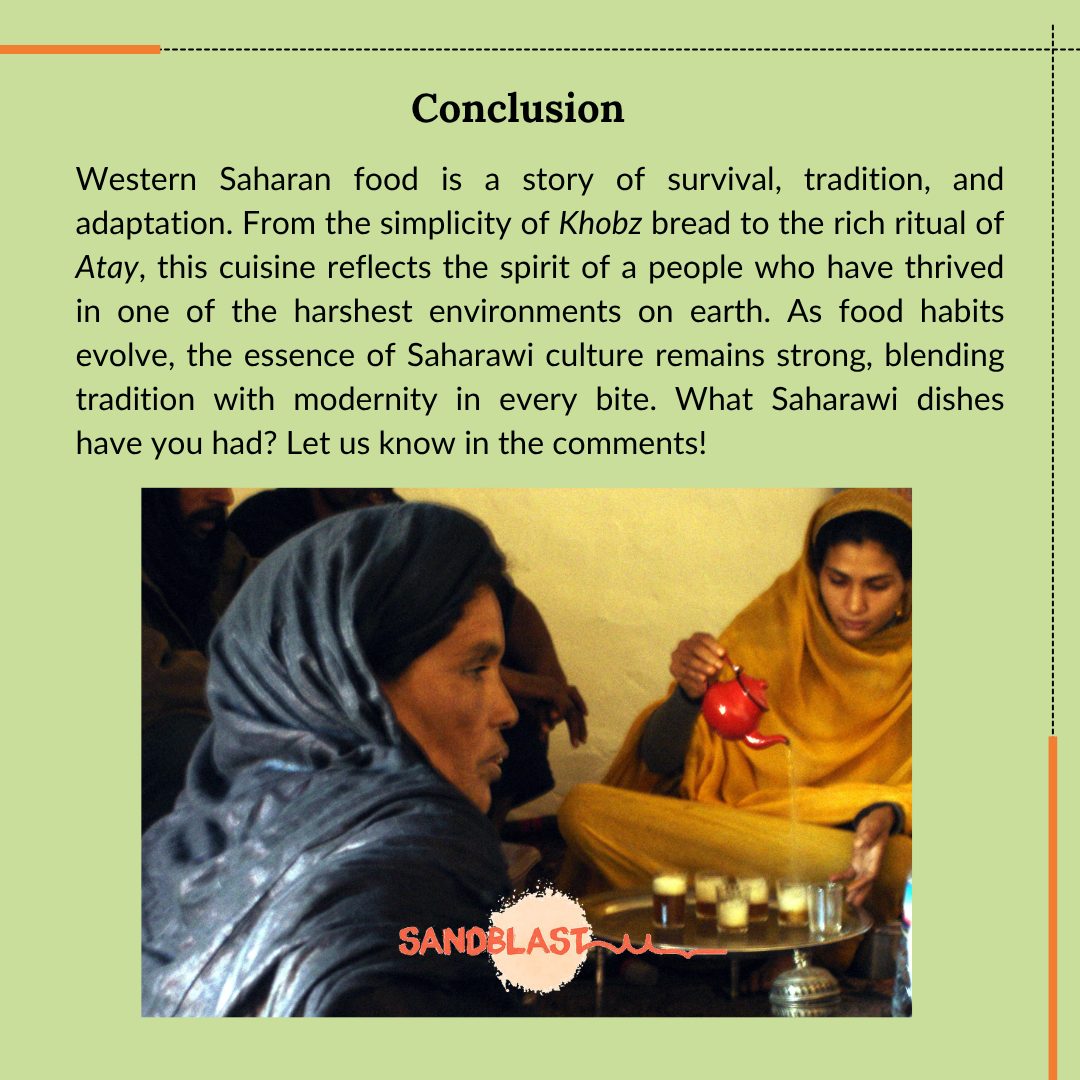
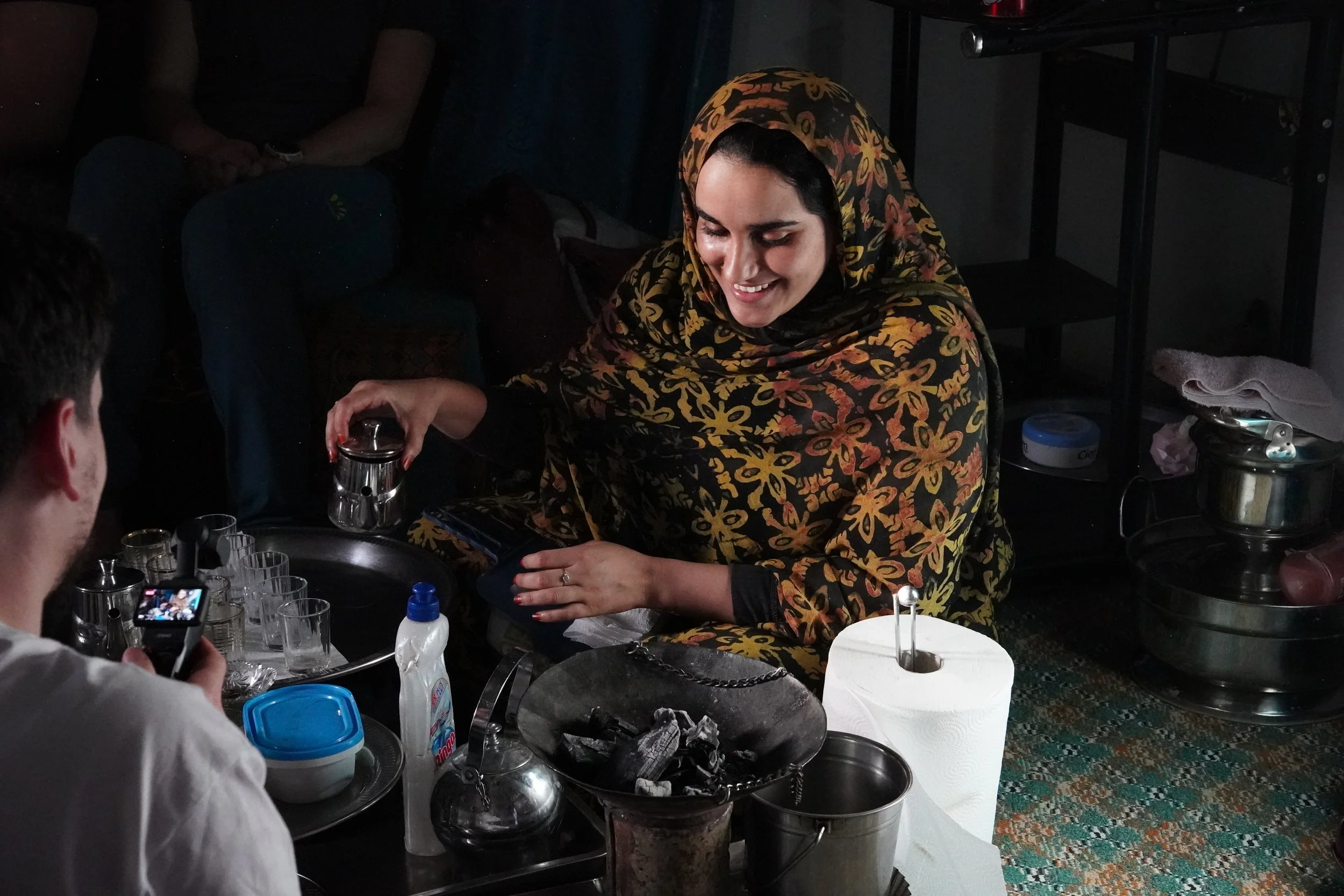
And of course, no meal is complete without the iconic Saharawi tea. A sweet, aromatic brew made with Chinese gunpowder tea is a staple in Saharawi kitchens. It's more than a drink, it's a tradition.
Mealtime shows how Saharawi families operate, how women sustain extended networks of care, and how hospitality is woven into everyday life. You'll be treated with immense generosity. Your hosts will ensure you're always well-fed, comfortable, and never without clean water.
Daily Routine of a Volunteer
There is a very natural cadence to each day, without any need for alarms and rushing. Tea time and meals shape the routine of camp life, and understanding the culture of slow-paced, social meals, can help understand the day-to-day of volunteering in the camps too.
Mornings are Slow and Social
You’ll likely find that there’s no need for an alarm, as the gentle pace of the mornings aren’t rushed. Wake up at your own pace and join breakfast around 9:00AM. This is a leisurely affair, especially if other volunteers are around. Take your time and ease yourself into the day.
After breakfast comes tea time! This is a great window to connect with people. Many families and neighbours are having their morning tea, so it's the perfect time to visit friends and neighbours, connect with your host family, schedule Hassaniya language lessons (if that interests you!), or use the free time to work on Desert Voicebox preparations.
A tip for volunteers: Women in the camps tend to have their most free time in the late morning. It's a great opportunity to schedule lessons or activities with them before their midday responsibilities begin.
While many of us are used to a coffee-fueled rise and grind start to the day, in the camps the morning is your most flexible time of day. The sun isn’t too strong yet, and there is plenty of time to tidy your room and get dressed for the day. With tea time, many of our volunteers love to lay down a mat outside the front door with pillows, and read a book or just hang out.
Even though classes don't run in the mornings, Desert Voicebox offers internet, air conditioning, desks, and couches. It's a comfortable spot to prepare lessons, do admin work, or just enjoy some quiet time of the morning.
Midday: Rest and Recharge
Many Saharawi women take a nap during this window after getting children up and ready for school. Once breakfast and tea are tidied up, and before the labor of lunch begins, it’s a great moment for your host mom to rest. You're welcome to nap too—especially if the heat is intense!
By early afternoon, women get busy cooking lunch which is often served around 2:30PM. After lunch is usually the hottest part of the day. This is prime time to nap if you haven’t already, read, or simply stay cool before Desert Voicebox.
Afterschool at Desert Voicebox
The first class begins at Desert Voicebox at 4:00. Volunteers head out to arrive before class to greet the kids. Your daily tasks at Desert Voicebox will vary depending on your role and responsibilities, but your routine will be the same! You’ll sit in on classes to help and support teachers or teach your own classes. The office space is also available for lesson preparation and administrative work. Throughout the day you can chat with the teachers and check in with students. Volunteers are also encouraged to help with cleaning or organising the space
By 7PM, classes wind down. Some volunteers may choose to stay later and finish up work, but most head home around this time.
Evenings with Family and Late Nights Together
After arriving home from Desert Voicebox, tea time begins around 8PM. This is a relaxing, enjoyable hour of conversation and connection with your host family and peers. Your host mom will likely start dinner around 9PM, with dinner served at 10:30PM. Meals are long affairs, typically lasting an hour or more.
Here's something that might surprise you: This evening window is actually your best chance to connect with your host family, especially your host mother. During the day, she might seem elusive, while she’s busy with cooking, visiting relatives, and managing the household. But at night, she sits down, serves tea, and is energetic and ready to talk.
After dinner, its time for bed. 11:30 might be later than you’re used to, but with out the rush of a hectic morning awaiting, we promise you’ll feel rested and recharged for another day in the desert.
The Saharawi homestay experience isn't for everyone.
Traveling to the camps is a long and arduous journey, and the stay requires a sacrifice of simple comforts many of us take for granted. Your stay will require flexibility, understanding, and a willingness to sit with discomfort.
For the right people, they'll find a life changing experience awaits them in Boujdour camp. For our volunteers and marathon runners, there is a community ready to welcome you as family, shares their stories freely, and invites you to be part of their journey towards freedom.
