
October has been a busting time of new beginnings and reflections. With so much unfolding at Desert Voicebox, from new volunteers, curriculum, and a clean slate: we wanted to share everything with our Sandblast family, in one place.
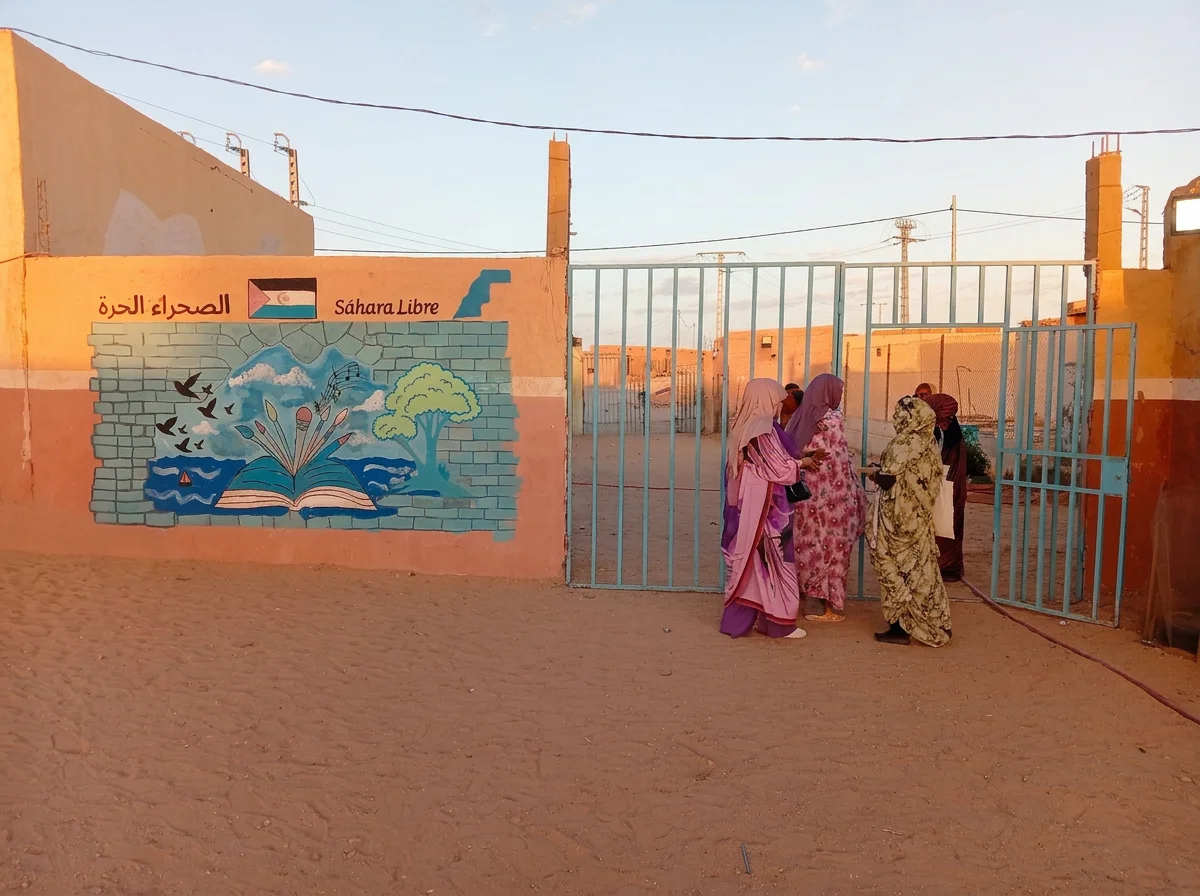
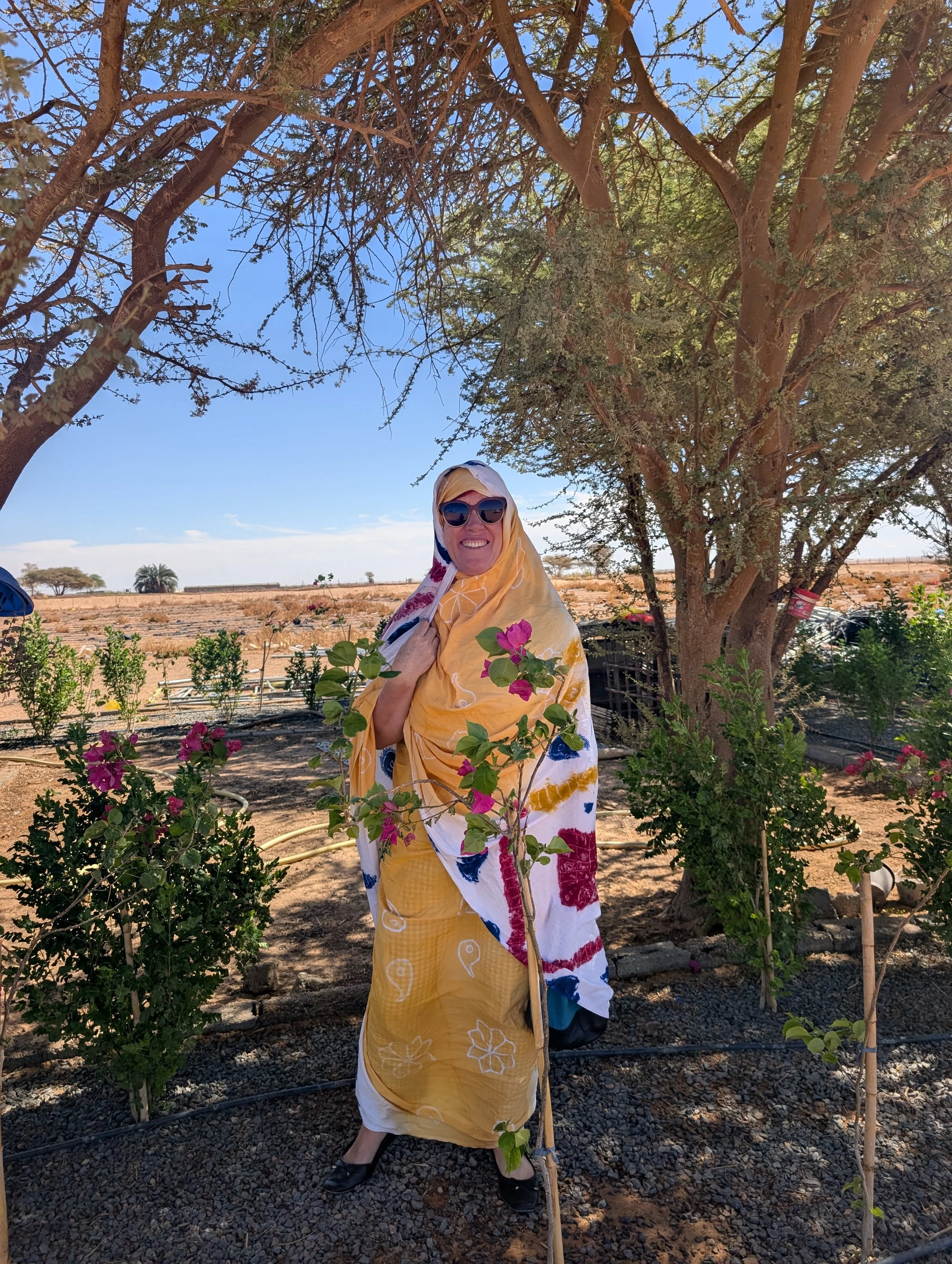
One of our biggest celebrations is welcoming Noreen as our resident teacher trainer. She was carefully selected to join our team on the ground to deliver teacher development trainings and serve as a co-teacher over the next few months.
This is part of an initial phase of our expanded teacher training programme.
You can learn more about Noreen’s background and her role here!
Noreen’s first week
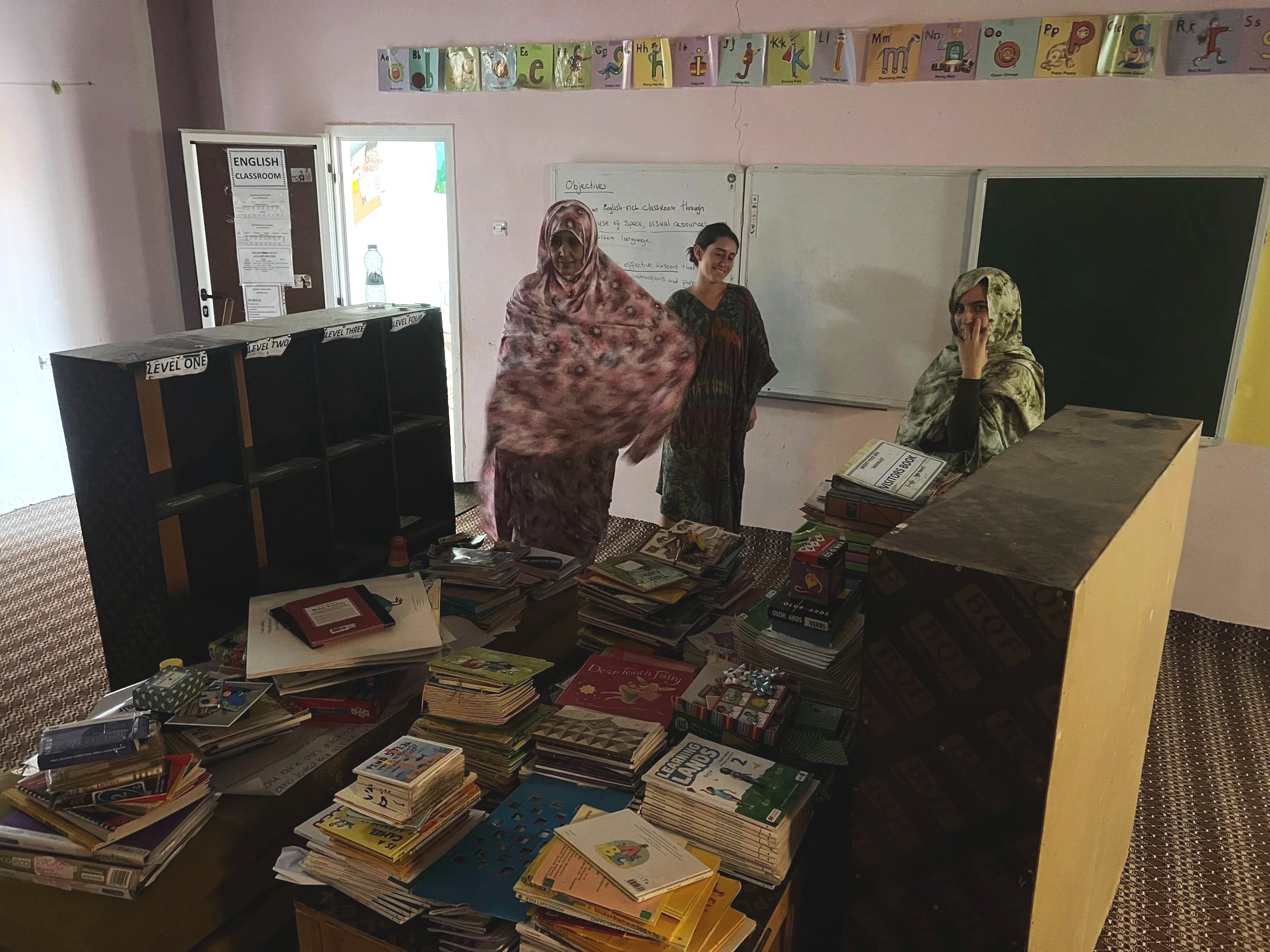
After settling into camp life, Noreen jumped straight in to the pre-semester preparations. Before classes started, Noreen ran three very practical planning days focused especially on how space, routines, behaviour and learning all work together. The teachers redesigned both classrooms around different types of learning, cleared the rooms and rebuilt them much more intentionally. The walls are a clean slate for the new year, so that the displays will be gradually be built up from materials the children have actually used and understand, creating an intentional student-centered classroom.
This fresh start transitioned into the first week of classes. In English, Tarba and Noreen established strong opening routines, including emotional check-ins, simple daily English questions and dialogues, along with clear transitions into study and activities. The children helped develop the classroom expectations themselves and made posters to display them. The rest of the week focused largely on games and review activities as an assessment to gain an understanding of what students retained from last year.
A new behaviour-management system has also been implemented across both the English and music classes. Noreen emphasizes that a key is consistency. She shares that though the teachers may not see immediate results, the routines and expectations need to be used repeatedly over the next few weeks before they can become fully woven into classroom routines.
Noreen she has shared how much she values being able to remain after the formal training and support teachers while they actually put the ideas into practice, rather than simply delivering training and leaving.
New students & the response to co-teaching
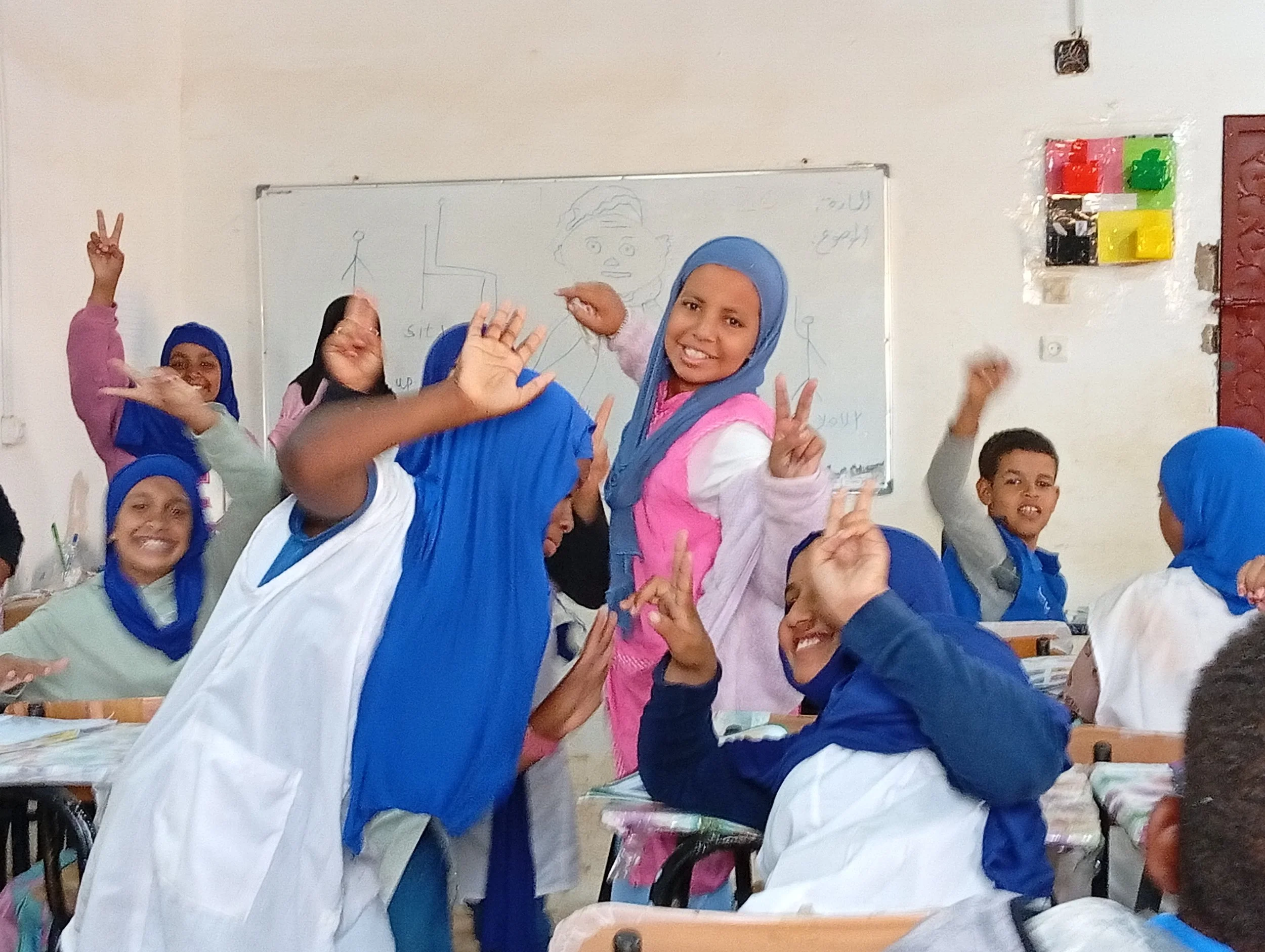
It is always exciting to meet the new Level 1 students, So far, the group seems really lovely and responsive, with roughly an even balance of girls and boys. Both teachers Tarba and Noreen have been very positive about the group.
The children also seem to be responding really well to the co-teaching approach. Of course, Desert Voicebox students are familiar with new faces in the classroom, from our Creative Workshop volunteers and special guests for Enrichment Activities, but a new face for the full semester is something new! Our team on the ground was curious to see how the new co-teaching method would unfold. There is much more student talk, movement and activity throughout the lesson. One child apparently said at the end of the first day that they couldn’t believe class was already over, which captures the general feeling quite nicely! The lessons feel very structured and predictable while still keeping the children continuously engaged.
Meet Linus!
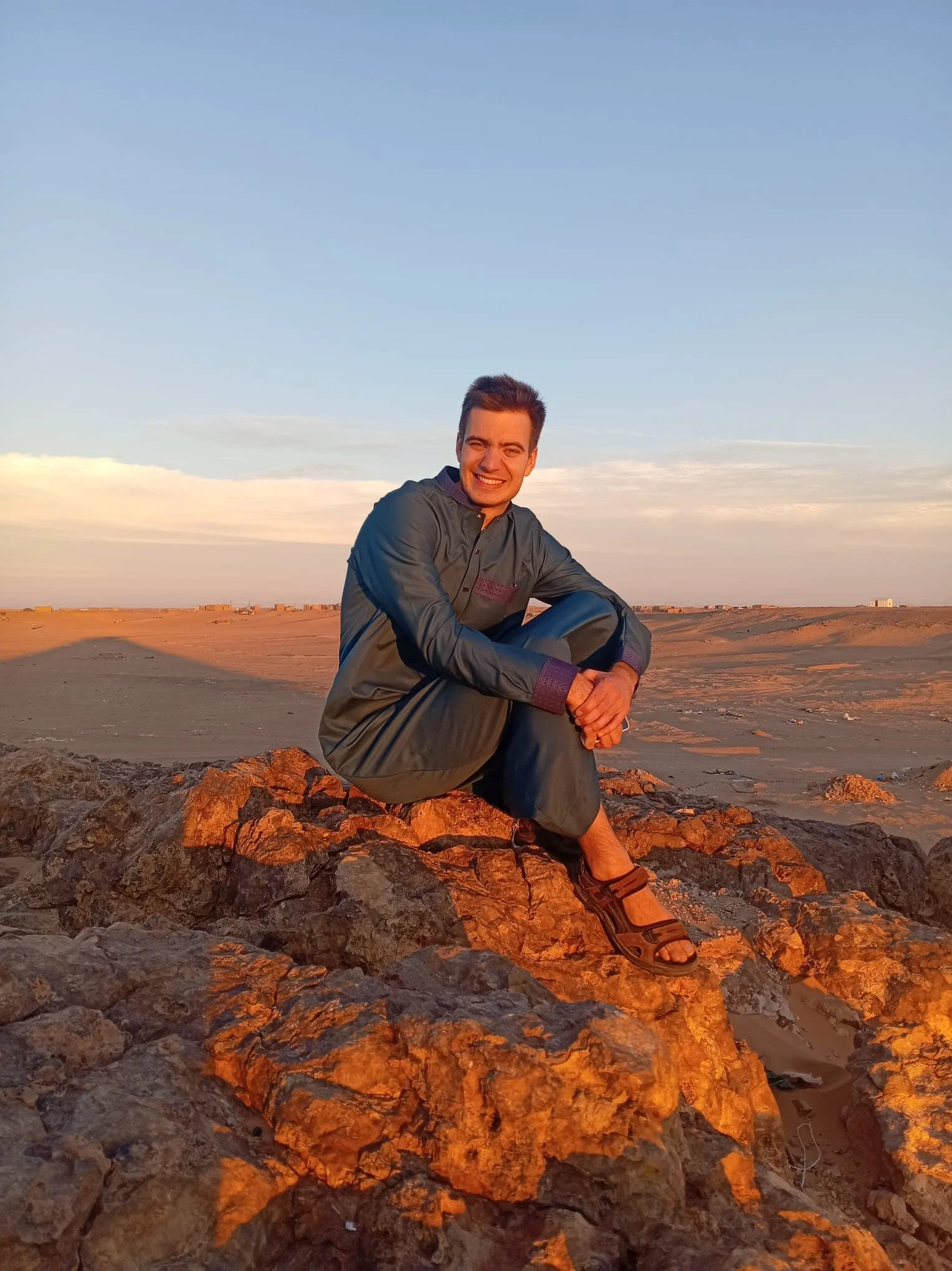
Linus is another volunteer we are excited to welcome aboard in Boujdour this October.
Linus spent much of this first week observing and supporting the music classes, with the idea that he can reinforce some of the routines and pedagogical approaches introduced during the training and give the teachers informal feedback after lessons.
Linus also took the lead and ran three drumming workshops. While the first two sessions were too advanced for the students’ current level, his quick thinking recognised this immediately, and he was able to adapt and simplify the third session around rhythm basics.
He felt the reframed session went very well, and that the students enjoyed the material.
Linus’s observations have already raised useful questions and insights about how we can create music sessions that are more practical and active, making clearer connections between music theory and actually singing, playing and creating music.
Middle School Developments
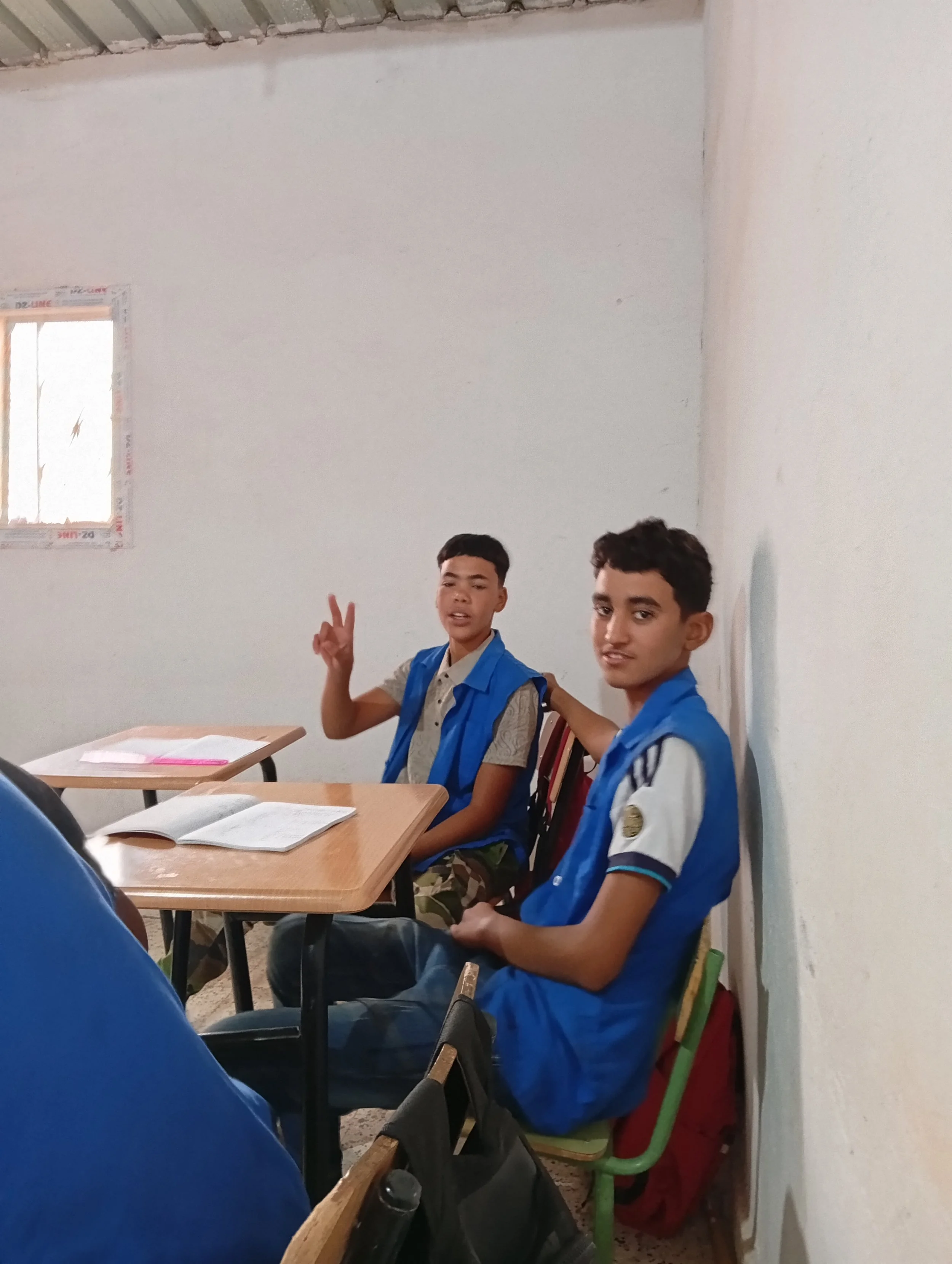
Linus is also playing an essential role in our growing relationship to the local middle school. Hamadi, the middle-school principal, is very keen for Sandblast to support the school. At the moment, their current English teacher is only 18 with intermediate English skills, and has just finished school herself. Hamadi was very open about the fact that she needs support in her new role.
The conclusion was that the most useful role for Linus would be to go into the English classes alongside her as an assistant, and provide her support as she develops her teaching skills. With approval, Linus is now attending three mornings a week, Tuesday–Thursday, from 9–11am.
His first week there confirmed quite a lot of the challenges we had suspected. Classroom management is extremely difficult and the students’ actual English level appears considerably below what the curriculum assumes. Linus spent the first two days observing, before teaching a short lesson on Thursday using basic commands and movement. The students were surprisingly responsive and really enjoyed it, showing a promising future in the weeks ahead.
Although it is a challenging environment, this opportunity promises to be a success for both Linus to contribute and for us to understand much better what support is most beneficial at the middle-school level.
Desert Voicebox Operations & Developments
Parents meetings
As part of the further development of the programme, our team decided it would be really useful to introduce parent meetings at the beginning of the year, in a unanimous decision! We split the meetings into two groups: Levels 3–4 came on Thursday 22nd of October, and Levels 1–2 came on Thursday 29th of October. The teachers followed outlines on key disucssion points to keep the meetings cohesive and effective.
The first meeting for Levels 3–4 went well. Nine parents attended, and the teachers reported that they were very engaged, participated actively and asked lots of questions. This kind of engagement is what encourages us to keep pushing for the preservation of the programme, community support and enthusiasm reminds us of the ripple effect that Desert Voicebox can have.
The discussions covered what children will be learning this year, Desert Voicebox’s approach to English and music, attendance policies, expectations for learning at home, the upcoming workshops and pen pal connections, photography consent, and parent communication.
Tarba is now teaching all four levels of Music!
Though it is still a fresh change, Tarba feels she is managing it well. The biggest adjustment is simply the energy required to teach for the full three hours every day, but otherwise, she has shared that she is happy with the arrangement. The greatest joy is being able to teach some of her former students again now that they are older. Continuing with one teacher encourages greater retention of skills, consistency, and a greater development of relationships overtime between students and teachers, and we hope that this adjustment proves to be fruitful across our grade levels.
Assessments
Another key pillar of our new classroom developments have been creating and implementing grade-level assessments. We now have a clear beginning-of-year assessment schedule:
Student self-assessments: started 22 October, finishing 29 October
Teacher self-assessments: due 29 October
Parent surveys: collected following the respective parent teacher meetings
Teacher assessments of each student: due 1 December, so teachers have enough time to properly get to know the children first
The teachers have seen the revised forms and were happy with them. Assessments like this aren’t graded for marks, but rather to provide a clear understanding of student abilities to better adapt lesson materials and provide the best lessons possible for students. Documenting growth over time is also essential to understand the efficacy of our approaches, and helps guide our pedagogical methods.
This feature is just the beginning. As the semester progresses, we are excited to keep sharing more insights into our classroom, daily life, and the growth and progress of all our students. Through creative arts, curriculum development, and the dedication of our teachers, our students continue to shine.
