
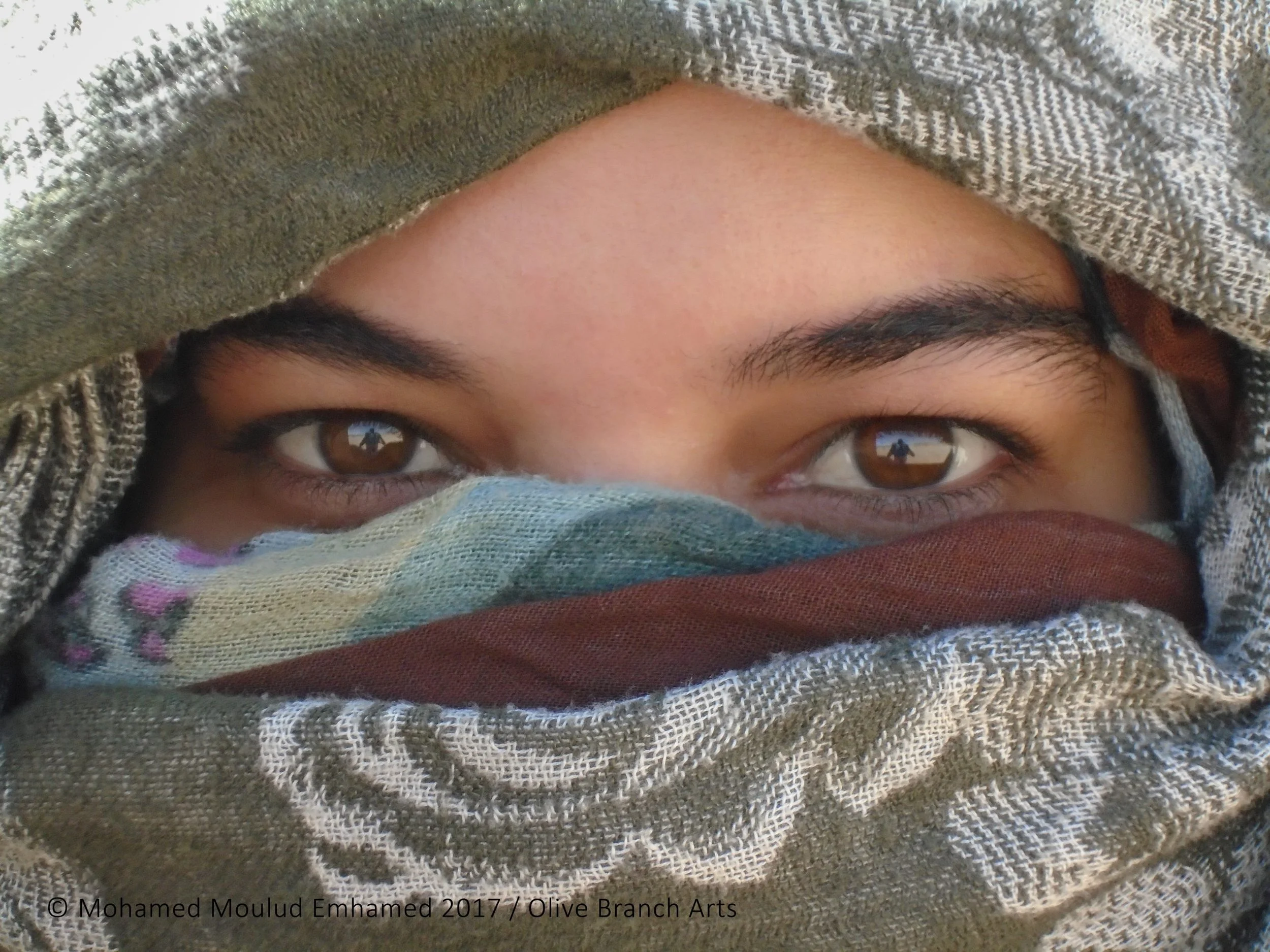
Saharawi Women
Saharawi women have always enjoyed freedom and respect. In their previous nomadic way of life, they performed important social roles, such as family educators and managers of their encampments. They were able to re-marry without stigma, and were integral to cultural and spiritual transmission. Because men were often away with their animal herds, women were also in charge of hospitality towards guests, one of the most important traits of Saharawi culture.
Twiza:
The expression of the communal spirit and belief in the coming together of many hands to lighten the burden.
Um Deleila performs a revolutionary song in honour of martyrs Luali and Mahfud Ali Beiba. Her voice has mobilised thousands of Saharawis to fight for their rights and freedom. Deleila’s songs have been described as "more effective than any political speech".
The Saharawi Refugee Women
Saharawi women have always shown huge determination and resourcefulness. Many of the large tasks of rebuilding life and community upon their displacement to the camps were organised in the spirit of Twiza, the expression of the communal spirit and belief in the coming together of many hands to lighten the burden.
Over the past decades, and with huge determination and resourcefulness, the Saharawis have managed to lay the foundations of a state-in-exile. This achievement of spirit, will, and perseverance has been made possible by generations of Saharawi Women.
During the first years of war and exile, Saharawi women were the primary community-builders within the refugee camps, supervising the national administration, and the education and health systems while the men were fighting on the frontlines. It was the women who built the camps from nothing and reshaped every aspect of life with the sparse resources available to them. .
In exile, women have assumed important roles at the political, social, and familial levels. Women are members of the Saharawi Parliament, hold ministerial positions and are prominent within the African Union, in which the Saharawi Arab Democratic Republic is a full member state. In the past two decades a growing number of women have also become diplomatic representatives in European countries and beyond and have proven very effective
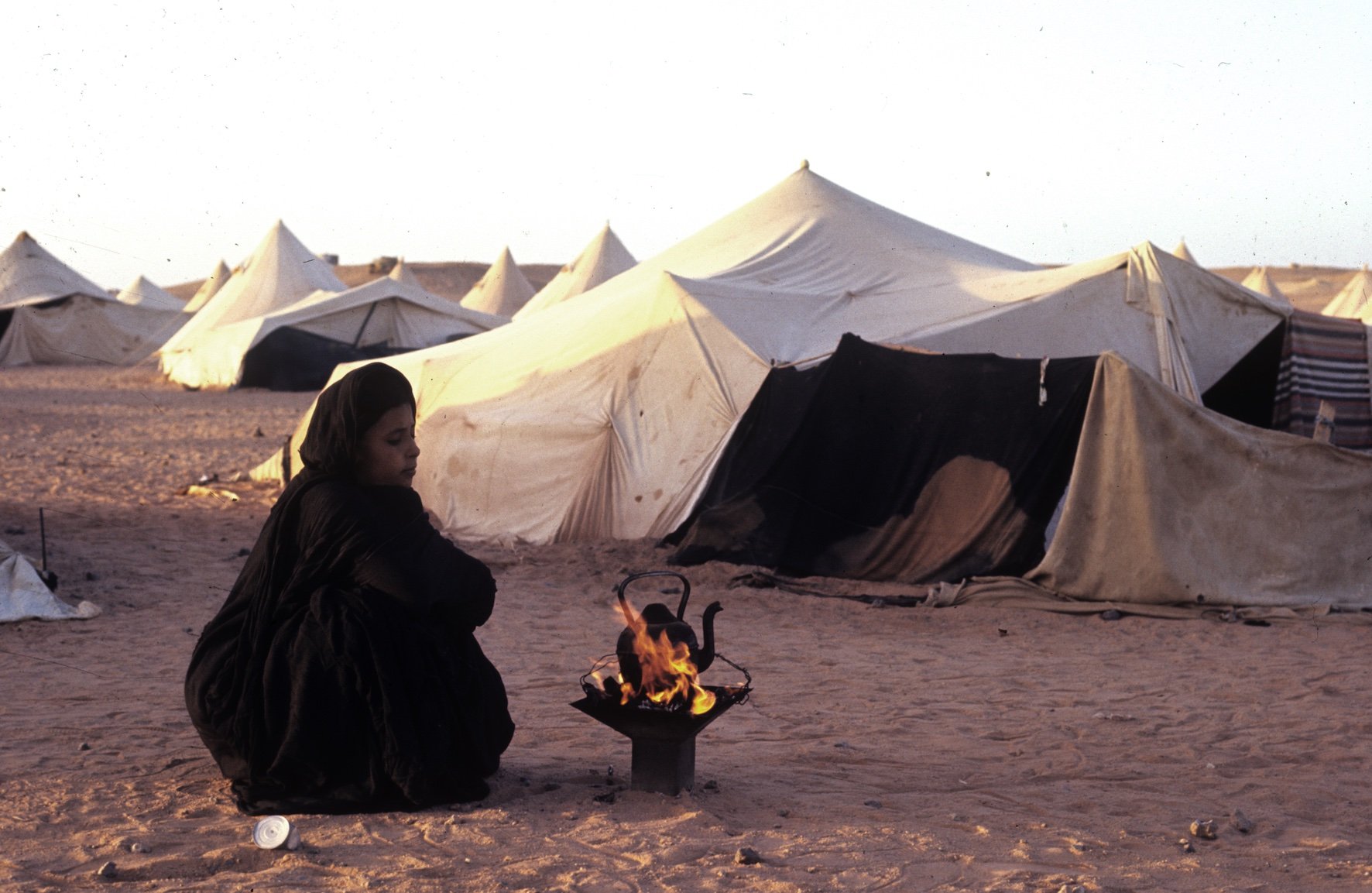
Saharawi refugee woman in the camps, during the early years of displacement in the Hamada of SW Algeria. Photo by Ed Harriman
Owners of the Tent:
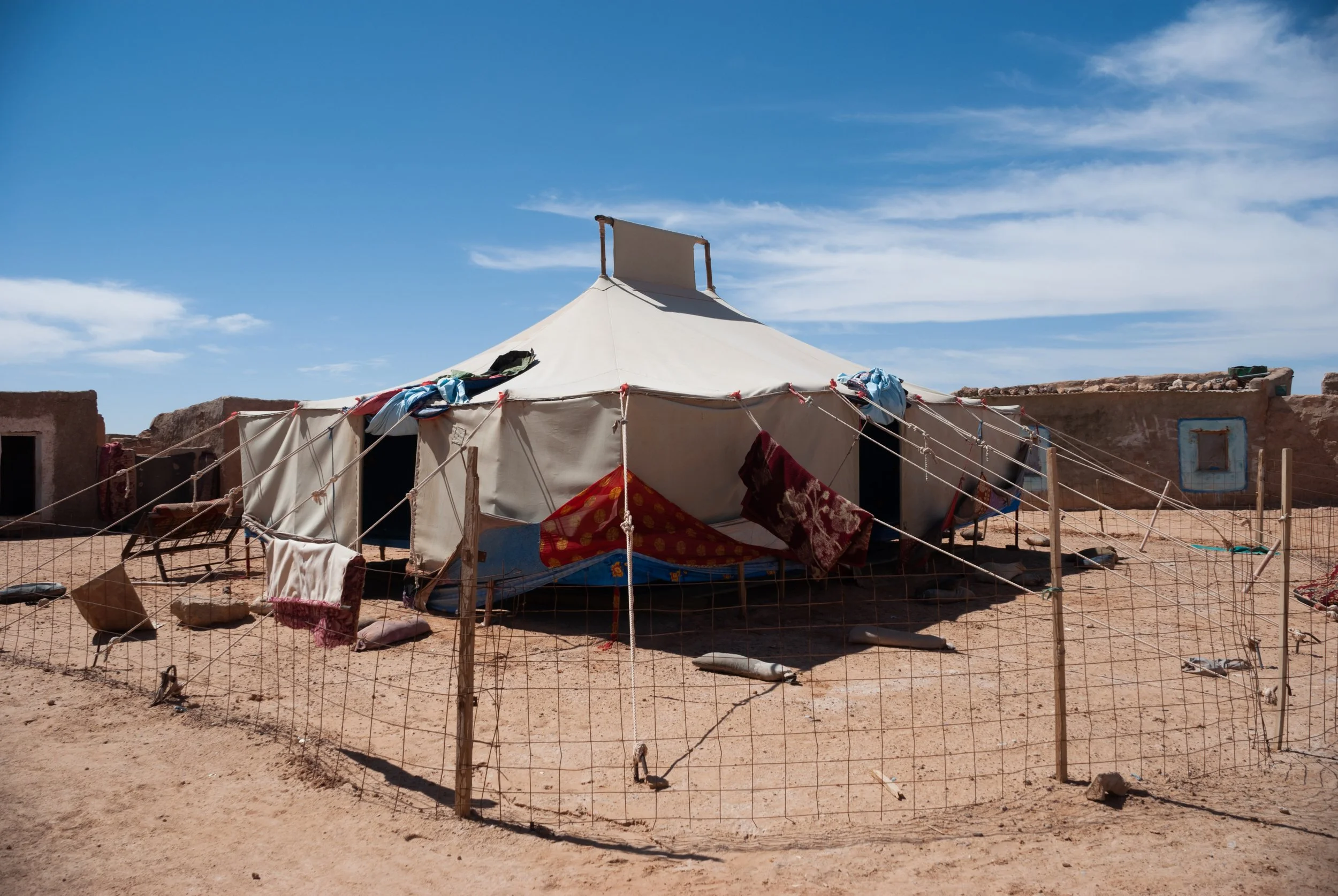
In Saharawi society, married women are described as the “mutkhayima”, literally translated as “the owner of the tent”. This means even when a man is married, the tent exclusively belongs to his wife and she can kick him out at any time if she is displeased with him.
Saharawi Women Under Moroccan Occupation
Just as women have played a central role in the refugee side of the story, women under the occupation have been prominent in leading the non-violent resistance. No account of the Saharawi struggle would be complete or accurate without acknowledging their protagonism on both sides of the wall.
From the beginning of the Moroccan occupation til today, many of the prominent Saharawi activists have been women: Aminatou Haidar, Sultana Khaya and Naziha Elkhalidi of Equipe Media to mention only a few. In all the protests and demonstrations taking place under the occupation, the Saharawi women have been out in force on the streets, and have endured beatings, rape, imprisonment and torture as a result of their activism.
Aminatou Haidar
Aminatou Haidar, stands out for her enormous valour and convictions. A Nobel peace-prize nominee, she twice single-handedly stood up to the Moroccan regime: first in 2005, when she refused to stop leading peaceful demonstrations calling for self-determination. For this she was beaten within an inch of her life, and was imprisoned for 7 months.
Then again at the end of 2009, she staged a 34 day hunger strike at the Lanzarote airport to protest her expulsion from her homeland for refusing to write that she was a Moroccan in her landing card. An unprecedented build up of international pressure finally forced Morocco to take Aminatou back, an extraordinary victory for an extraordinary individual willing to go to the end for her people’s dignity and rights.
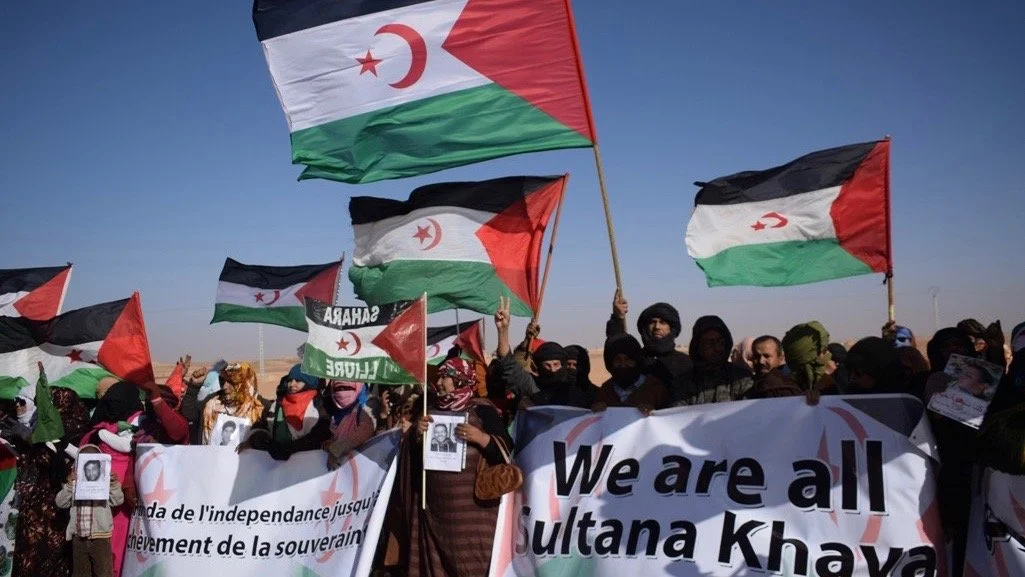
Sultana Khaya
Sultana Khaya is one of the most prominent and outspoken Sahrawi woman activists and defenders of Sahrawis’ right to self-determination. She is the President of the League for the Defense of Human Rights and against Plunder of Natural Resources in Boujdour and she regularly participates in demonstrations advocating for self-determination and denouncing violence against Saharawi women. Sultana has travels internationally to participate in high-profile conferences and events, including the UN Human Rights Council, to speak about the the human rights situation in Western Sahara.
But Sultana has paid a heavy price for her activism. In February 2021, she lost her eye after she was severely beaten and hit with a rock by a Moroccan police officer. In November 2020, after the breakdown of the ceasefire between Morocco and the Polisario Front, she was placed under de facto house arrest as a result of her activism. Khaya would ultimately spend more than 500 days living under 24/7 surveillance alongside her 84-year-old mother and sister. The Khaya family was denied visitors or medical treatment, and they faced repeated sexual assaults including rape. Several women activists who protested her arbitrary detainment were also beaten and threatened for expressing their solidarity with Sultana.
After 484 days, an American delegation of human rights activists arrived in Boujdour to break the blockade on the Khaya home. Finally, in June 2022, Khaya was temporarily released to seek medical treatment in Spain. She says she will return to Boujdour as soon as she is able to.

Sultana Khaya Accepts Individual War Abolisher Award of 2023 - with English subtitles
Although we have highlighted only two activists here, there are hundreds of brave Saharawi women who have stood up for their cause for decades now. We would like to acknowledge their contribution to the struggle.
For further reading and insight into the experience and role of Saharawi women activists under Moroccan rule watch Insumisas (2023) based on in-depth research and testimonies about the systemic violence experienced by Saharawi women since 1975.
Voices of Saharawi Women
-
![]()
Aminatou Haidar’s vision for a free Western Sahara
Right Livelihood Laureate, Aminatou Haidar, sheds light on her vision for the self-determination of Western Sahara.
-
![]()
Endless Sands of Time
Desert Voicebox teacher Nanaha Bachri shares her experiences growing up in the camps and what the meant in context of her own ancestry.
-
![]()
Gender rights in Western Sahara: Will future generations of Saharawi women maintain their position as ‘owners of the tent’?
Written by Sandblast founder: Danielle Smith
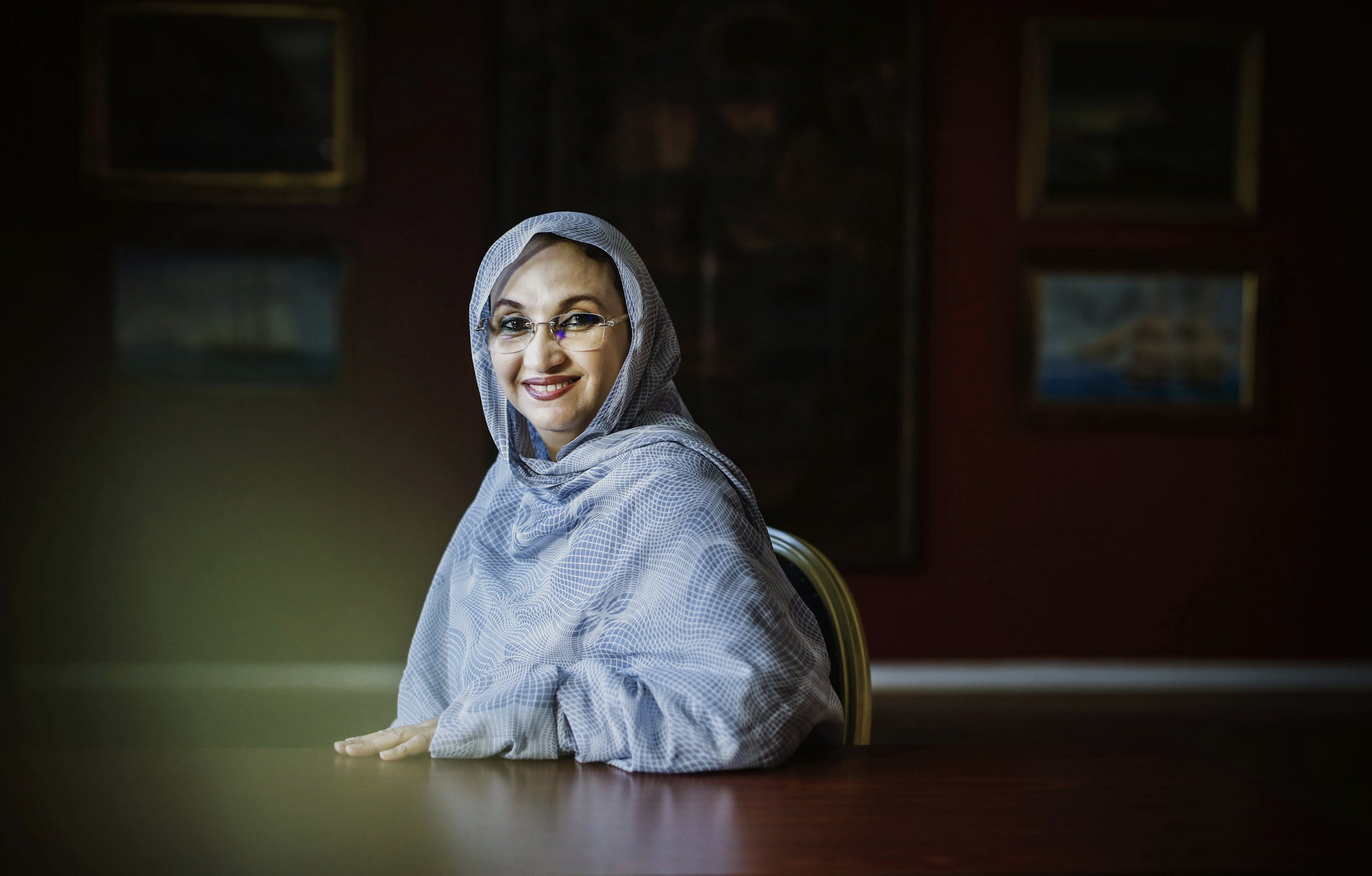

Sandblast’s Work with Saharawi Women
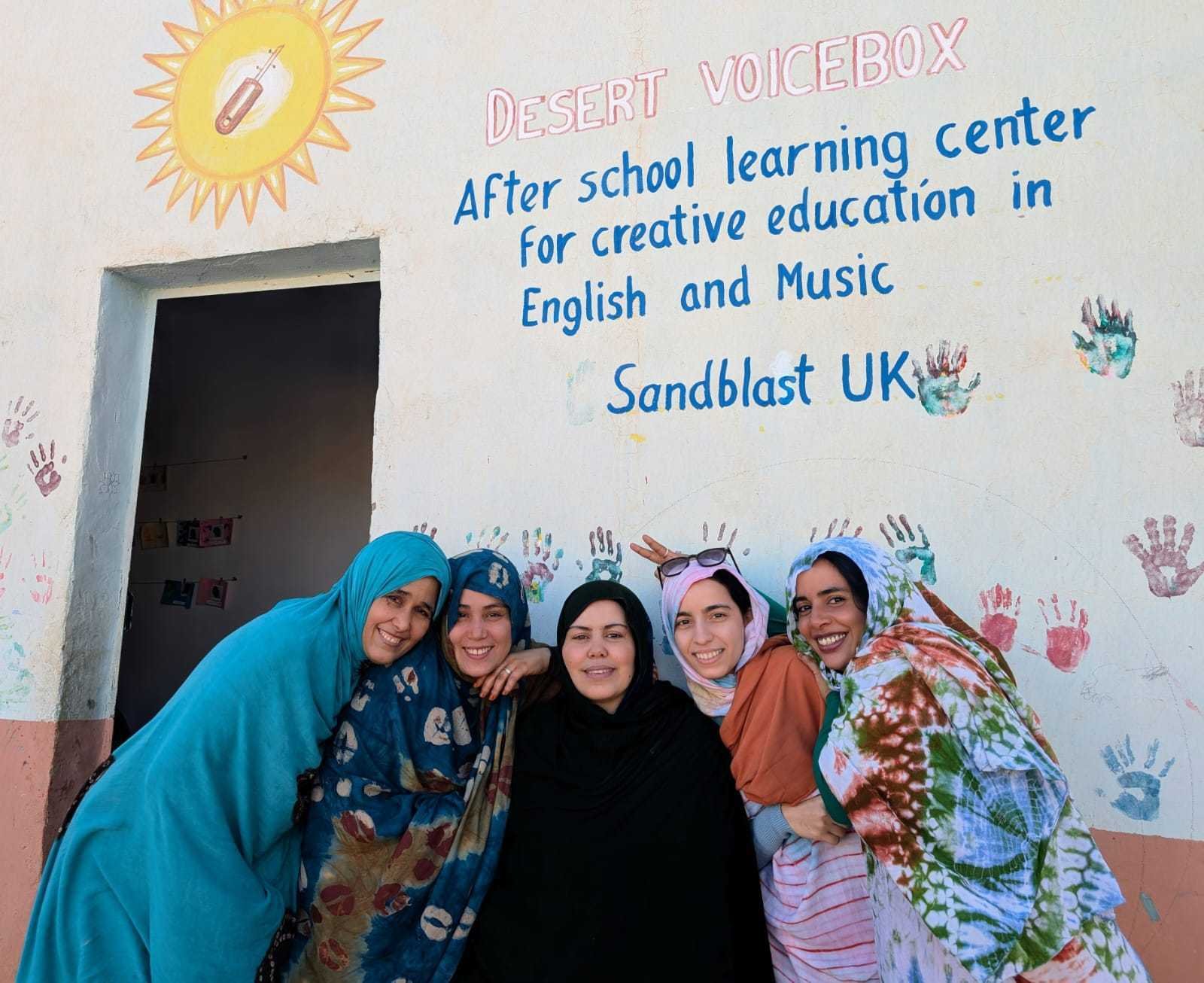
One of the issues that Sandblast is tackling through our Desert Voicebox project is to give opportunities to young Saharawi refugee women to develop professionally, even if they haven’t finished secondary school. Through our specialised training programme we are currently working with four women to get them qualified to teach English and music for the four year long after-school programme that we run for primary school children in one of the camps.
Although the project still functions on a modest scale, the aim is for them to become self-reliant educational leaders and train other women, able to drive the project forward for future expansion to the other camps and earning a livelihood to reduce their aid dependency. By their example, we seek to counter the negative trends around the value of education for girls and show how with skills, they can improve their lives and that of their community and be better equipped to advance their cause internationally.
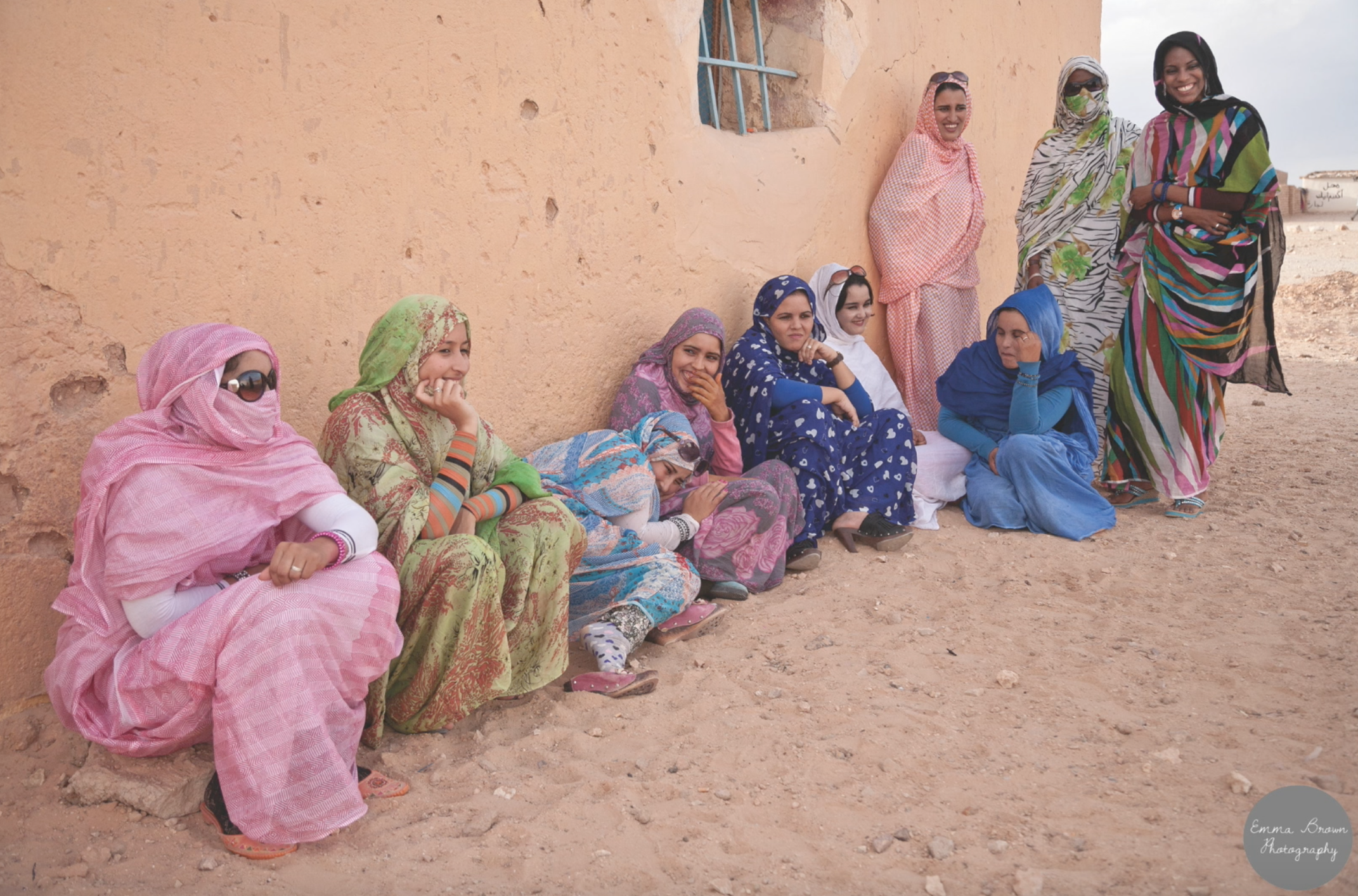
"When we think of Western Sahara we think of number one, the women number two, the women number three, the women. For they are strong and they are beautiful."
– Ljadra Mint Mabruk, Saharawi poet