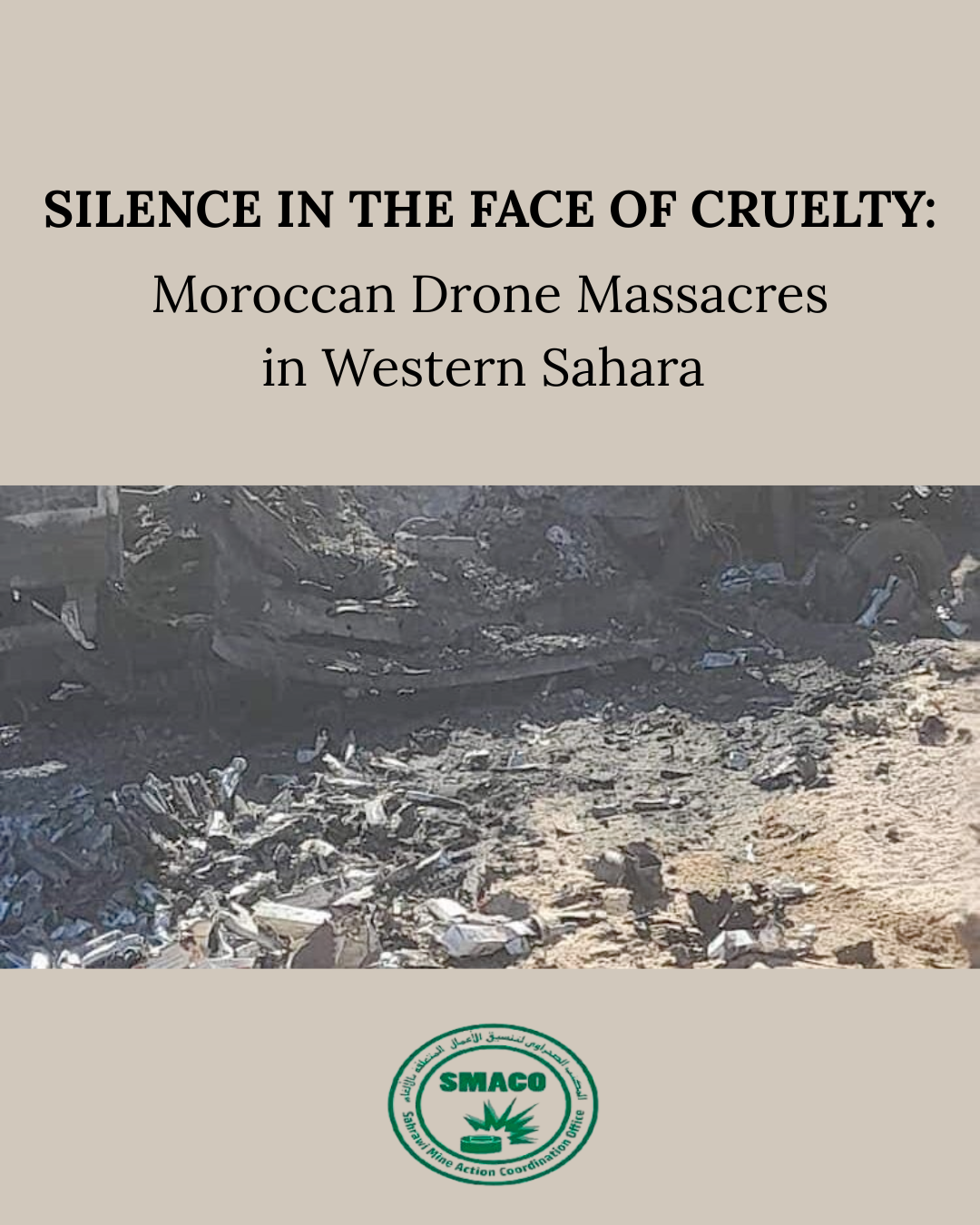
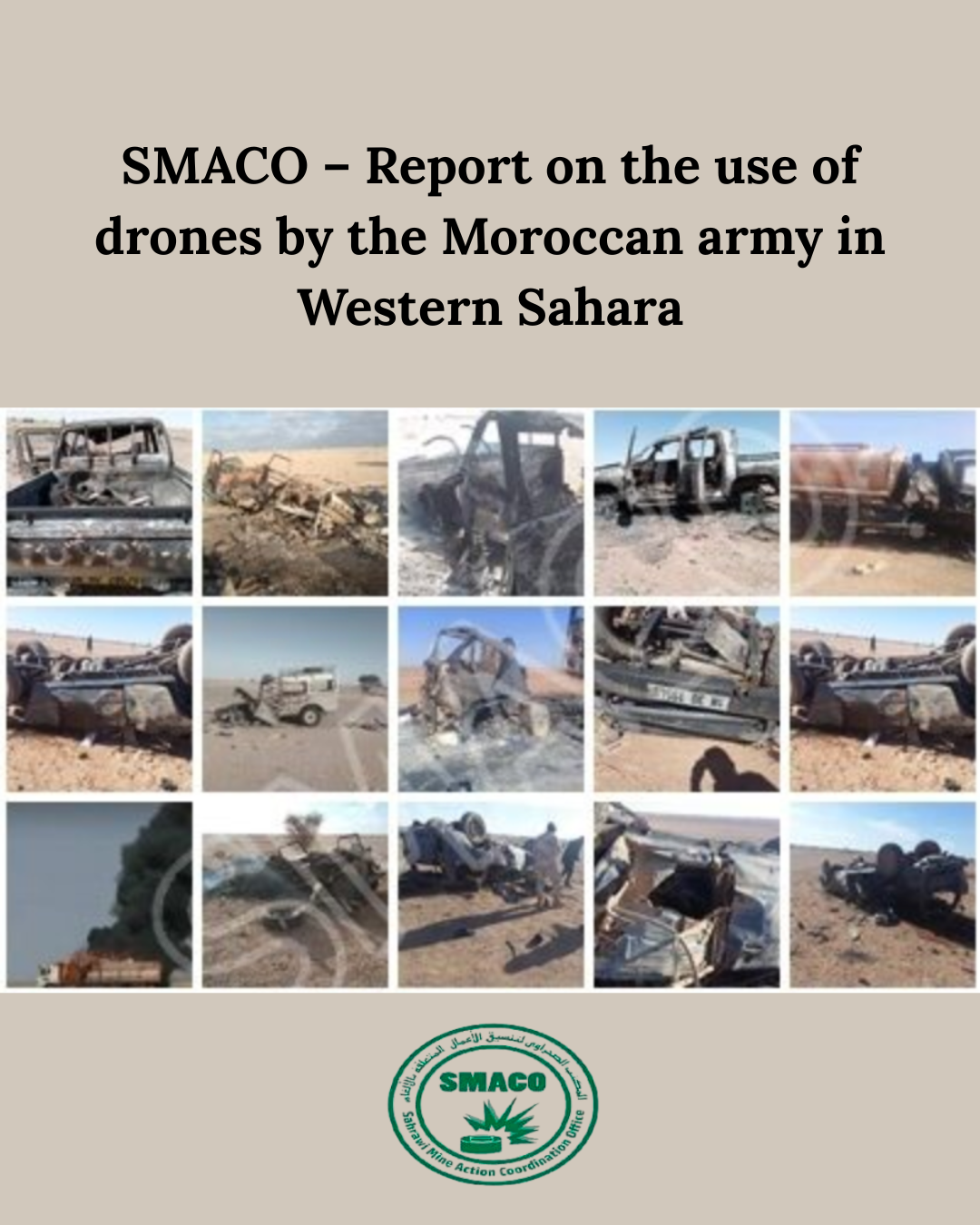
SMACO 2024 Drone Strikes Report
Unlike Morocco’s official discourse, the 2024 Annual Report by Sahara Mining Action Coordination Office (SMACO) provides a fuller context on the drone attacks and violence in Western Sahara, supported by figures, data, and above all, victims with names and identities.
Between 2021 and 2023 a total of 73 attacks against civilians, attributed to Morocco, were documented in areas east of the Berm military wall.
Their full reports are available at the end of this article.
“SMACO was created by a presidential decree in 2013, which established the office as the authority to coordinate humanitarian mine action activities in Western Sahara, east of the berm, in line with International Mine Action Standards. In cooperation with well-known international organizations (such as the United Nations, SLG, DDG and NPA), SMACO participates in the planning, implementation, follow-up and reporting of all demining activities conducted east of the berm.” as stated in SMACO’s published strategy.
SMACO is also the point of contact for all reporting of accidents related to mines and Explosive Remnants of War and they cooperate for the collection, coordination and dissemination of this information to reach people who are living or travelling through Western Sahara, east of the berm.
Their Vision: A developed Western Sahara, impact-free from mines and explosive remnants of war, where all people, including those affected by mines/explosive remnants of war accidents, enjoy a free and safe life.
Why read their reports?
SMACO holds Morocco responsible for the drone attacks and accuses the international community of failing to launch sufficient independent investigations. Despite Morocco’s tight restrictions on journalism and media, the SMACO report documents the ongoing atrocities, and supports the fight for justice through indisputable evidence.
Key Highlights of the Reports:
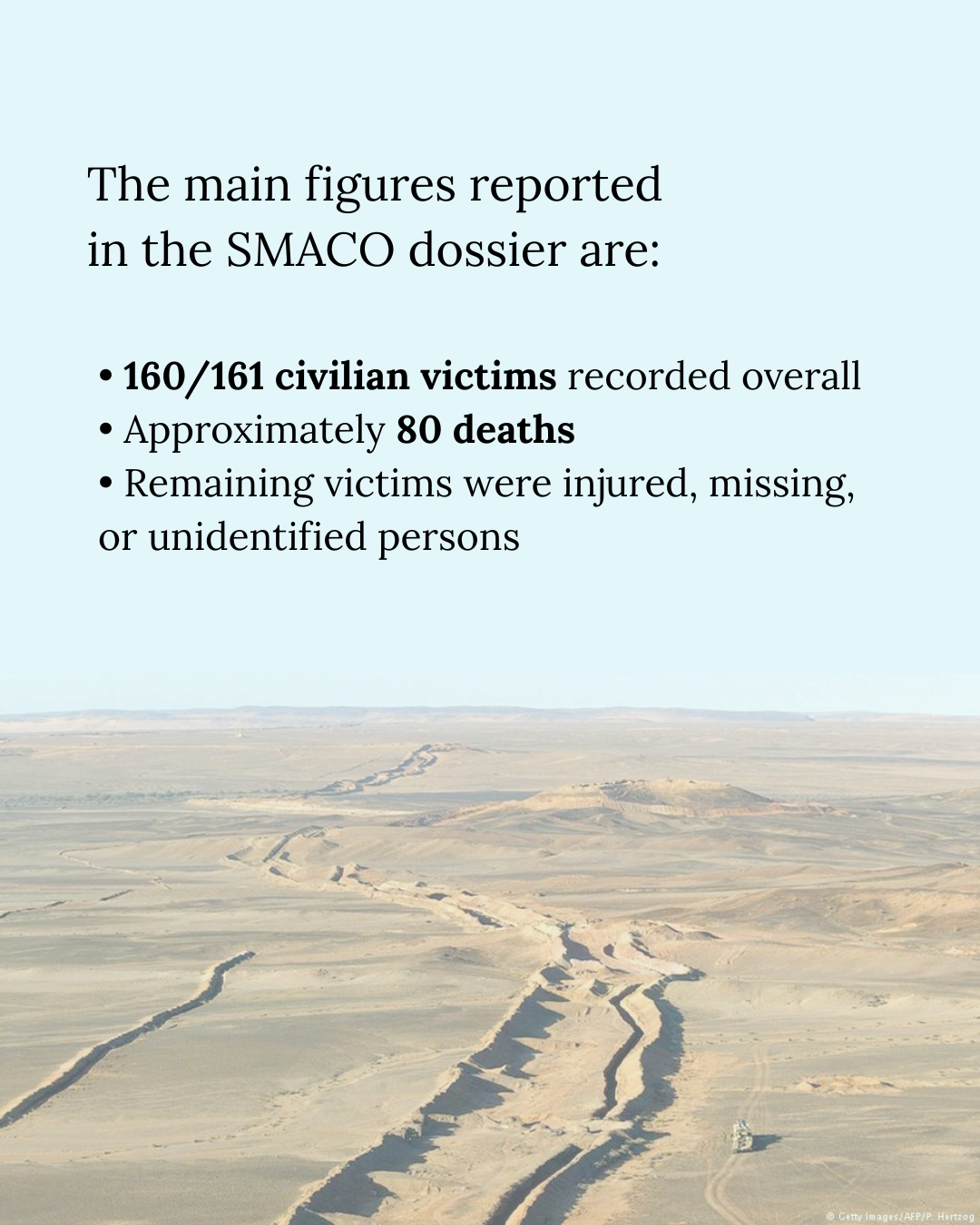
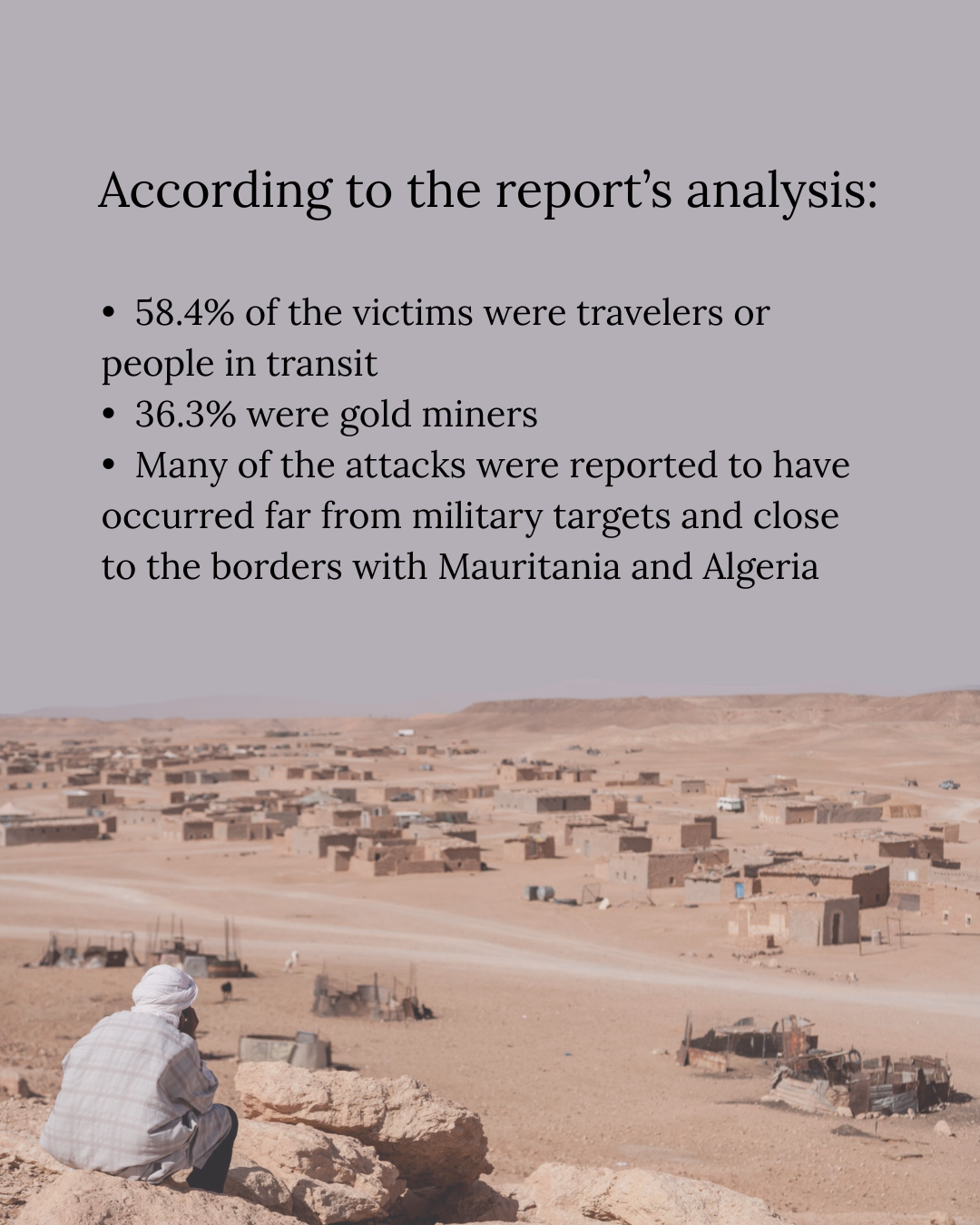
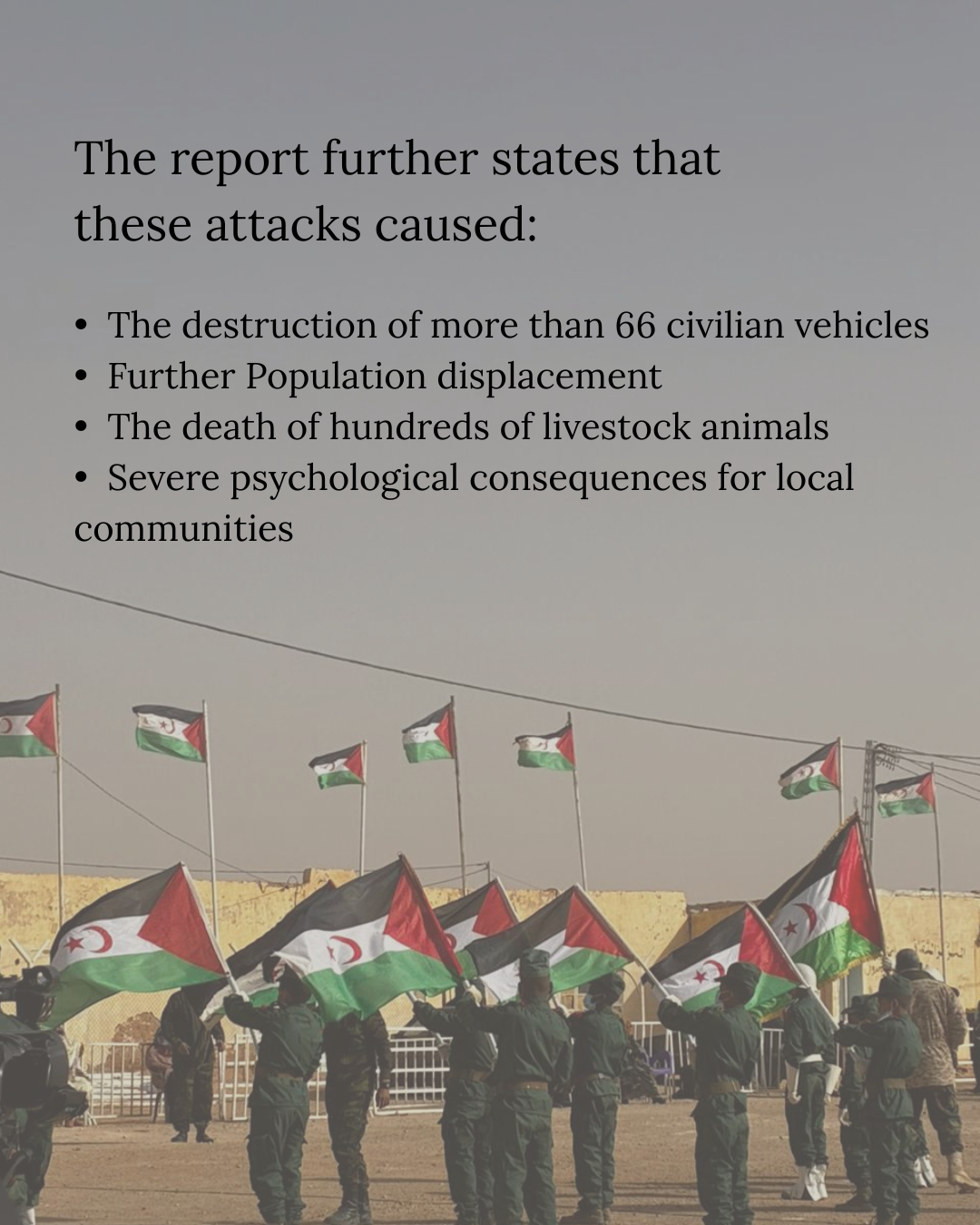
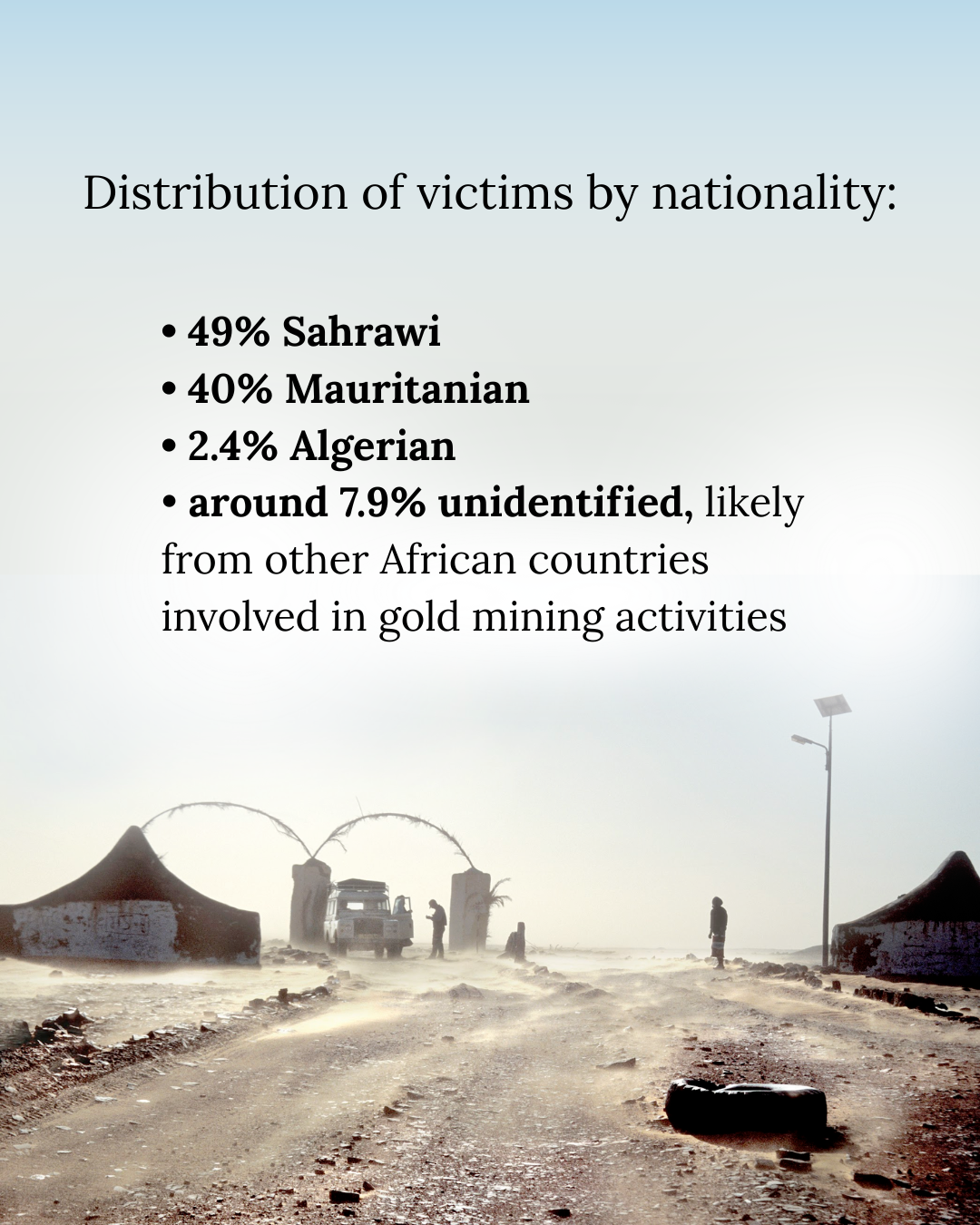
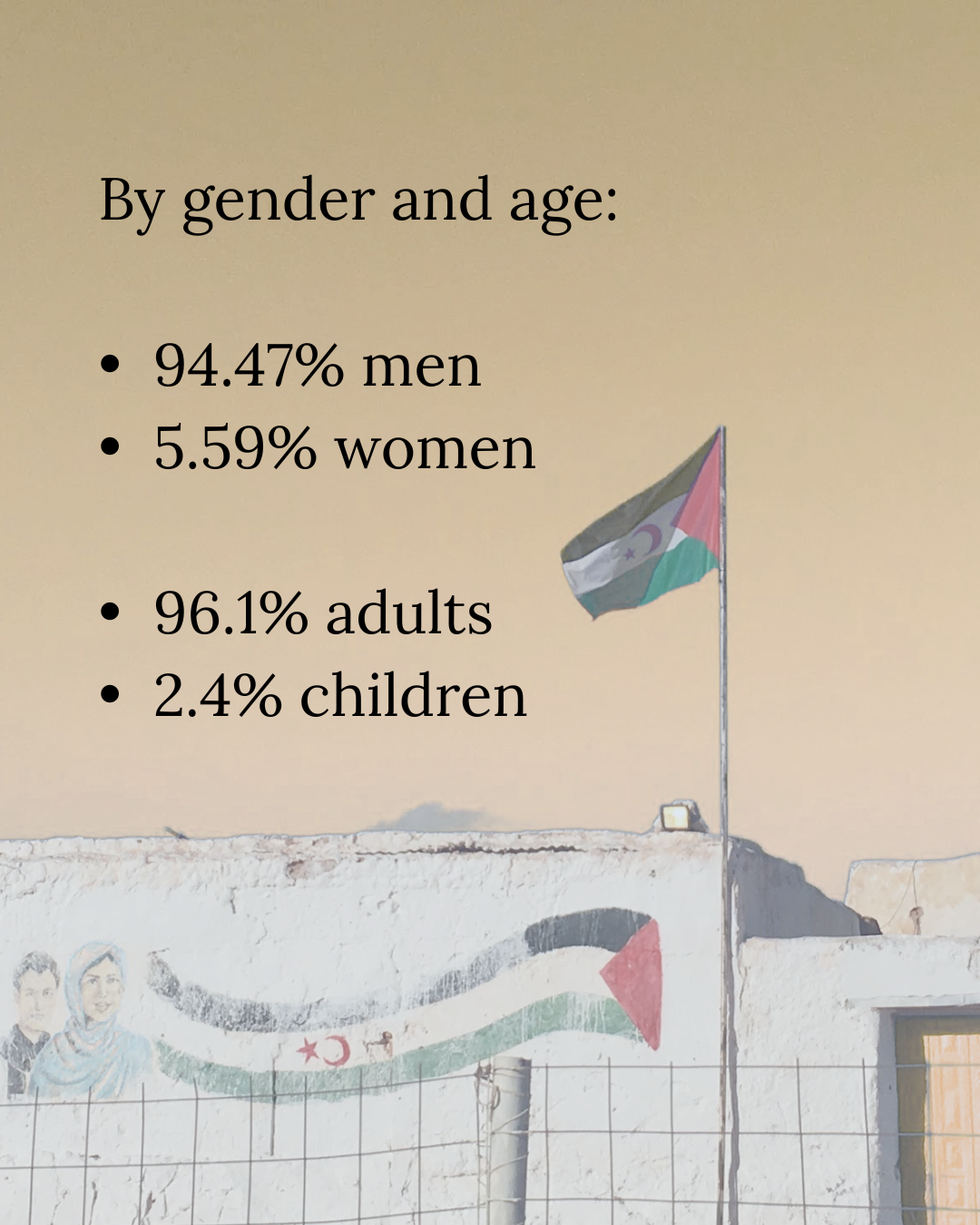
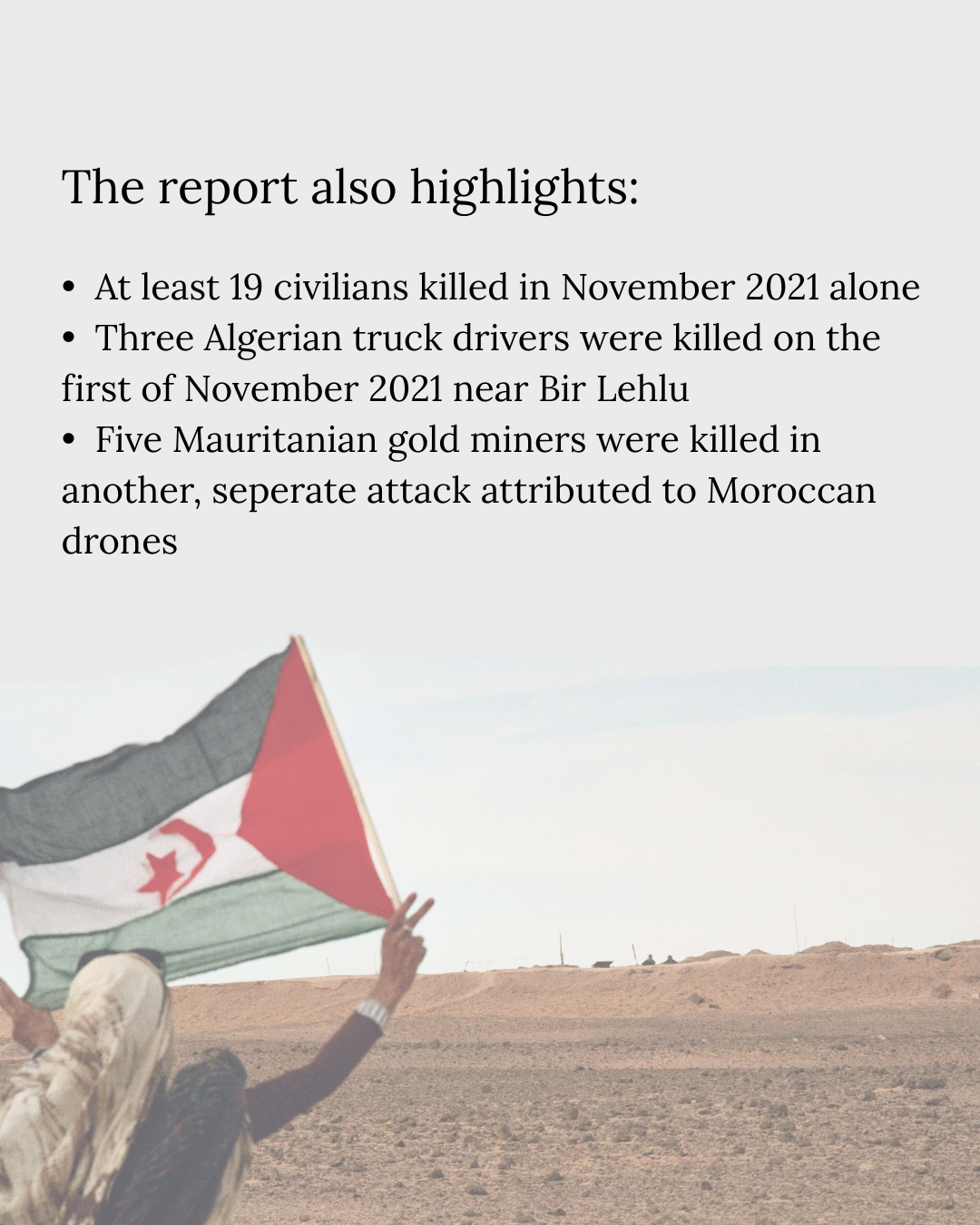
The victims.
There are many victims documented in the 2024 report, including several Sahrawi, Mauritanian, and Algerian civilians targeted in remote desert areas far from active combat zones.
Young Sahrawi civilian Deidih Mahmud Hueibita was killed on 24 November 2022 in the Ahfir region, near the Western Sahara–Mauritania border, while attempting to rescue people wounded in a previous drone strike.
Jatra Buchraia, another young Saharawi, was killed on 25 November 2022 near Tmeimchet Agzumal. Survivor Ahmed Salem Brahim Mohamed, testifies that their vehicle was first hit by a missile and, while Jatra tried to assist his injured companion, a second rocket struck him directly, dismembering his body. Shortly afterward, another vehicle carrying gold miners that had come to provide assistance was also targeted by the drone, causing additional deaths.
The report also recalls the killing of three Algerian citizens on 1 November 2021 near Bir Lehlu while travelling on the Nouakchott–Ouargla commercial route, as well as five Mauritanian civilians killed one year later in the regions of Agzumal and Tagzumalet. Among the most serious incidents mentioned are attacks against gold miners north of Tagzumalet, where at least five people were burned alive, a circumstance that the report links to the possible use of thermobaric munitions.
Click a report below to access the full documents