
Saharawi Women in Resistance
For nearly five decades, Saharawi women have sustained one of the world’s longest struggles for self-determination.

Saharawi refugee woman in the camps, during the first year of displacement.,1976. Photo by Ed Harriman
In exile in Algeria and under Moroccan colonial occupation in their homeland, they have refused political erasure. Their collective resistance woven into daily life has been central to the national struggle. Women’s resistance spams beyond acts of demonstration: it is embedded in governance, education, memory, and daily survival. In a conflict too often marginalised internationally, Saharawi women have shaped political institutions, organised communities, and confronted repression.
Whether in the refugee camps near Tindouf or in the occupied cities along the Atlantic coast, their activism has shaped the political and social fabric of their nation. Saharawi women have not simply participated in the nationalist struggle, rather they have been the architects of its institutions and its continuity. Understanding the resistance of Saharawi women means recognising how steadfastness itself becomes political, how persistence, organisation, and visibility are acts of defiance.
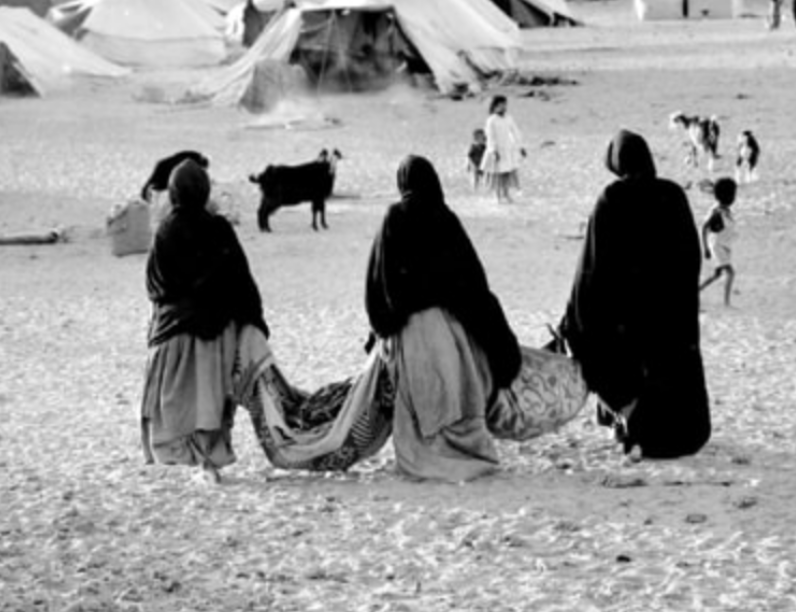
Photo by Ed Harriman
After decades of occupation, Spain finally withdrew from Western Sahara in 1975. Instead of overseeing a process of decolonisation, the Spanish authorities effectively ceded control two Morocco and Mauritania. Both countries moved to claim the territory, prompting war with the independence movement led by the Polisario Front. In 1976, the movement declared the Saharawi Arab Democratic Republic (SADR). Mauritania later withdrew, but Morocco – backed up by France and the USA – consolidated control over the Western side of the territory. Tens of thousands of Saharawis fled across the border into Algeria, where refugee camps were established near Tindouf.
A UN-brokered ceasefire in 1991 promised a referendum on self-determination but more than thirty years later, that vote has yet to take place. Today, a large part of Western Sahara remains under Moroccan colonial occupation, while over 170,000 Saharawis live in protracted displacement. It is within these parallel realities, exile and occupation, that Sahrawi women’s resistance has evolved.
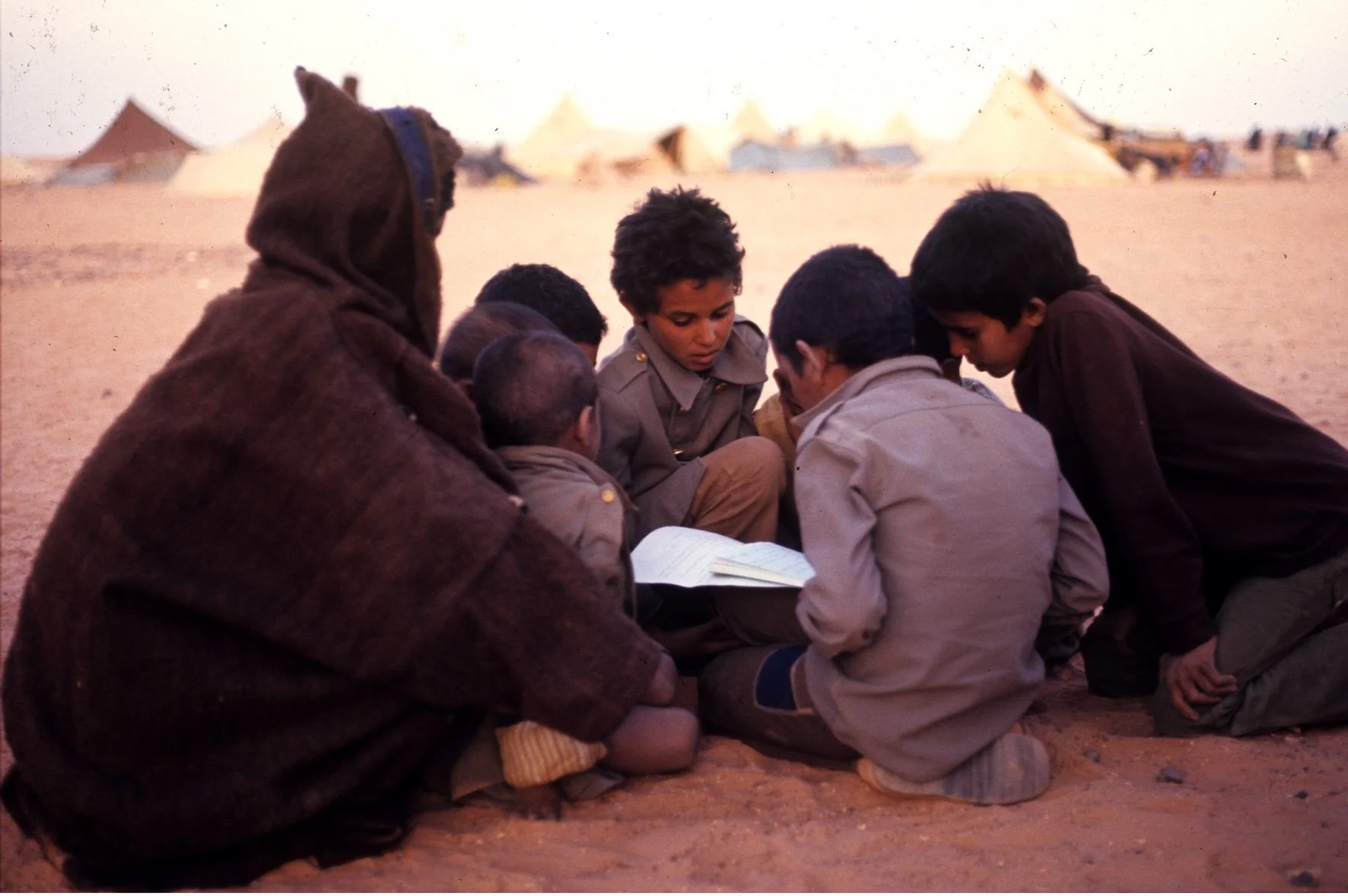
Photo by Ed Harriman
When war broke out in the mid-1970s, many Saharawi men joined the armed struggle, leaving most of the women as the primary organisers of the camps. What emerged was not only a humanitarian response, but a clear political project. From the beginning, women established food distribution systems, schools, and clinics; and organised neighbourhoods into administrative districts. The camps were not conceived merely as temporary shelters but as spaces of political formation in exile. The National Union of Sahrawi Women (NUSW) became central to this mobilisation, coordinating literacy campaigns, vocational training, and political education programs.
International observers have frequently noted and written about the high level of female political participation in the camps. Yet this visibility should not be romanticised: it was born of necessity as much as ideology. With limited resources and difficult conditions, sustaining daily life required collective organisation. For many women, resistance in the camps takes the form of institution-building. Classrooms are political spaces where children born in exile learn the history of their homeland. Community meetings reinforce social cohesion. Cultural traditions are preserved through poetry, music, and oral storytelling. In this sense, resilience is not just passive endurance but structured persistence: the deliberate continuation of a national project under conditions of displacement.
In Moroccan-controlled cities such as Laayoune and Boujdour, activism carries immediate risks. Demonstrations calling for independence or respect for human rights are frequently met with surveillance, arrests, and reported abuses. Within this context, Sahrawi women have become some of the most visible faces of dissent. Marching with photographs of disappeared relatives or political prisoners, they embody both mourning and defiance.
A pivotal collective moment was the 2010 protest camp at Gdeim Izik, established outside Laayoune. Thousands of Sahrawis gathered to demand social justice and political rights. Women played key roles in organising logistics, distributing food, and maintaining communication networks. When Moroccan forces dismantled the camp, clashes and arrests followed. The events underscored both the scale of Sahrawi mobilisation and the risks faced by those who participated. In occupied areas, resistance can also be quieter but equally powerful: documenting abuses, speaking to international media, hosting solidarity delegations, or raising the Sahrawi flag despite the threat of reprisal. Domestic spaces often become politicized, blurring the boundary between home and protest site.
Beyond the Camps
Saharawi women have also played an influential role outside the refugee camps and occupied Western Sahara. Internationally, they have been acting as diplomats and political envoys across Europe, Latin America, and Africa. Serving as official representatives of the Polisario Front and the Saharawi Arab Democratic Republic, they engage with governments, parliaments, and civil society. Through formal diplomacy and grassroots advocacy, they advocate for the recognition of the Saharawis’ right to self-determination, challenge Morocco’s colonial propaganda, and ensure that Western Sahara remains on the international agenda. By occupying positions traditionally dominated by men abroad, Saharawi women abroad embody both national representation and the egalitarian ethos at the heard of Saharawi liberation movement.
Saharawi Changemakers
Women’s resistance becomes clearer through the lives of individual women whose activism has shaped the struggle in different and distinct ways. Aminatou Haidar, born in occupied Laayoune, emerged as one of the most internationally recognized Saharawi human rights defenders. In the late 1980s, she was forcibly disappeared and imprisoned for her political activism. After her release, she continued advocating for self-determination. In 2009, after refusing to declare Moroccan nationality on an entry form, she was expelled to Lanzarote in the Canary Islands. Her subsequent 32-day hunger strike drew global attention and ultimately led to her return. Sultana Khaya is another figure of defiance.
From Boujdour, Sultana Khaya lost sight in one eye in 2007 after being assaulted during a peaceful demonstration. In later years, she reported prolonged house arrest, surveillance, and harassment. Despite this, she continued raising the Saharawi flag from her rooftop and receiving activists in her home. Her house became a symbol of steadfast resistance, a domestic space transformed into a political frontline.
Another prominent figure is Mahfouda Lefkir. As a teenager, she was detained and later imprisoned following her participation in protests. She has since spoken publicly about her experiences of incarceration and the broader repression faced by Saharawi activists. Her activism highlights the generational dimension of the struggle, as young women continue to confront detention and intimidation while asserting their political identity.
Elghalia Djimi is a human rights activist from Laayoune and a member of the Collective of Saharawi Human Rights Defenders (CODESA). Detained and abused for her activism in the 1980s, she has continued documenting violations in the occupied territories and advocating for prisoners’ rights. Elghalia Djimi’s resistance is rooted in meticulous documentation, international advocacy, and decades-long persistence despite harassment and surveillance.
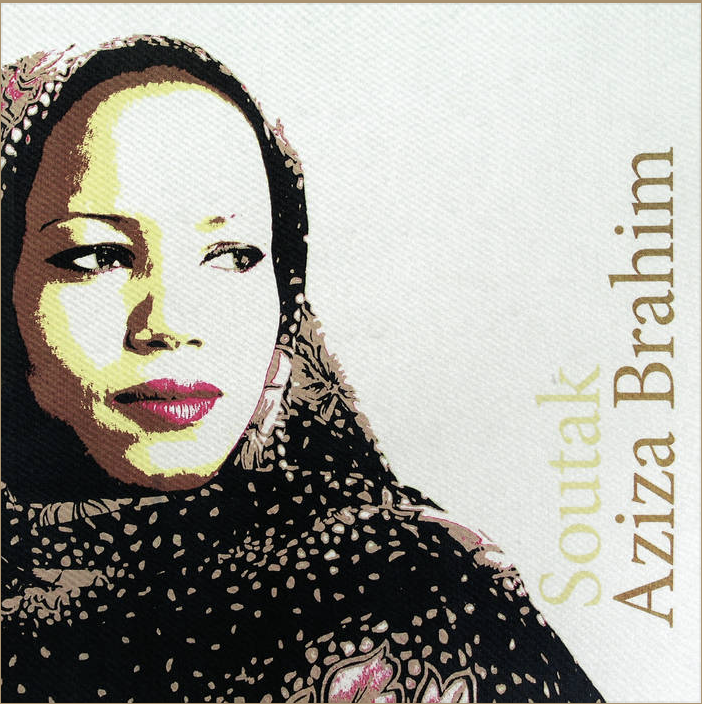
Many other could be cited, notably from the Saharawi camps. Aziza Brahim is a singer-songwriter born in the refugee camps near Tindouf. Through her music which blends traditional Saharawi rhythms with contemporary influences she links art and political testimony. Through international tours and albums that address displacement, memory, and resistance, she has carried the Saharawi cause to global audiences. Najla Mohamed-Lamin, a women’s right and climate activist funded the Almasar Library Centre in the Saharawi camp. This project aimed at expanding access to books and learning resources for young people, promoting literacy, cultural exchange, and education as important forms of empowerment and resilience in exile.
Asria Taleb Mohamed illustrates resistance from abroad. She is a Saharawi human rights activist based in Norway who works with the Norwegian Support Committee for Western Sahara. Born in the Saharawi refugee camps, she raises awareness and advocates for the Saharawi people’s right to self-determination, along with women’s rights and with refugee rights. Together, these women illustrate varied trajectories of resistance: international diplomacy, localized civil disobedience, and testimony shaped by imprisonment. Their lives reveal how Saharawi women adapt their strategies to context while remaining anchored in a shared demand for self-determination.
50 Years Later
More than fifty years after displacement began, Saharawi women continue to carry the weight of an unresolved conflict. In refugee camps, they built and sustained institutions that transformed exile into a structured political community. In Moroccan occupied cities, they confront surveillance and repression with loud and quiet acts of defiance. Their resistance is not reducible to isolated acts of heroism. It is persistence – the everyday decision to enter a classroom, to raise a flag, or to transmit memory to the next generation – and insistence on political dignity in spaces designed to suppress it. Saharawi women are not merely symbols of suffering in a forgotten conflict. They are administrators, diplomats, teachers, doctors and journalists.
It is through their labour in exile and under occupation, that they have enabled the continuity of their nation’s struggle for self-determination.
This article was written by our Volunteer Research Assistant Manon Minassian
