
Celebrating Volunteer Marta Capa: Two Months of Creativity, Joy, and Transformation at Desert Voicebox
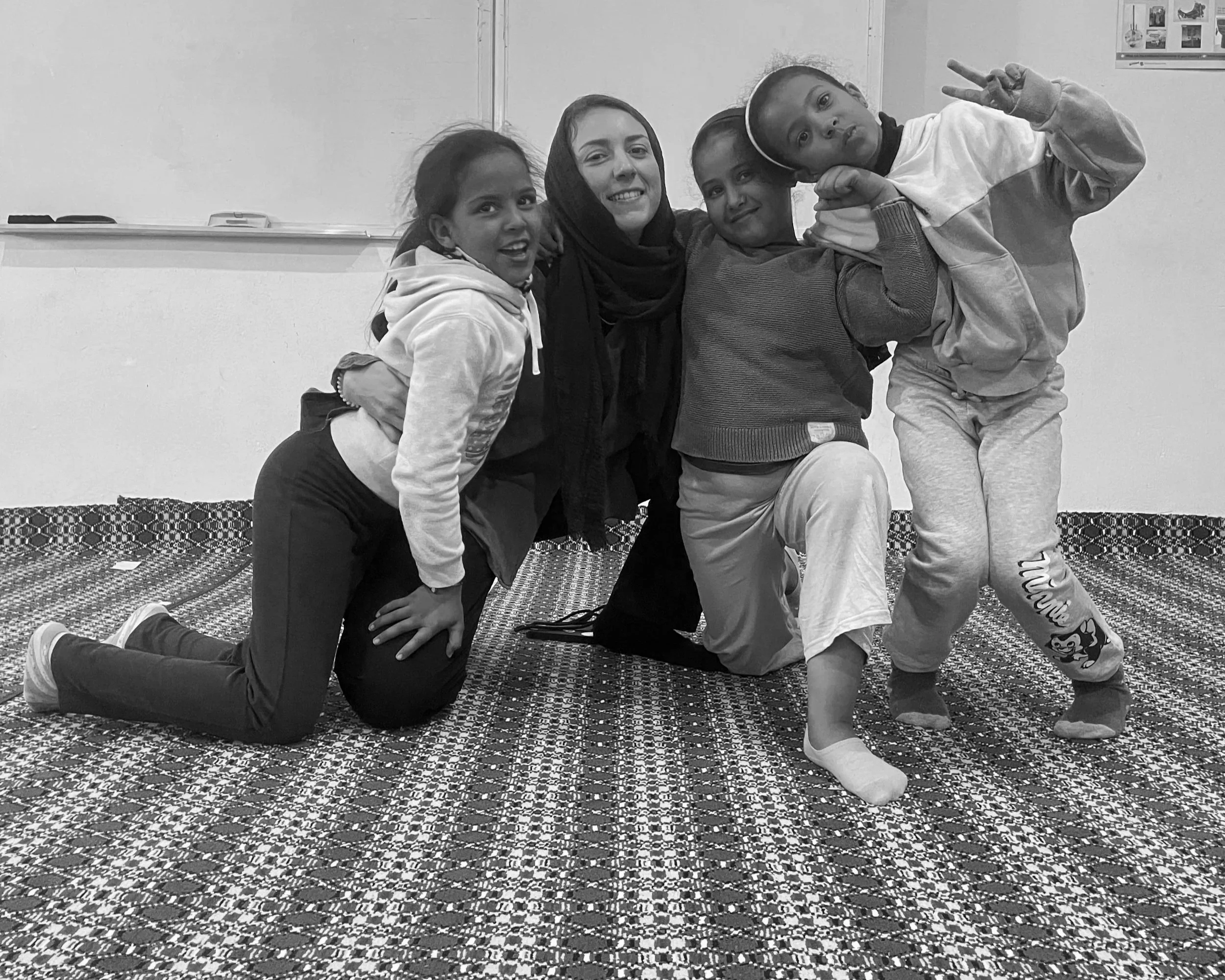
At Sandblast Arts, our Desert Voicebox programme is powered by volunteers who bring their unique gifts to our classroom.
Volunteers are at the heart of carrying Sandblast's mission forward, especially our Desert Voicebox project on the ground. Thanks to the dedication, creativity, and care of our past and present volunteers, the programme has grown into a dynamic and transformative learning space for Saharawi children and teachers.
From January 9th to March 4th—nearly two full months—Marta Capa was immersed in the Saharawi refugee camps, bringing with her a contagious creative energy, a passion for environmental awareness, and her ability to give new life to objects that were otherwise discarded.
We want to celebrate Marta's remarkable contribution and share the beautiful work she accomplished during her time with us. What made Marta's volunteer journey so special was her unique vision, experience, and ability to adapt. Her workshops were perfect for all our age groups at Desert Voicebox, using the resources available, and working fluidly within the structure of our regular classroom routines.
What is Desert Voicebox?
Our flagship project, Desert Voicebox, is a unique after-school programme providing English and music education to over 60 primary school-aged children in the Saharawi refugee camps. In a place where these subjects aren't available in the local curriculum, Desert Voicebox opens a window to the world. Learn More
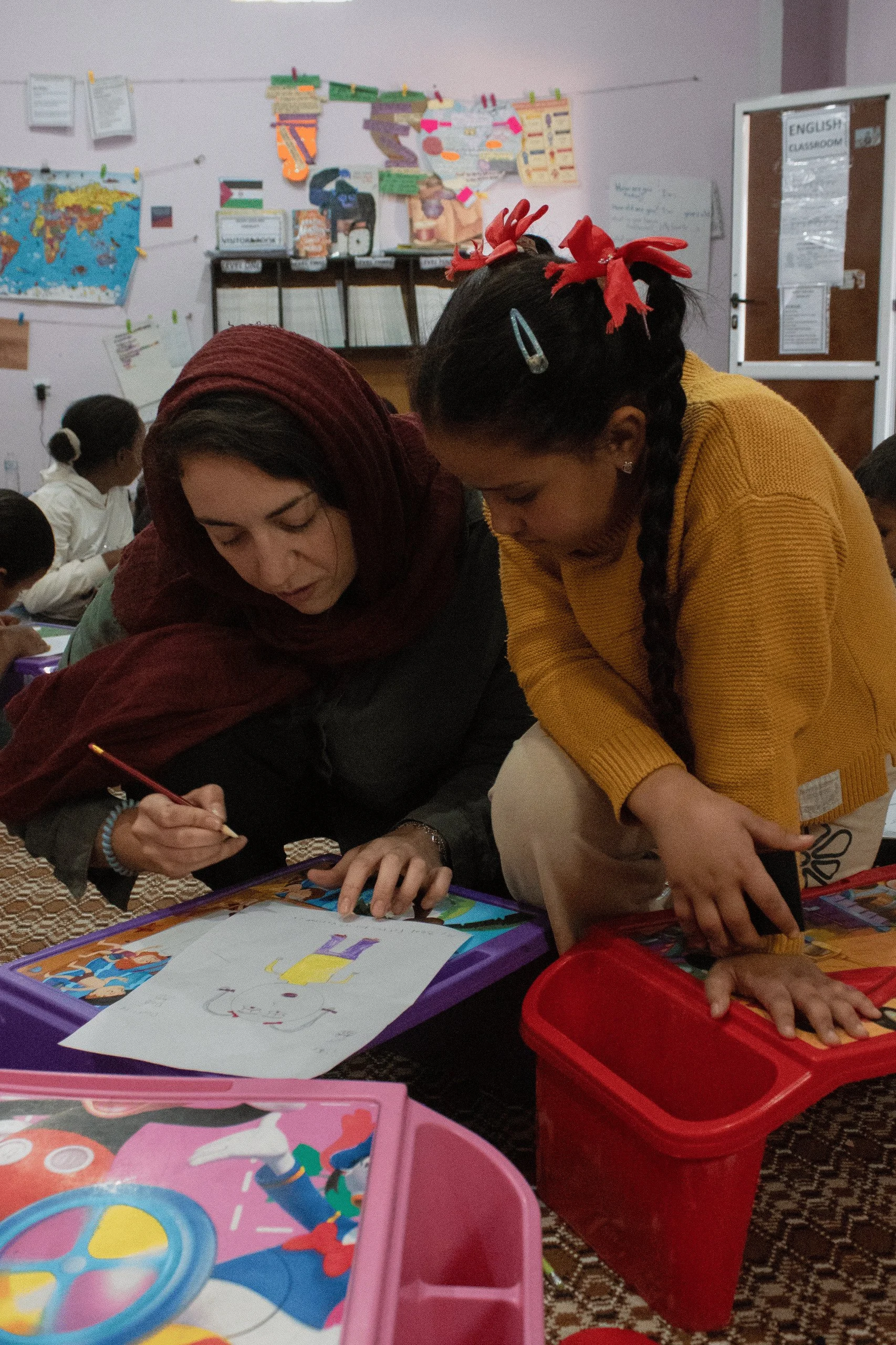
Marta’s Passion for Trash
Marta’s unique philosophy came to life through a series of extraordinary workshops that blended environmental awareness, creativity, teamwork, and English language learning into unforgettable experiences for the students at Desert Voicebox.
She has a one-of-a-kind way of viewing the world, and draws inspiration from using found objects and discarded materials: or what we would consider to be trash.
During her stay, she was able to lead over 12 different creative workshops across our grade levels and spanning diverse mediums, and we’ve featured a few below. From visual arts to constructive play, not a moment went to waste.
In her own words:
“The goal of these workshops was to encourage creativity while introducing the concept of recycling and environmental awareness. Through the use of recycled materials and everyday “trash,” the activities aimed to challenge students’ perceptions of waste and help them see its creative potential. In the context of the Saharawi refugee camps, where resources are limited and there is a lack of proper waste disposal infrastructure, the workshops also aimed to promote a more conscious relationship with the environment and highlight how discarded materials can be reused in creative ways. The workshops sought to stimulate imagination, encourage experimentation with different artistic techniques, and help students develop practical creative skills while becoming more aware of the materials and environment around them.”
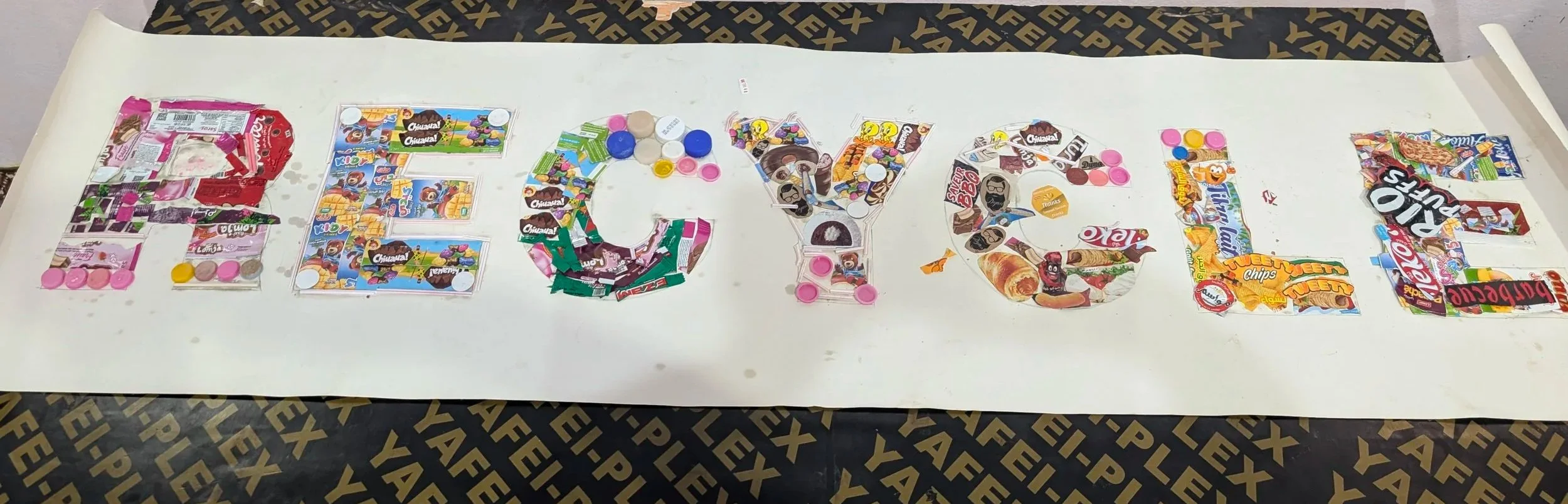
Recycle Banner Challenge (Level 4)
Marta's commitment to environmental education shone brightly in this collaborative activity for older students. Level 4 Students, aged 12 to 13, formed teams and fanned out across the camp to collect litter. This melded a traditional litter-cleanup project with a scavenger hunt, encouraging them to think outside the box, and seek colors, textures, and materials that could be used in new ways.
Working together, the students used their collected materials to collage large letters spelling "RECYCLE." Their shared banner started conversations around environmental responsibility and taught lessons of teamwork, while reinforcing their English vocabulary.
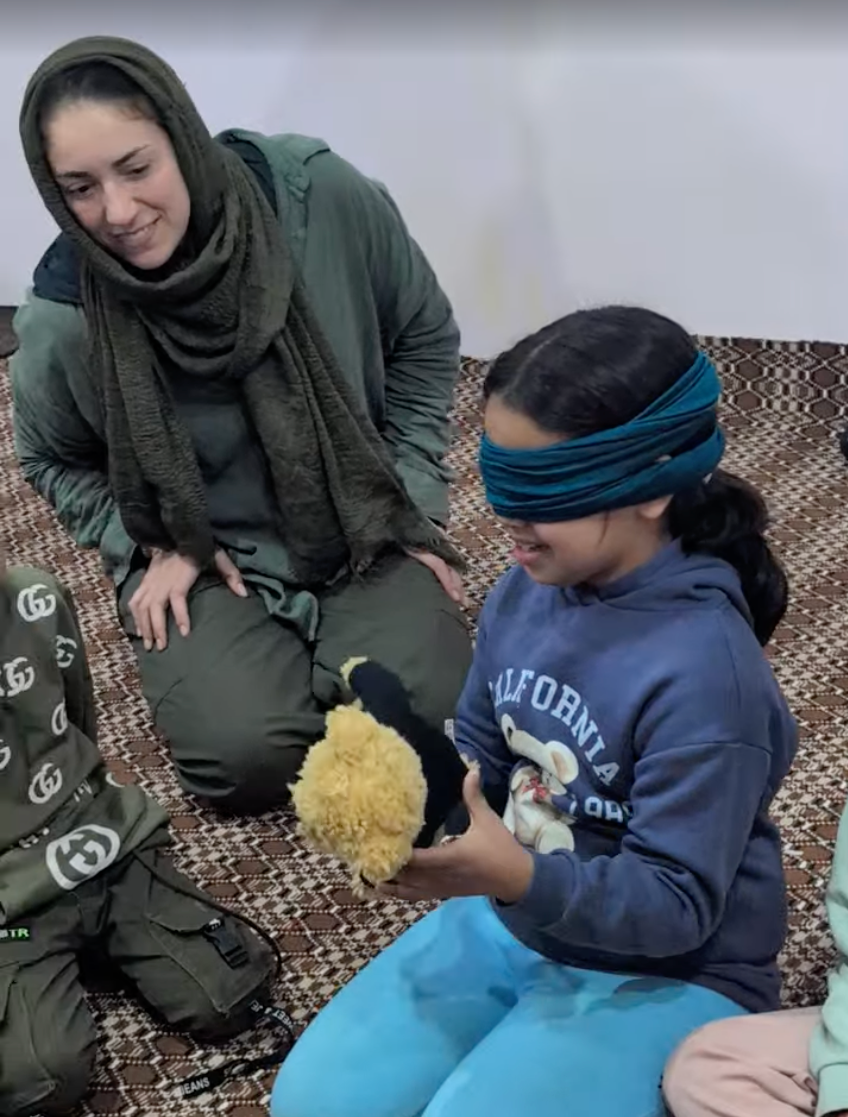
Sensory Guessing Game (Level 1)
For our Level 1 class, ages 8 to 9, Marta designed an activity that was sensory-driven and inventive, perfect for younger learners. One student would choose an object from around the classroom and describe it to their blindfolded partner using descriptive vocabulary. If the blindfolded student couldn't guess, they could reach out and touch the object, feeling its texture and shape before making a final guess.
While this game is simple, it worked wonderfully to engage the students. Capturing their attention with excitement and laughter, it helped reinforce their vocabulary and add new descriptive language to their English skills.
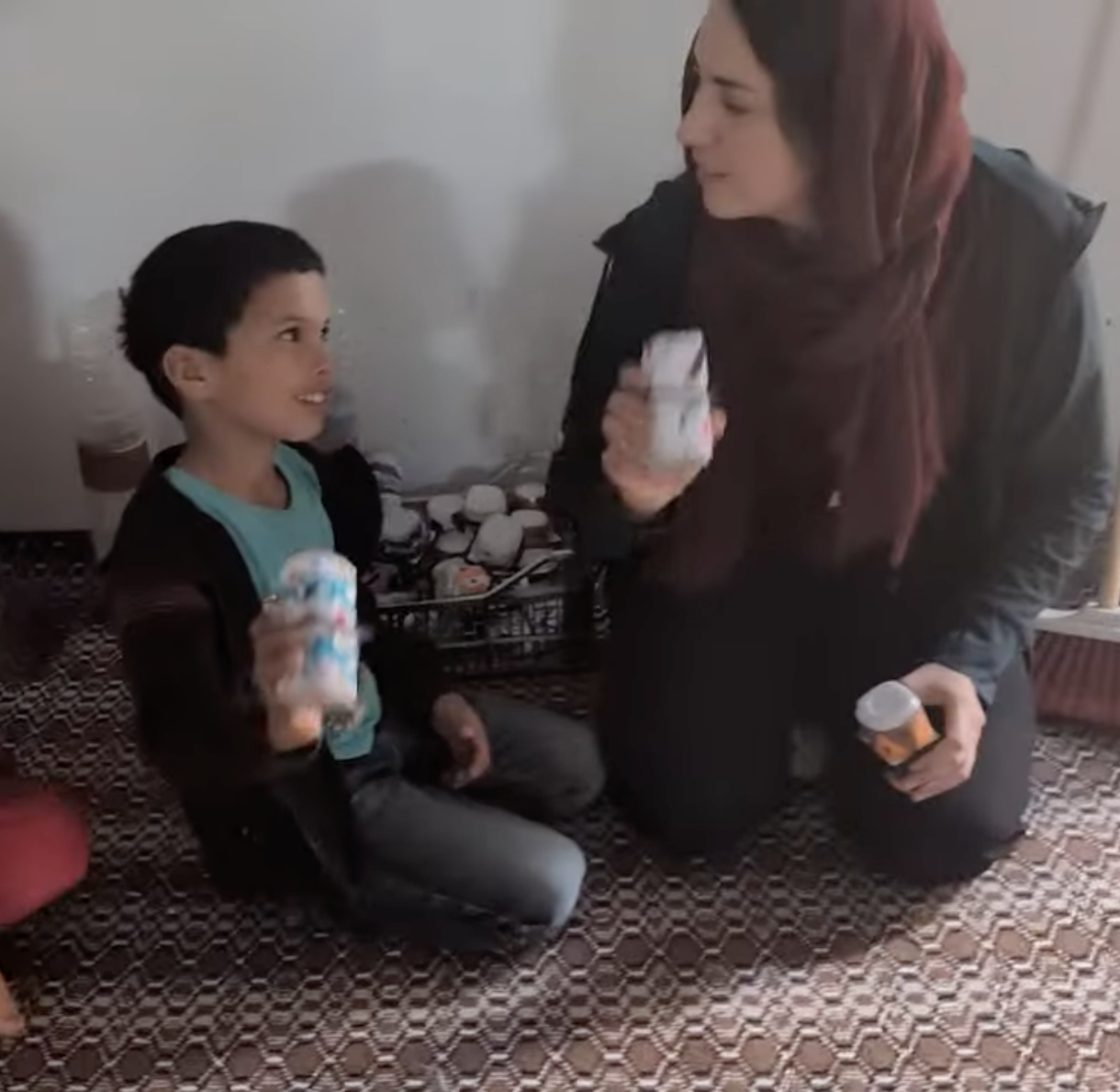
DIY Maracas Workshop
Perhaps nothing embodies Marta's creative philosophy better than this workshop. Children transformed yogurt containers into vibrant musical instruments, filling them with natural materials found around the camp, like sand, rocks, and sticks. Each created its own unique sounds.
The workshop taught our students that music can be created anywhere, encouraging their musicality and creative listening skills. The Maracas workshop also inspired imagination and the ability to see new potential in discarded objects.
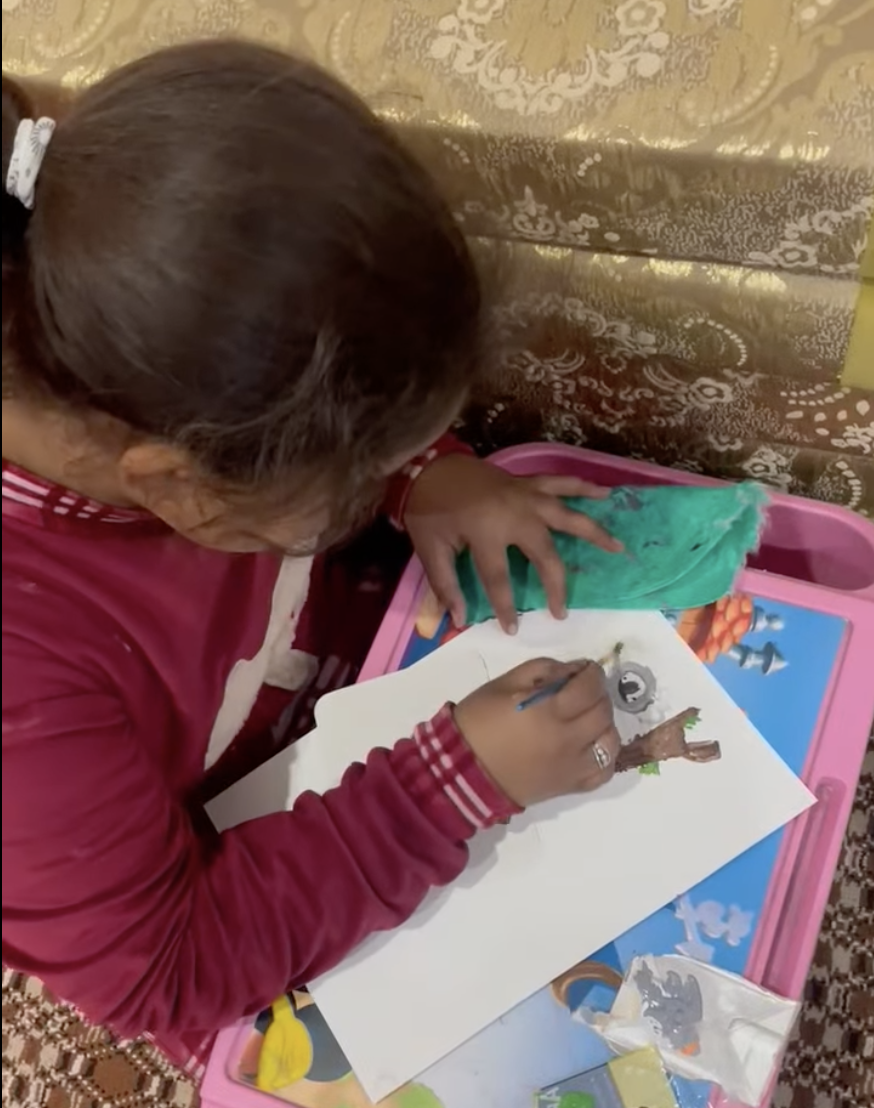
Imaginary Animal Self-Portraits at the Saturday Book Club
During the Saturday Book Club at Desert Voicebox, Marta invited children to imagine themselves as animals. What animal would you be? What characteristics would you have? How would you move, think, feel?
Students described their chosen animals and then painted creative self-representations. The classroom was soon filled with lions, gazelles, camels, and birds, each portrait reflected a child's imagination and sense of self. This workshop encouraged self-expression, built self-confidence, and reinforced their English skills at every opportunity.
Projects like these are particularly valuable to refugee children who often struggle to imagine themselves beyond being refugees, affecting their motivation to learn and strive to fulfil their ambitions and dreams.
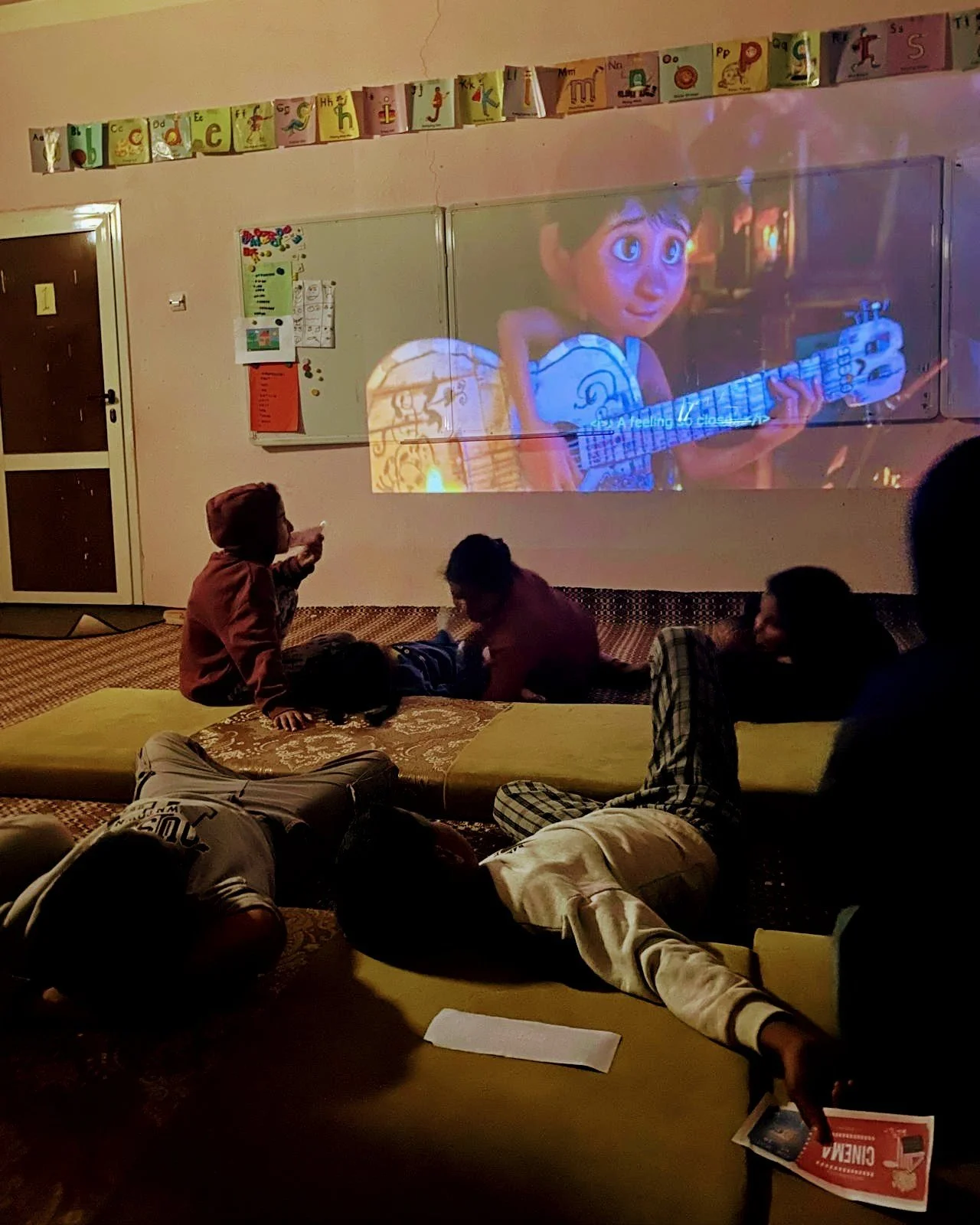
Mexican Cinema & Piñata Day
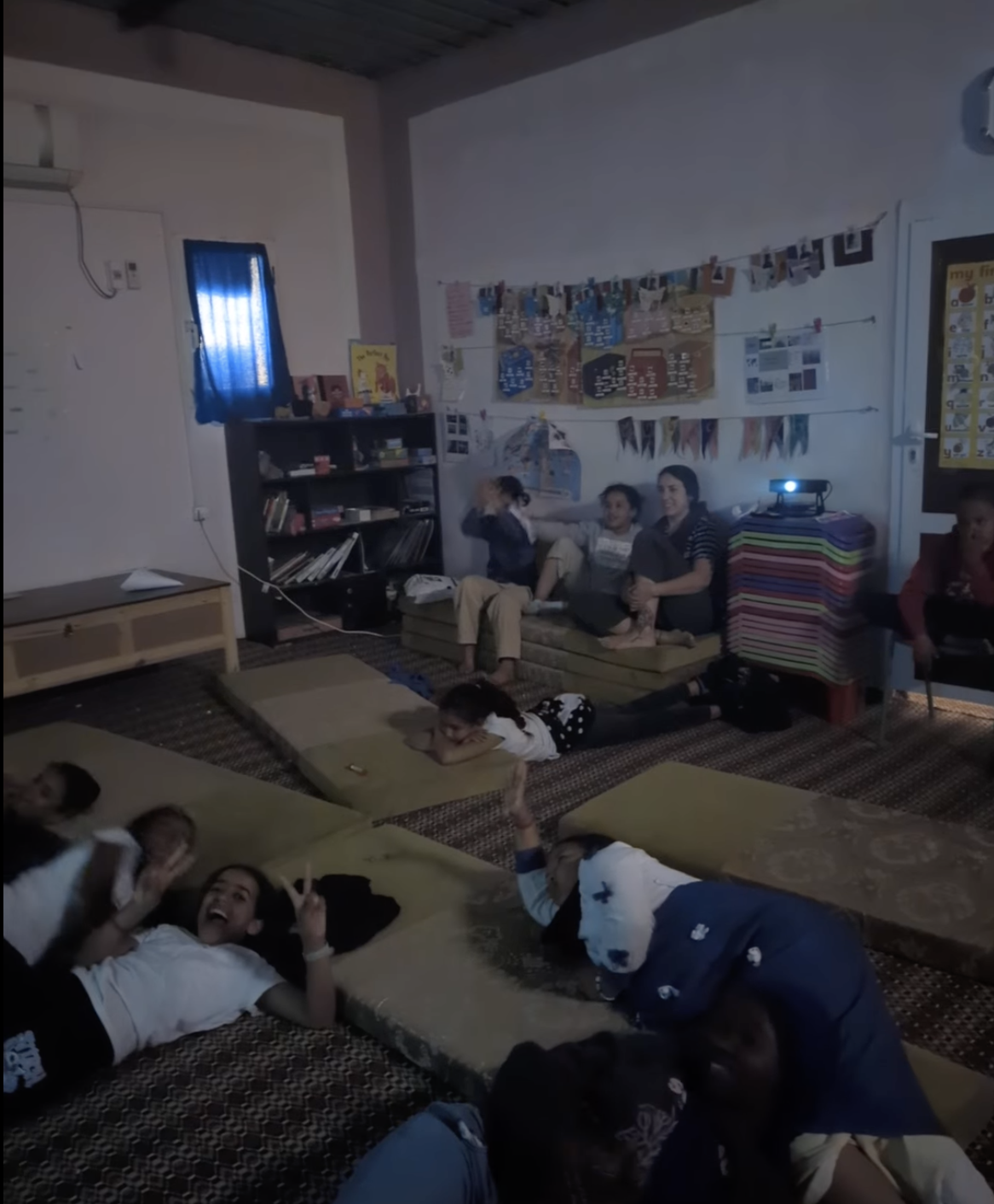
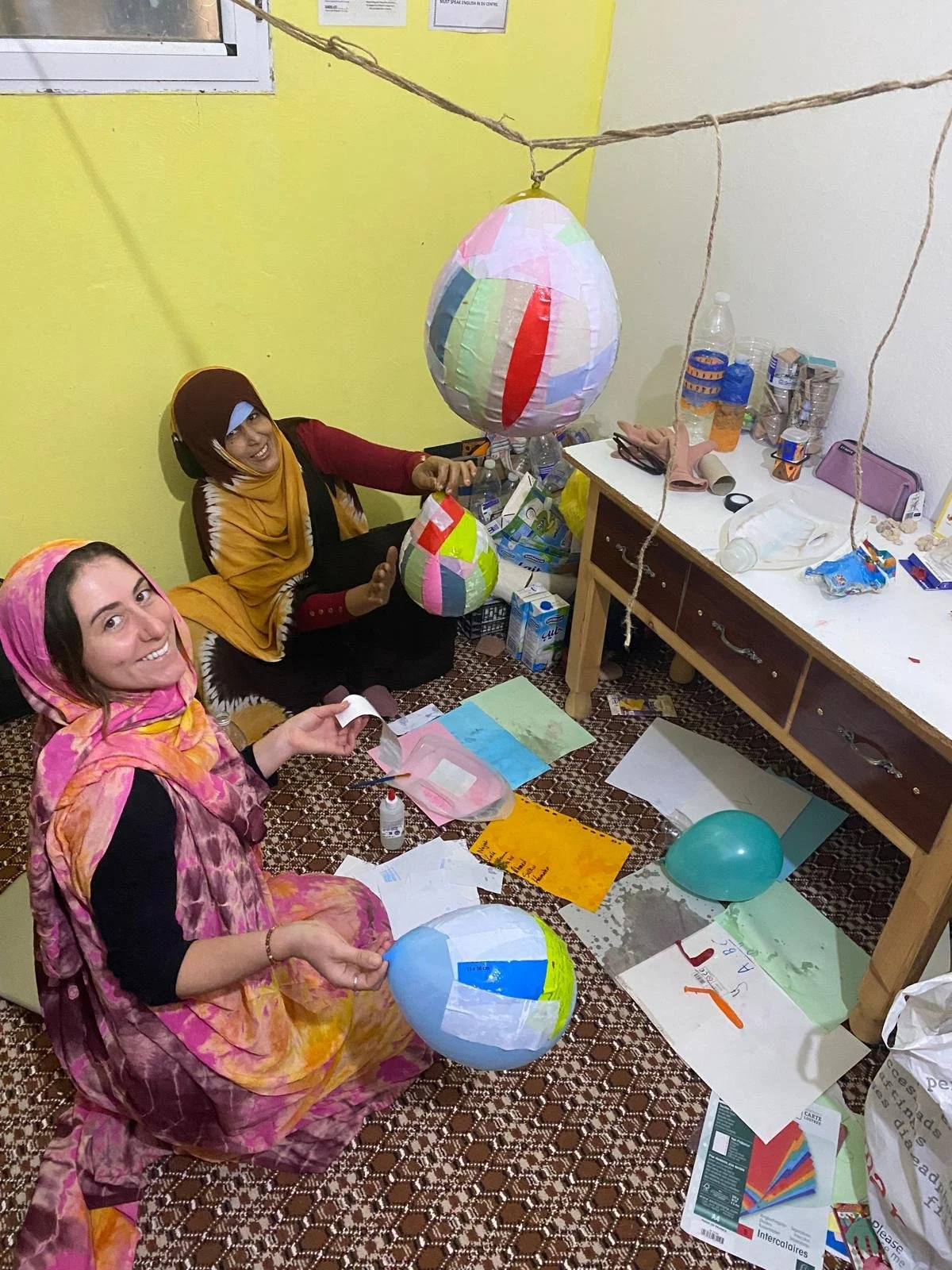
One of the most joyful moments of Marta's time with us came through cultural celebration. Marta and Raymundo, another volunteer from the past months, spent hours preparing papier-mâché piñatas by hand, building anticipation for a very special movie night.
On the day itself, each student received their very own ticket to the cinema, to add a touch of magic to make the experience feel all the more special. We all gathered to watch Pixar’s Coco in English. Sharing popcorn and experiencing the joy of cinema, together. The film's themes of family, memory, and cultural heritage resonated deeply with them as refugee children.
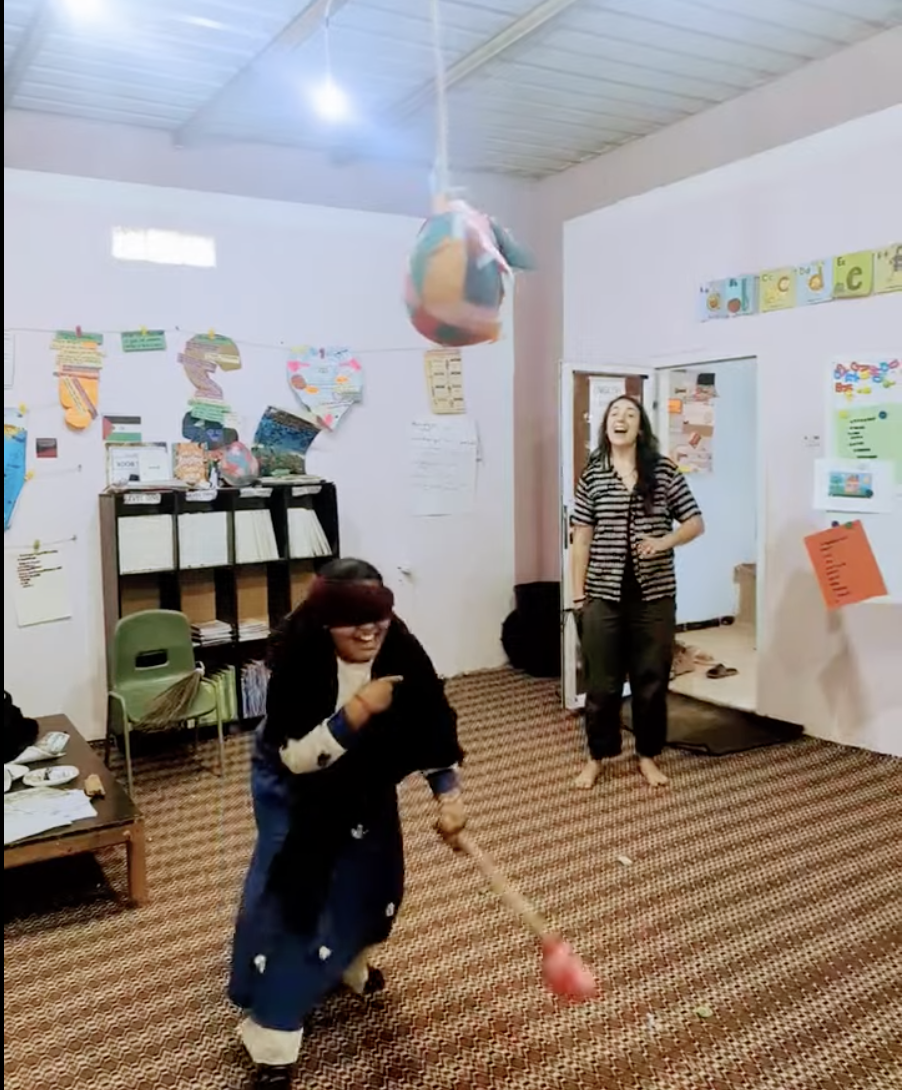
The best part? The volunteers surprised our students with the piñatas, now filled with candy, and the party finished with a flourish. Marta helped elevate our movie night to become an immersive cultural experience that combined language learning, cultural appreciation, and the joy of play.
Abstract Self-Portraits
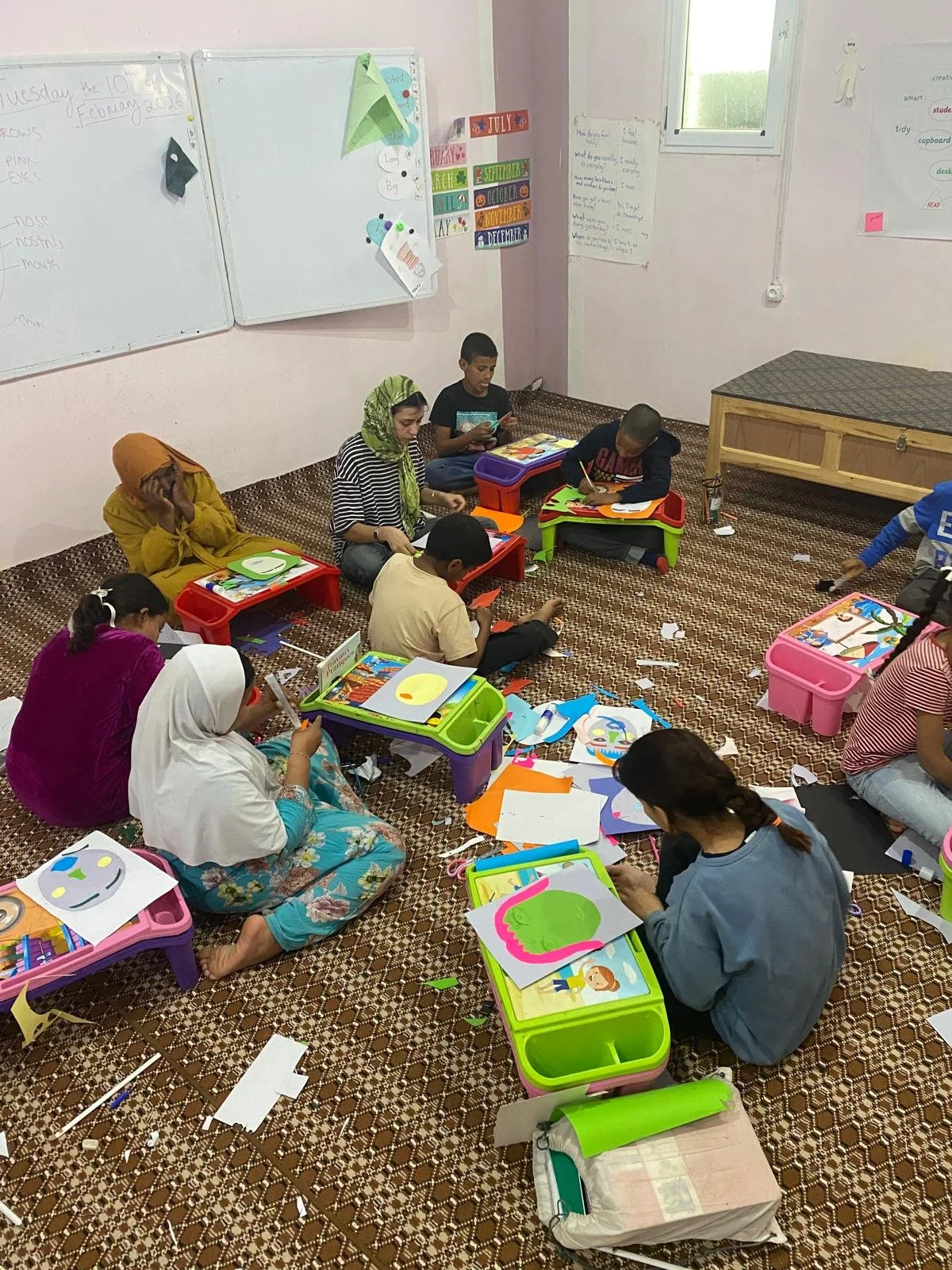
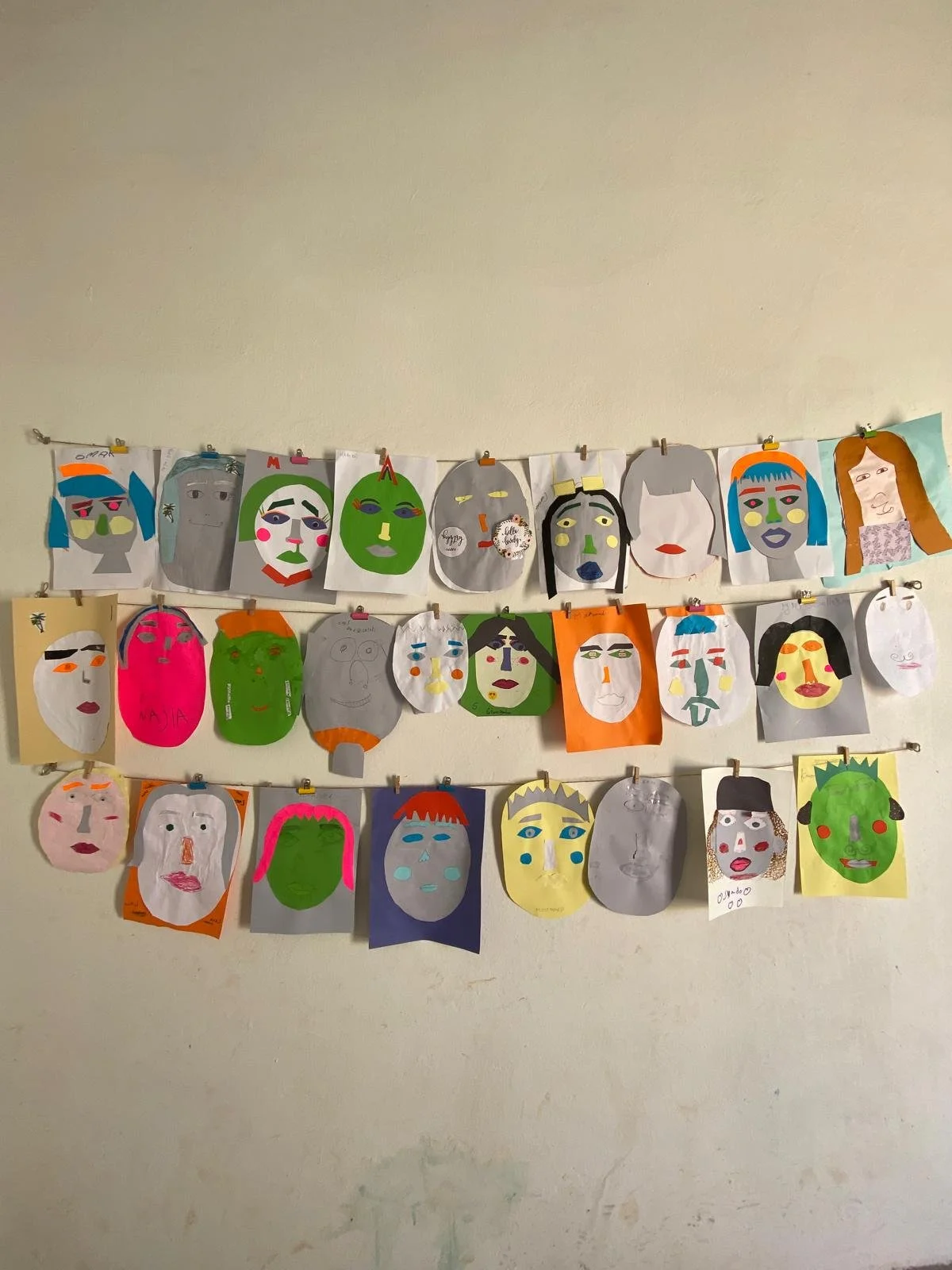
Marta encouraged older students to look inward and express their emotions and inner worlds through a variety of art mediums and visual symbolism. Using coloured shapes and paper collage, children created abstract self-portraits that represented how they felt, who they were, and what mattered to them.
This workshop gave children a new vocabulary for self-expression. Going beyond Hassaniya or English words, and exploring using colours, shapes, and compositions as tools for their voices and visions. The final projects were deeply moving, offering glimpses into the rich inner lives of young people growing up in the refugee camps.
Texture Exploration Workshop
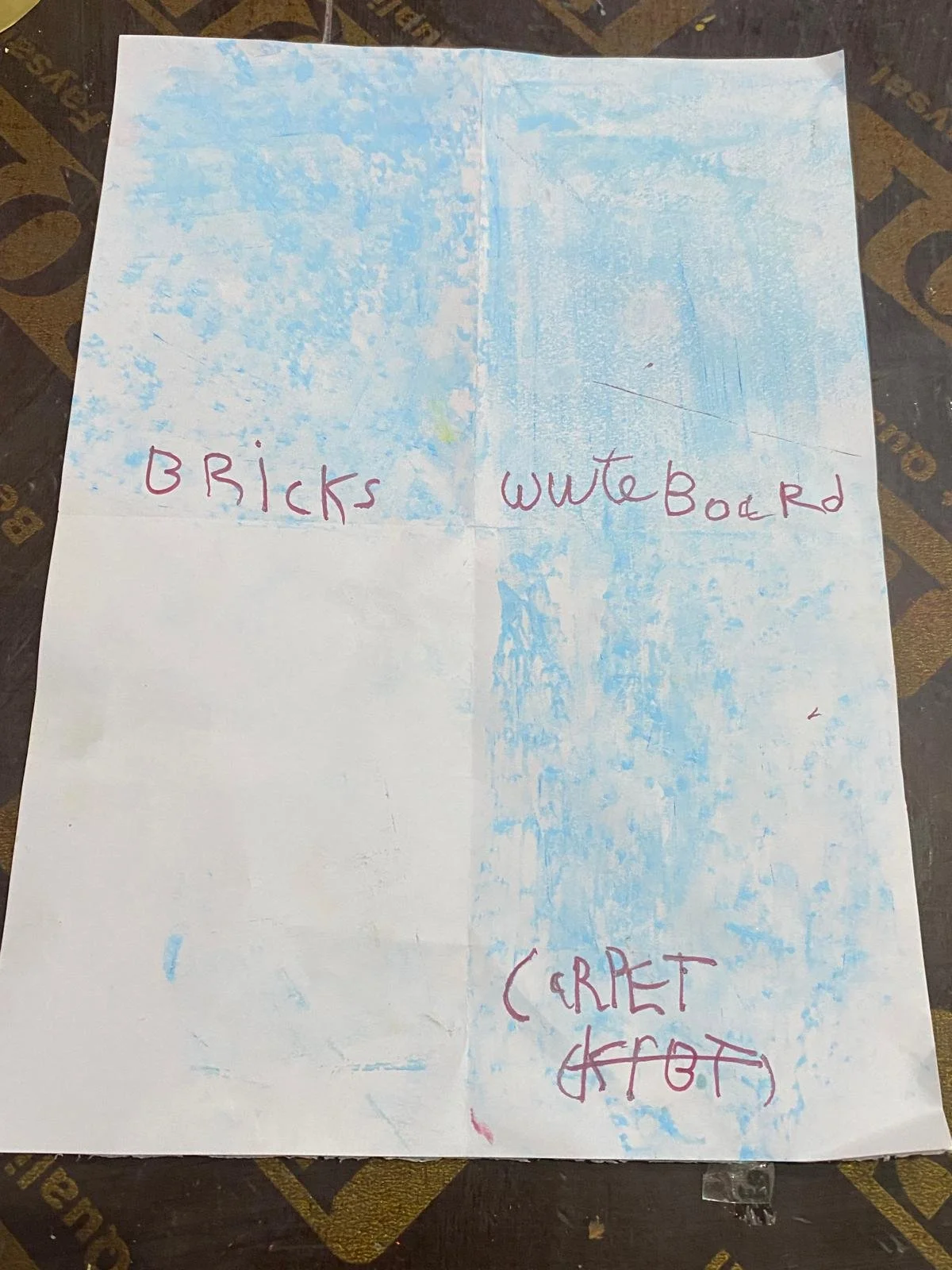
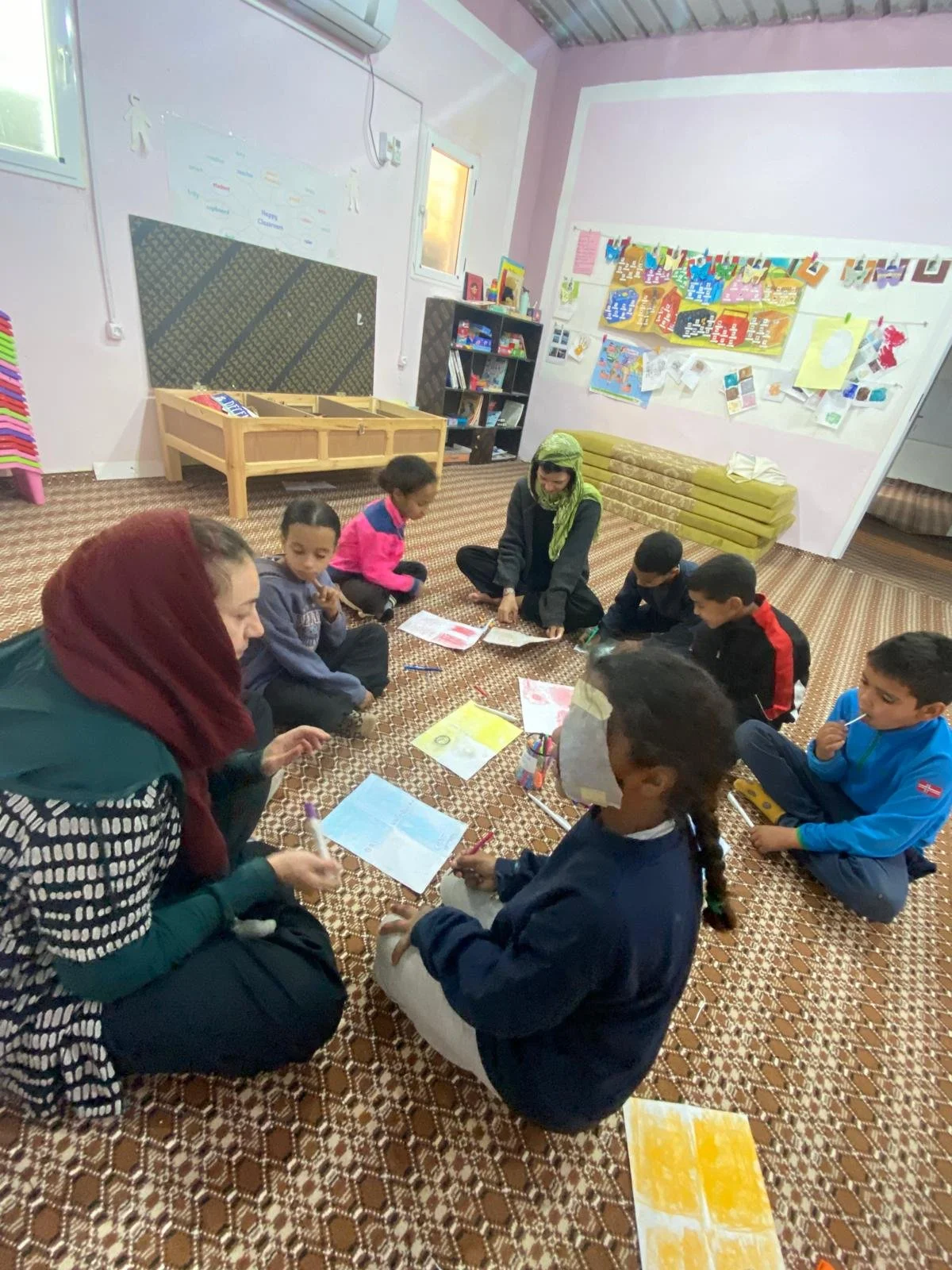
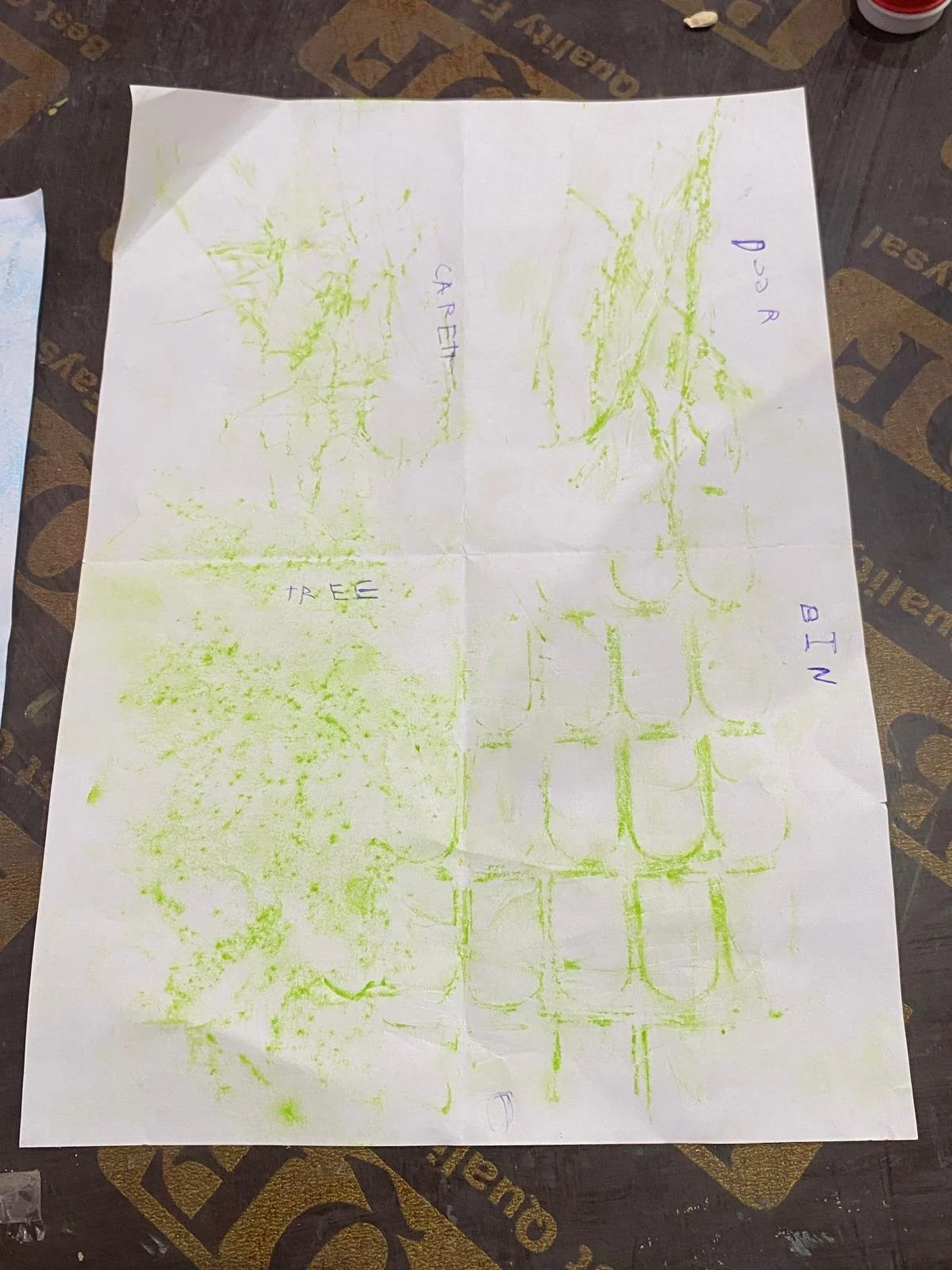
For this activity, Marta sent children on a texture treasure hunt. Armed with pastels and paper, they explored familiar landscapes with fresh eyes. They carefully traced the textures of rough cement walls, ridged plastic bins, and weathered wooden benches, aiming to capture the feel of their environment.
The child with the most original texture won, but really, every child won. They learned to look closely at the world around them, noticing details they might otherwise miss. They discovered that even the most familiar environment holds hidden beau
“I feel privileged to have been part of this community and consider this the beginning of a lasting connection. I left the camps with my heart full, inspired, and deeply grateful.”
Inspired to Make Your Own Impact?
By donating your time and expertise, you aren't just supporting a charity, you are standing in solidarity with the Saharawi people as they fight for their UN-recognized right to self-determination. You are helping to preserve a rich cultural heritage and ensuring that the next generation of Saharawis has the tools to tell their own story.
Marta is a prime example of what makes a volunteer flourish in our programme. She is inventive, adaptive, independent, and invested. The success of her workshops is tied to her two-month commitment, which allowed her to build genuine relationships, understand the community deeply, and deliver workshops that built meaningfully on one another. During her time in Boujdour, she became part of the Sandblast community.
The success of her Creative Workshops is proof that volunteers can transform our programme in profound ways, and the experience is life-changing. As a volunteer on the ground, you gain professional experience in human rights and international development, deepen your understanding of the Saharawi struggle, and join a global solidarity network. As our veteran-volunteer Anastasia Oleinik shared, “I was treated like a family member from the first moment. The generosity and hospitality is part of who the Saharawis are”
Whether you have a few hours a week or two months of time, there is a place for you in the Sandblast community.
On-the-ground placements
Creative Workshop Leaders provide much needed enrichment for refugee youth. From theater and circus arts, to film photography and rap: we are open to all styles of creative expression as well as workshops that promote musicality through singing and instrument learning-ukelele, recorder and piano in particular! If you have a passion for the cause, a creative talent, and like to work with children, we would love to hear from you.
Qualified English Language Teachers are much needed to help our teachers flourish. We require a 6 week minimum commitment for Teachers,
Remote Volunteer Opportunities:
Not everyone can spend weeks in the desert, but that doesn’t mean you can’t be essential. Virtual volunteers are just as crucial to our success.
Virtual English Teachers for one-on-one student sessions in our Speaking Buddies Programme. Through our Virtual English Speaking Buddy initiative, volunteers meet one-on-one with Saharawi students (ages 10–16) for 30–45 minutes, twice a week. The goal isn't grammar perfection, it is building confidence. Speaking Buddies create a space for our older students to express themselves and give them a chance to connect across cultures.
Teacher Trainers We also have roles for virtual volunteers to aid in our Teacher Training Programme, where they can design lesson plans, support curriculum development, and provide pedagogical training sessions.
Research Assistants For those interested in advocacy work, we have created a new role for Research Assistants. Where passionate, justice driven individuals with relevant experience can join our internal team of volunteers. In this role, you can support ongoing research, and explore topics of interest to help bolster our advocacy network and portfolio of projects.
How does Volunteering work?
Volunteering with Sandblast Arts is a structured yet flexible process. Prospective volunteers start by sending their CV and cover letter, along with a short proposal outlining their teaching or training plan. If approved, applicants then work closely with our Volunteer Coordinator and Founding Director to develop a tailored plan before completing our Volunteer Agreement and Safeguarding Policy.
