
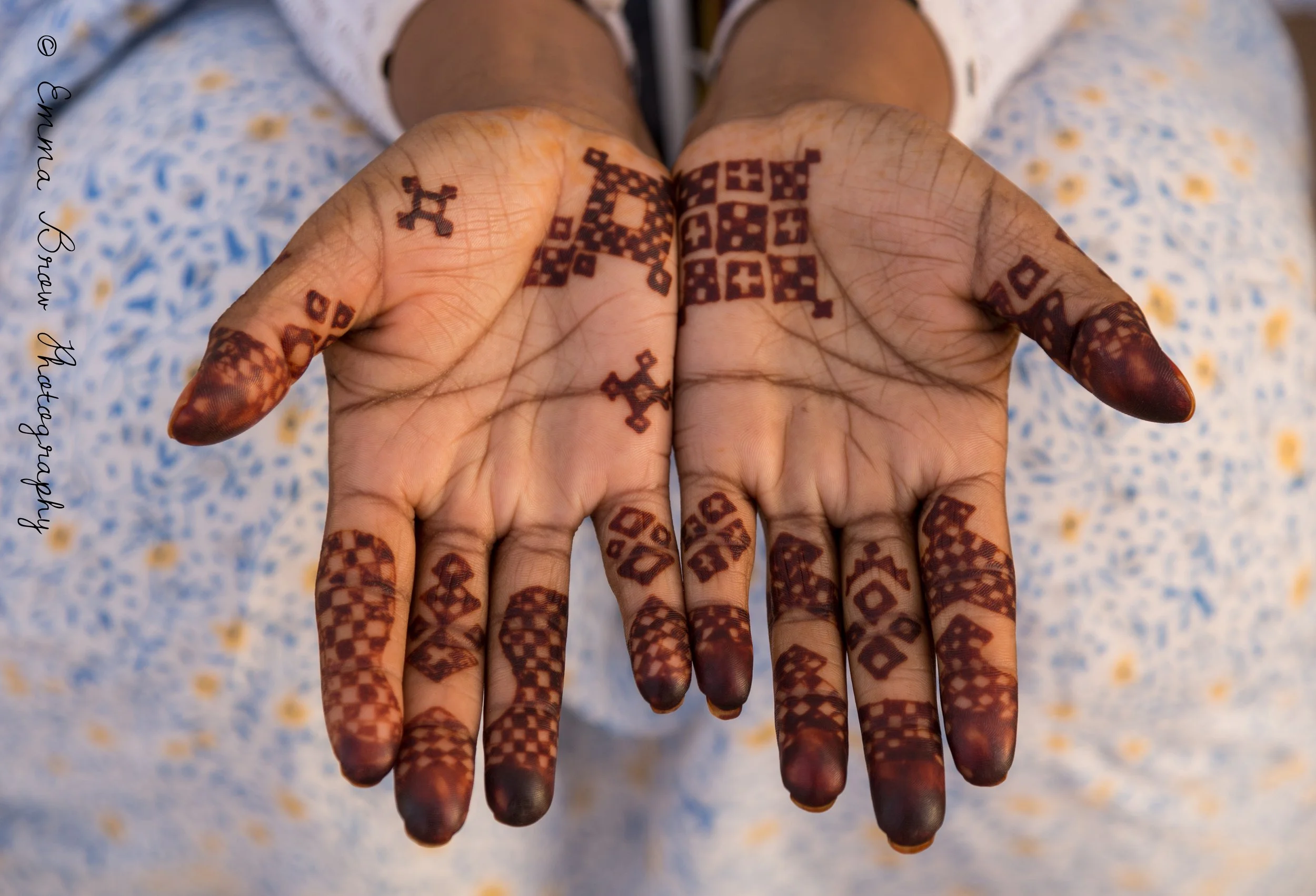
Saharawi henna is a unique, living expression of identity, resilience, and intergenerational heritage.
Practiced by Saharawi women across the occupied territory of Western Sahara, in refugee camps in Algeria, and amidst the global diaspora, this ancestral tradition serves as a powerful symbol of cultural continuity in the face of displacement. Each design reflects the nurtured connection between Saharawi women, their land, and their enduring cultural traditions, acting as a visual language to communicate their shared belonging, memory, and pride.
When is henna worn?
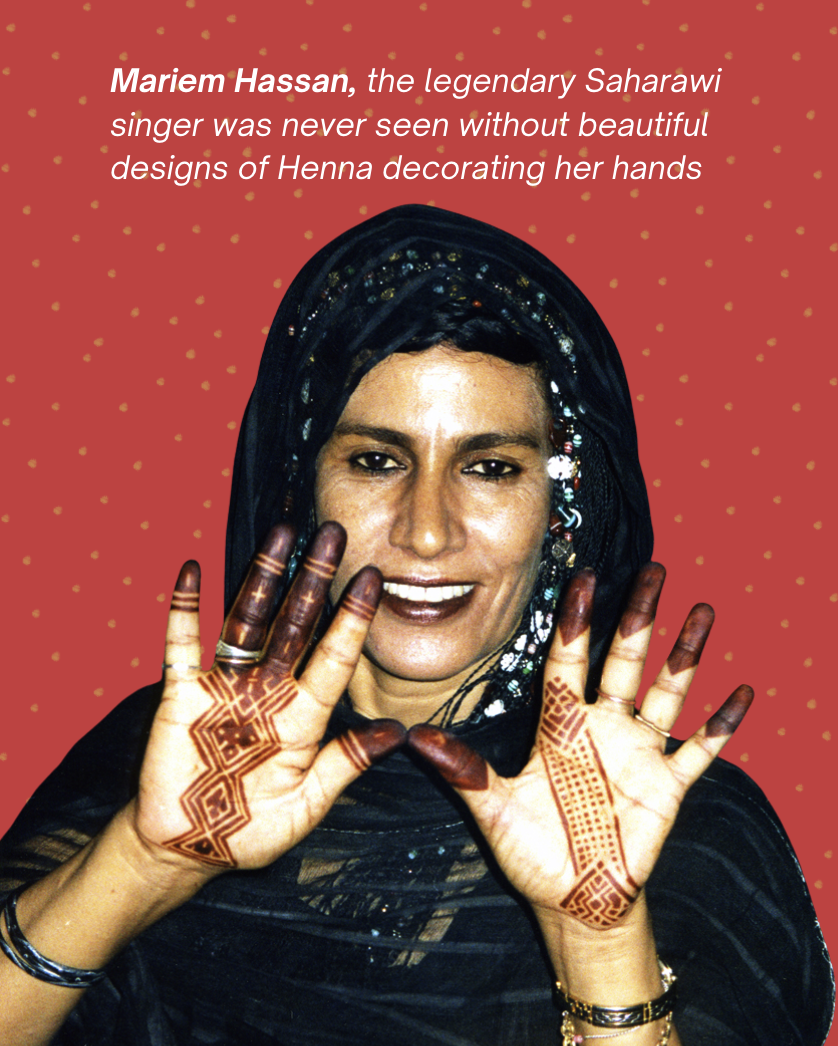
Traditionally, Saharawi henna is applied for weddings, Eid celebrations, and other festive occasions, but it is also an integral part of hospitality, something Saharawis pride themselves on. When a female guest arrives at a Saharawi home, it is customary to offer her henna as a gesture of welcome and honor. This practice transforms the art into a social ritual to strengthen community bonds and affirms the status of Saharawi women as keepers of culture.
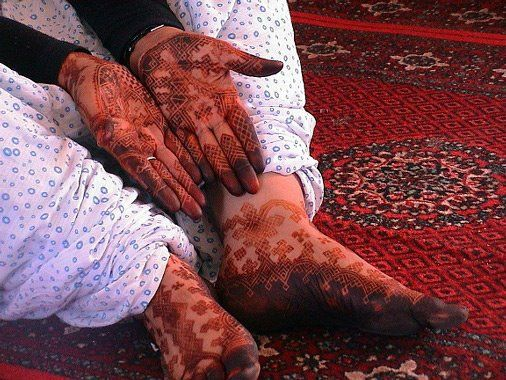
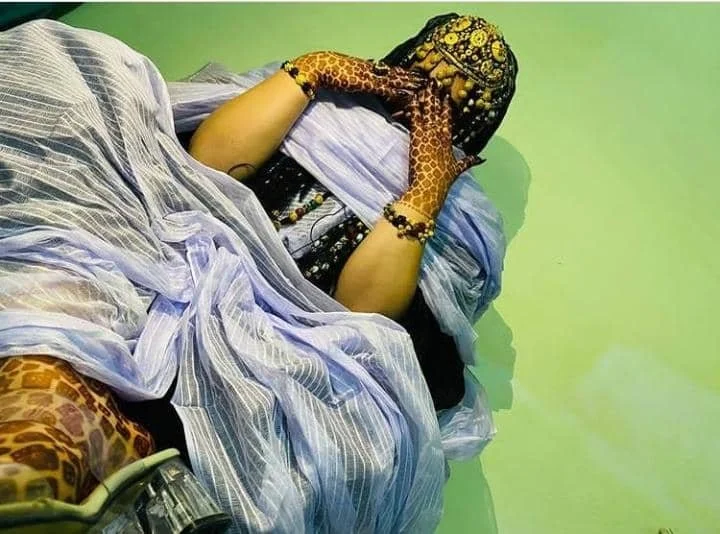
During weddings, the bride’s henna is particularly elaborate, often covering her hands and feet in dense, protective patterns meant to ward off the evil eye and bless her new journey. For younger girls, receiving their first henna is a rite of passage, marking their entry into the circle of women.
Henna is also entangled with storytelling.
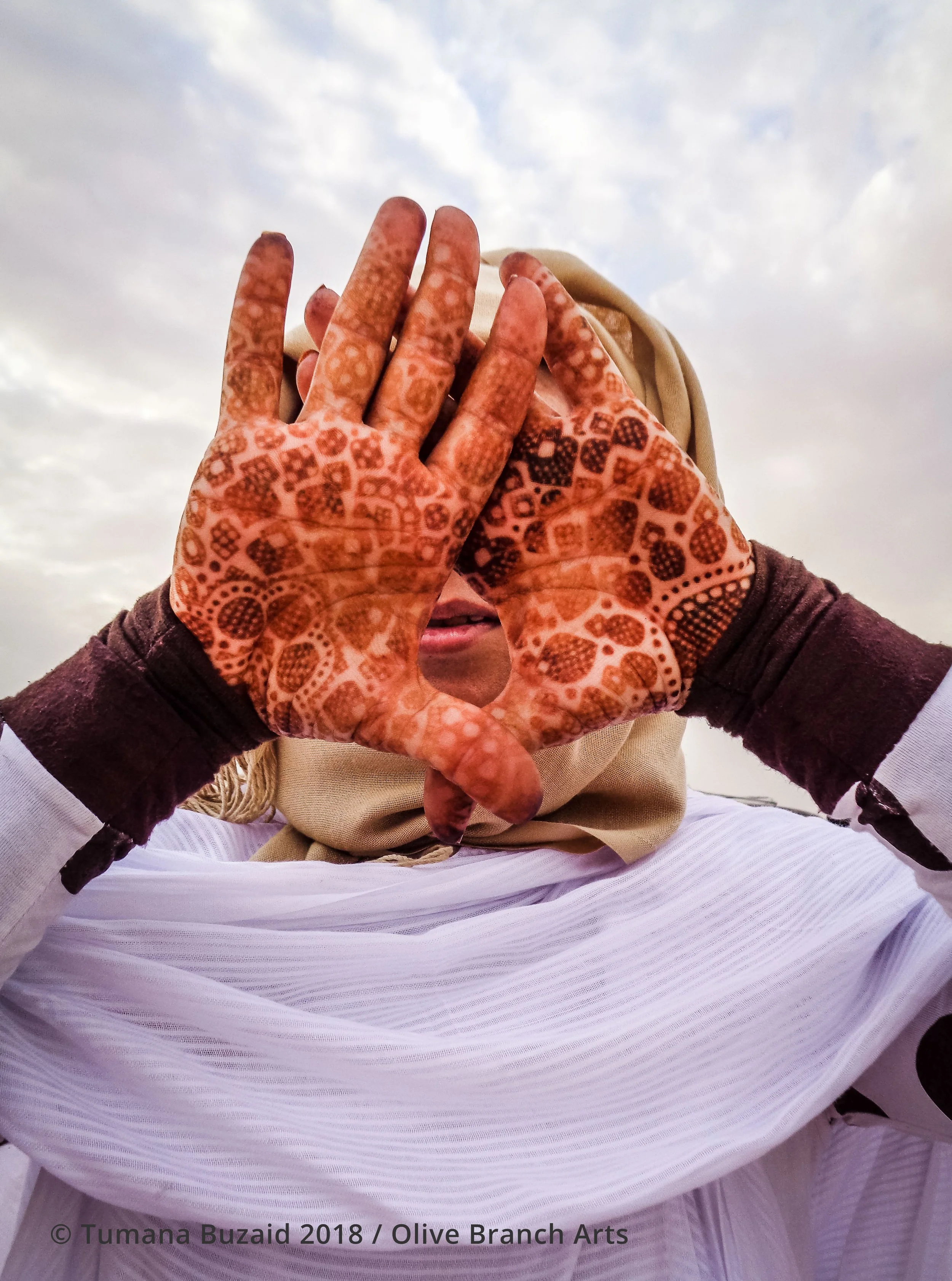
Women gather together, singing traditional songs and exchanging oral histories while the henna paste dries. These moments are living archives where knowledge, jokes, sorrows, and dreams are passed down. The geometric patterns soak into the skin over several hours, leaving a reddish-black stain that can last up to three weeks, creating a temporary but deeply felt inscription of identity.
What makes Saharawi henna unique?
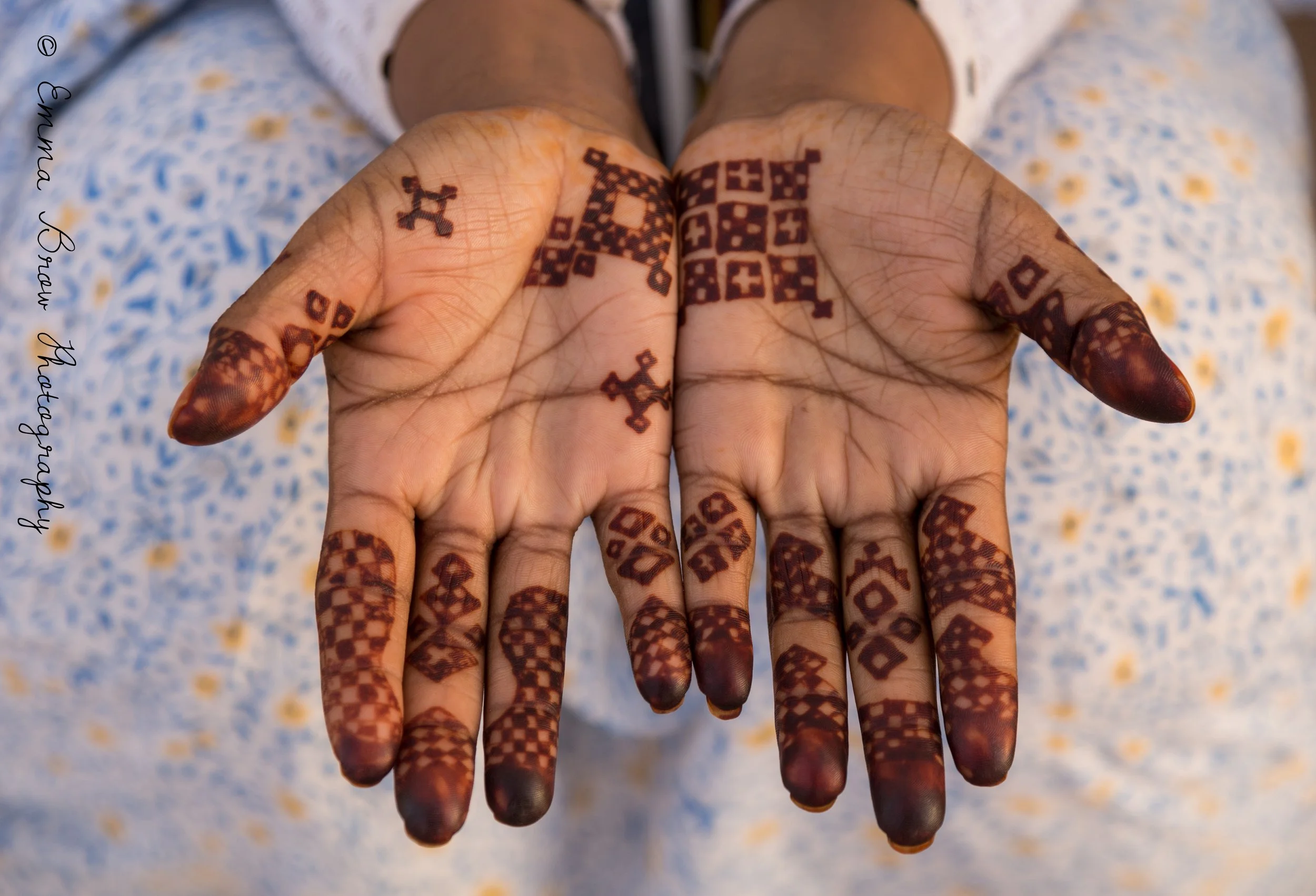
Unlike other henna styles found across North Africa and the Middle East, Saharawi patterns are distinctly bold and geometric, setting them apart from the more floral, curved, or intricate filigree designs common in Tunisia, Algeria, or Egypt.
While Moroccan henna often features delicate open flowers and vines, and Egyptian styles lean toward fine, lace-like patterns, Saharawi henna embraces stark lines, sharp angles, diamonds, dots, and block-like motifs. These forms mirror the geometry of Saharawi textiles, tents, and even the beautiful landscape and horizon line of the desert itself.
The designs reflect a people shaped by open spaces and a nomadic history that values clarity, strength, and symbolism.
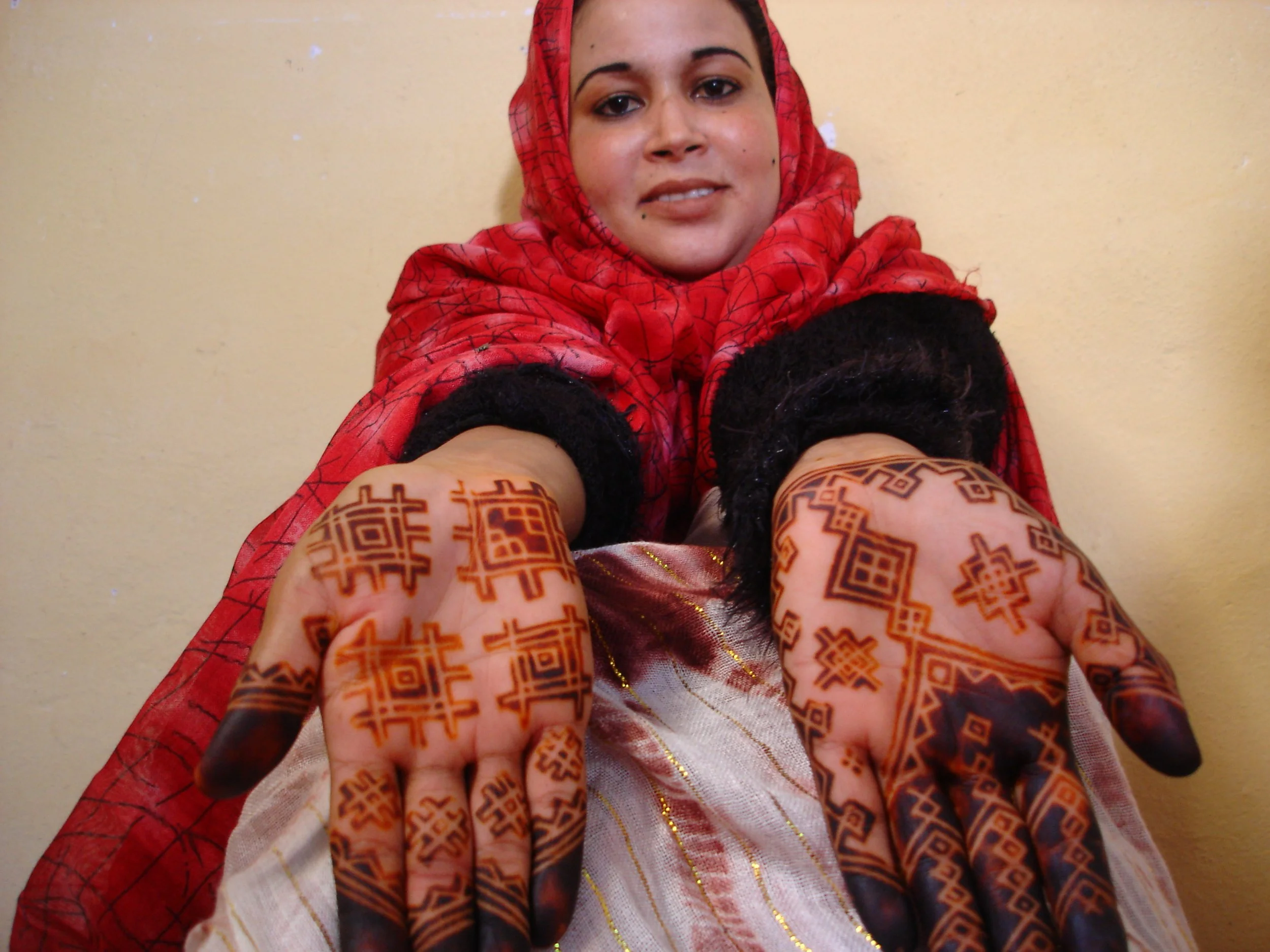
Through henna, Saharawi women hold on to and honor their nomadic heritage.
What makes Saharawi henna even more distinctive is the paste itself.
While other North African henna pastes are often mixed with lemon, sugar, or essential oils to create a fine consistency for intricate detailing, the Saharawi paste is noticeably thicker and coarser. This texture allows for bold, swift application, often using a small stick or the tip of a cone, without the need for extreme precision that other filigree designs require. The resulting stain is darker and more intense, leaning toward a reddish-black hue that resembles the earth tones of their desert landscape.
The importance of this tradition
Through henna, Saharawi women hold on to and honor their nomadic heritage. Even for those living in refugee camps or diaspora communities far from the open desert, the act of applying henna becomes a ritual of return and a way to trace memory on the body.
Under the threat of forced assimilation and Moroccanization, henna becomes a preservation of Saharawi art. Which, in turn, is an act of resistance.
Each design is an individual narrative on the skin. It becomes a declaration that despite war, exile, and oppression, Saharawi culture remains vibrantly alive. In gesture, there is resistance; in every gathering of women, there is resilience. Saharawi henna is an act of survival and a testament to the unbreakable bond between a people and their land.
Want to learn more about the role of women in Saharawi history, culture, and traditions?
Saharawi women are leaders, artists, educators- and the inspiration for our work. We have created a resource page dedicated to documenting the many roles they play in their communities, in their history, and beyond.
