
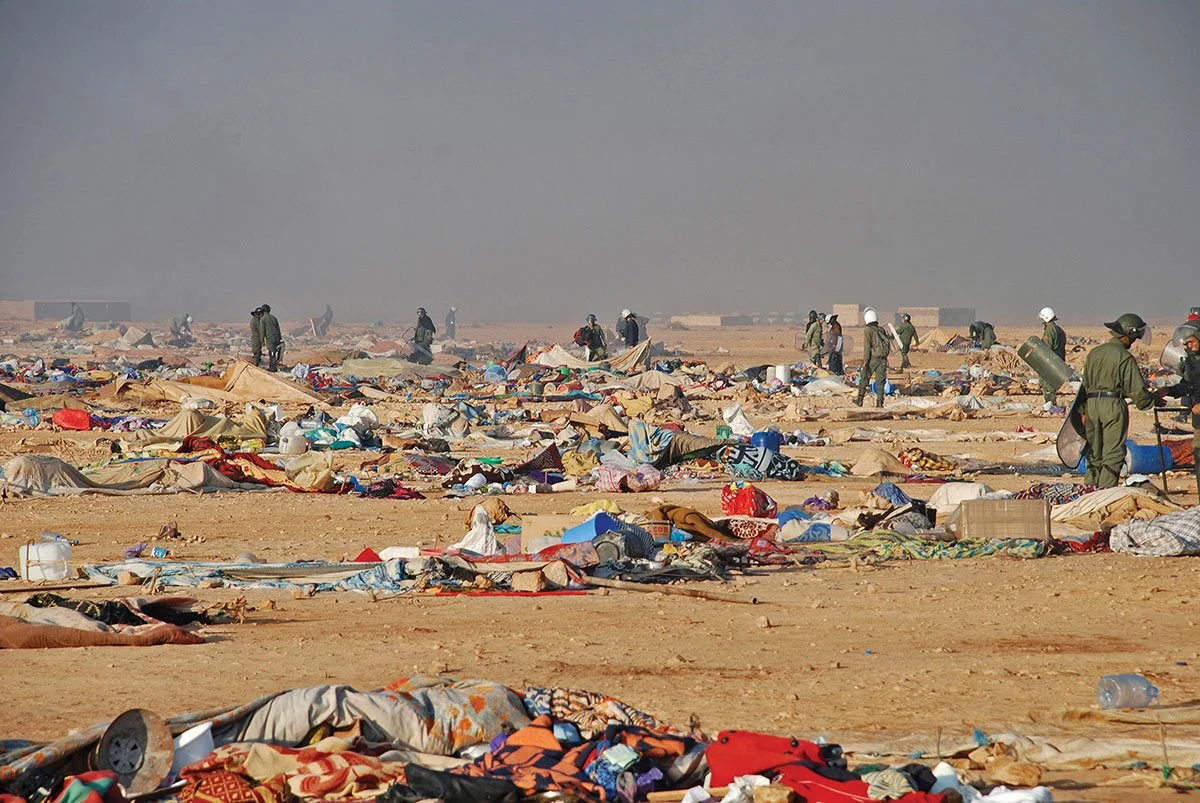
Gdeim Izik:
the spark of the Arab Spring?
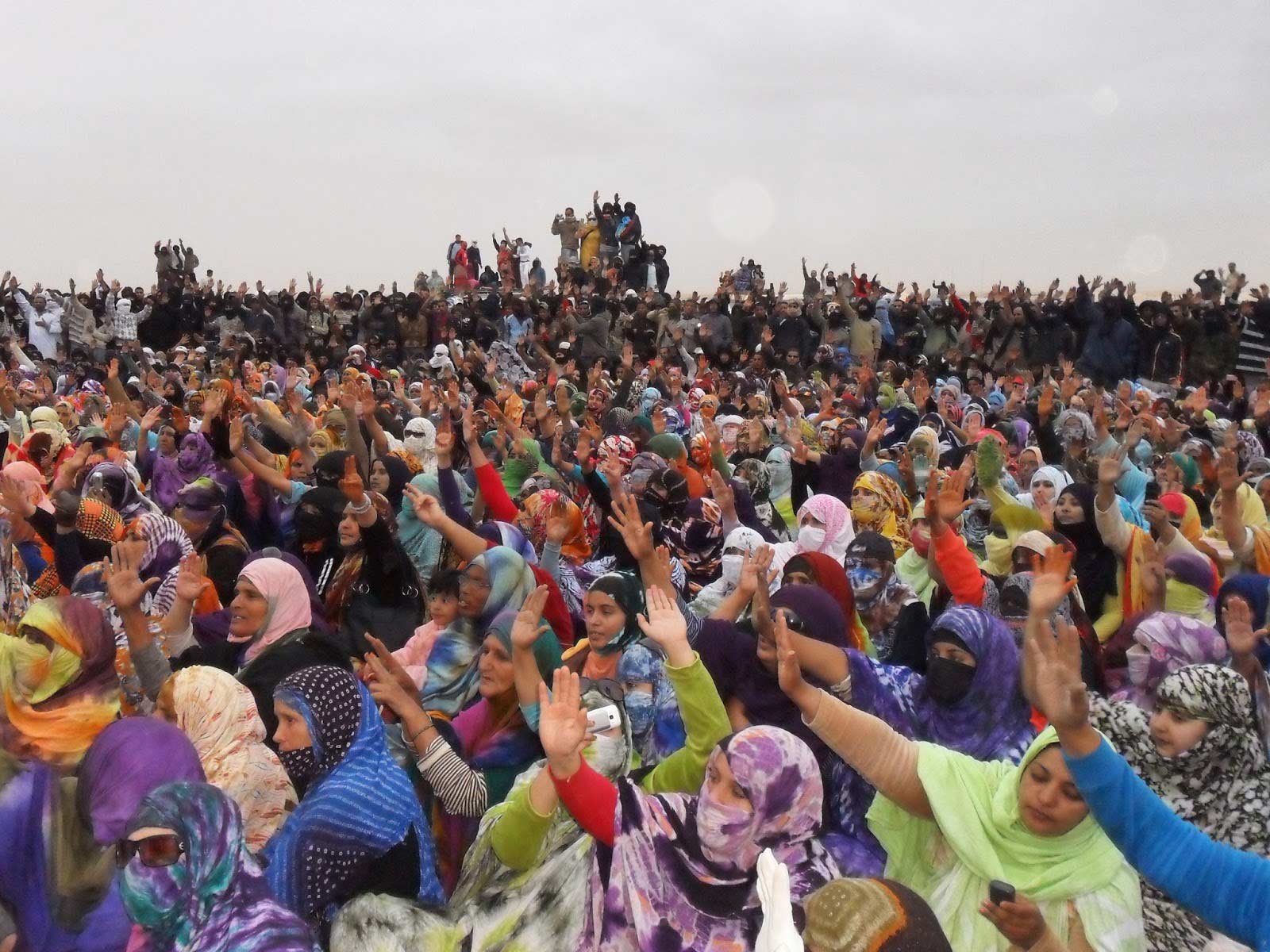
Gdeim Izik is the name given to largest peaceful protest organized by the Saharawis since the start of the occupation in 1975.
According to Noam Chomsky, the American theoretical linguist, the Arab Spring began in October 2010 when the people of Western Sahara revolted against their Moroccan occupiers. This opinion has been echoed by North Africa analysts, including Hicham Yezza, who commented:
In October 2010 – a few weeks before that fateful December encounter in Sidi Bouzid (Tunisia) between Mohamed Bouazizi and a municipal official – thousands of Sahrawi men, women and children set up Gdeim Izik, a camp a few miles East of Layyoune, the capital of occupied Western Sahara, in an act of mass protest against their continuing marginalisation under the decades-long Moroccan occupation of their land...” Read more
Images of a fiercely repressed peaceful protest were indeed reminiscent of those which were to follow in Tunis, Cairo, Tripoli and other Arab cities throughout the Middle East.
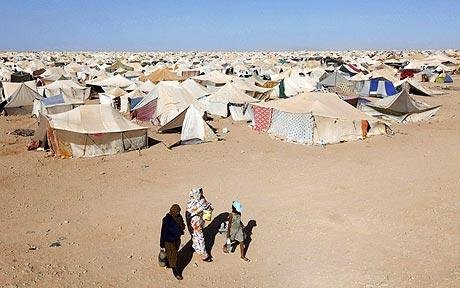
Thousands of Sahrawis moved out of the cities of Western Sahara and into about 6,500 tents in the area of Gdeim Izik, outside the capital El Aaiún, to protest the Moroccan occupation of Western Sahara and the ongoing discrimination, poverty and human rights abuses against Sahrawi citizens.
“In October 2010 – a few weeks before that fateful December encounter in Sidi Bouzid (Tunisia) between Mohamed Bouazizi and a municipal official – thousands of Sahrawi men, women and children set up Gdeim Izik, a camp a few miles East of Layyoune, the capital of occupied Western Sahara, in an act of mass protest against their continuing marginalisation under the decades-long Moroccan occupation of their land...”
Moroccan authorities dismantled the camps forcefully and blocked wounded Sahrawis from seeking medical treatment in fear of the bad publicity that its activities could engender, Morocco expelled the Al Jazeera journalist sent to cover the events and closed the channel’s office in the country.
The national airline, Royal Air Maroc, also impeded foreign correspondents from the Spanish television channels TVE and TV3, and from the Spanish newspaper El Mundo, from boarding flights from Morocco to El Aaiún, cancelling their flights in advance or blocking them at the airport.7 It is therefore difficult to find exact numbers of the casualties at Gdeim Izik, but it is estimated that at least several dozen Sahrawis lost their lives and hundreds were arrested.
The Gdeim Izik 25
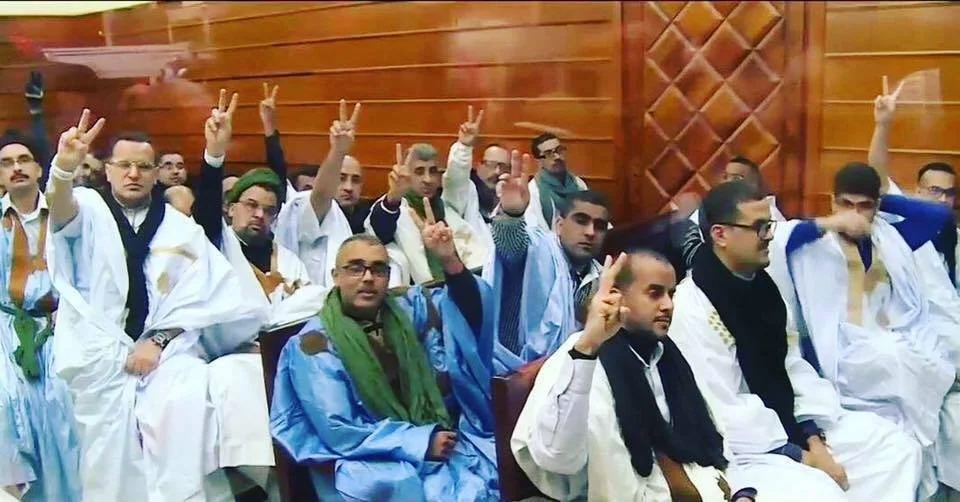
Among those detained were the ‘Gdeim Izik 25’ – 25 civilian Sahrawis who were convicted in a Moroccan military court on charges relating to violent resistance against security forces and forming criminal gangs. Nine of the men received life sentences, 14 received prison terms ranging between 20 and 30 years, and two were released after spending their two-year sentences in prison in court-ordered pre-trial detention.
Today, 19 of the 25 are still in prison. For a full account of each of the prisoners, click here
Understanding the media embargo:
Today, we are accustomed to the commonality of self-documented media coverage. Smartphones, socialmedia, and their accesability have provided new agency to resistance groups as they fight for visibility and awareness.
At the time of the protest, western media outlets refused coverage, as they were unable to enter the occupied territory to confirm the events transpiring.
Modern technology, in the guise of mobile phones and the internet played a crucial role in advocacy for the Saharawi Arab Democratic Republic. For the first time, images and stories from the occupied territory were leaked to the outside world.